


The physiological benefits of smiling extend far beyond appearance or social etiquette. Smiling triggers measurable changes in the brain and body that influence stress, mood, and overall wellbeing.
Let’s be honest: most days lately feel a little… tense.
People are distracted. Everyone’s in a rush. Eye contact feels optional. And half the time, it seems like we’re all one minor inconvenience away from losing it in the grocery store lineup.
Which is exactly why something as simple as a smile deserves a bit more attention — not as a cheesy “good vibes only” idea, but as an actual, science-backed wellness habit that helps you and quietly helps everyone around you too.
Smiling isn’t about pretending everything is fine. It’s about giving your nervous system — and other people’s — a small break.
What Research Says About Smiling and the Brain
Research in psychophysiology shows that smiling activates neural pathways linked to dopamine, serotonin, and endorphin release — chemicals associated with mood regulation and stress reduction. Studies on facial feedback theory suggest that even intentional or “forced” smiling can trigger measurable changes in heart rate and stress hormone levels. While smiling is not a cure-all, research consistently demonstrates that it has tangible physiological effects on both mood and nervous system activation.
What Happens in the Body When You Smile
Smiling isn’t just a facial expression. It’s a physiological event.
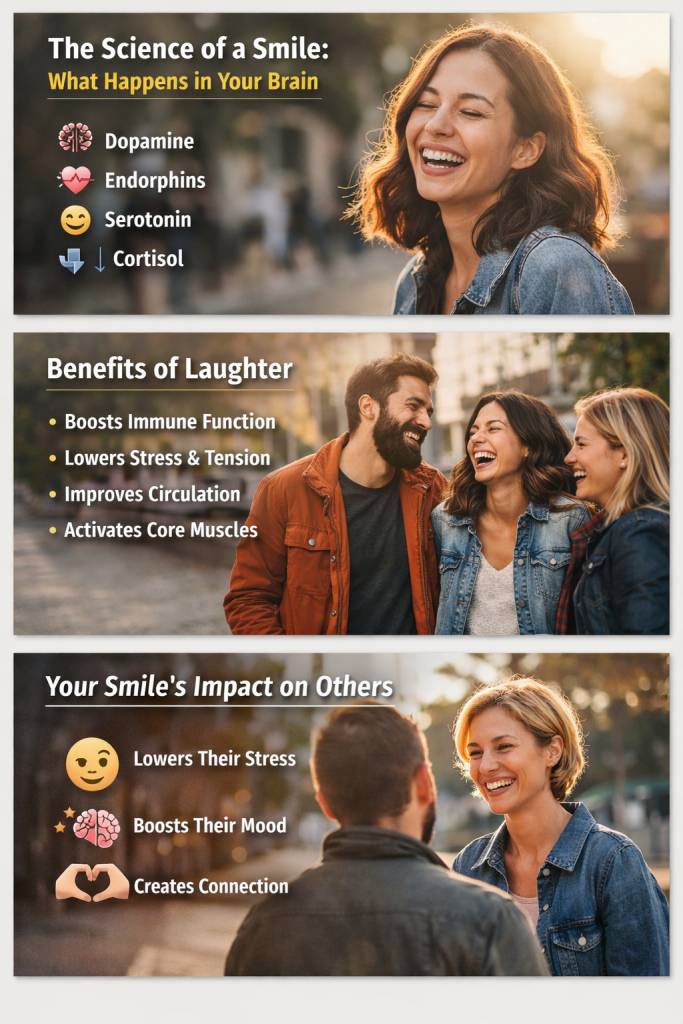
When you smile, your brain releases a mix of chemicals that play a huge role in how you feel day to day:
- Dopamine, which improves mood and motivation
- Endorphins, which help reduce pain and tension
- Serotonin, which supports emotional balance and calm
At the same time, smiling helps lower cortisol, the stress hormone that’s linked to anxiety, poor sleep, inflammation, and burnout.
Here’s the wild part: your brain doesn’t fully care whether the smile starts because you’re happy or because you chose to smile. The signal still gets sent. The chemistry still shifts.
That’s not fake positivity — that’s biology.
How Smiling Reduces Stress Hormones
Smiling won’t fix your inbox, your mortgage, or whatever chaos is happening in the news today. But it does help your body respond differently to stress.
Studies show that smiling can:
- Lower heart rate during stressful moments
- Reduce blood pressure
- Help your nervous system recover faster after stress
Think of it as a small reset button. Not dramatic. Just helpful.
When stress is constant — and for a lot of people, it is — these small resets matter more than we give them credit for.
Why Laughing Is Even Better (Yes, It Counts as Wellness)
If smiling is helpful, laughing is the deluxe version.
Laughter:
- Increases oxygen intake and circulation
- Activates facial, core, and respiratory muscles
- Stimulates the vagus nerve, which helps calm the nervous system
It also boosts immune function and increases pain tolerance. Which means laughing isn’t just fun — it’s functional.
And unlike most “wellness tools,” laughter tends to happen when we’re actually present. Not scrolling. Not multitasking. Just being there.
The Ripple Effect: How Your Smile Affects Other People
Here’s where things get interesting.
When you smile at someone, their brain often mirrors that expression automatically. It’s called facial mimicry, and it’s wired into us.
Translation:
- Your smile can lower their stress
- It can trigger their dopamine and serotonin release
- It can make someone feel acknowledged without a single word
In a time when many interactions feel rushed, transactional, or filtered through a screen, that small moment of connection can land harder than you think.
Sometimes people don’t need conversation. They just need to not feel invisible.
About Eye Contact (And How Not to Make It Weird)
Let’s clear this up: this is not about staring people down or smiling like a maniac at strangers.
This is about normal, human eye contact.
The kind that lasts a second or two.
The kind paired with a relaxed face.
The kind that says, “Hey, I see you.”
Examples:
- Passing someone on the sidewalk
- Ordering coffee
- Letting someone merge in traffic
- Being out in your neighbourhood
No intensity. No lingering. Just acknowledgement.
Those micro-moments help rebuild something we’ve lost a bit of lately: casual social trust.
Why This Feels Harder Right Now
A lot of people are running on edge.
Between constant news cycles, social media outrage, financial stress, and general burnout, it makes sense that people feel guarded. Smiling doesn’t always feel automatic when you’re tired or overwhelmed.
That doesn’t mean you’re doing anything wrong.
It just means connection needs a little more intention right now.
Smiling — and letting yourself laugh — helps your nervous system soften. And when your nervous system softens, your interactions do too.
Smiling Isn’t About Pretending Everything Is Fine
This part matters.
Smiling isn’t about ignoring real problems or forcing happiness. It’s not about being “positive” all the time.
It’s about:
- Giving your body a physiological break
- Creating small moments of ease
- Making everyday interactions feel more human
You’re allowed to have a rough day and still smile at someone holding the door.
Both can be true.
A Small, Practical Practice You Can Actually Use
You don’t need to overhaul your personality.
Just try this:
- Make eye contact when it feels natural
- Smile when someone smiles at you
- Laugh when something’s funny, even if it’s dumb
- Spend time with people who make this easy
That’s it. No affirmations required.
The Takeaway
Smiling is simple. But it’s not insignificant.
It changes your brain chemistry.
It reduces stress.
It helps other people feel safer and more connected.
And right now, with everything feeling a little unhinged, that kind of quiet, low-effort wellness might be exactly what we need more of.
Not louder.
Not faster.
Just more human.