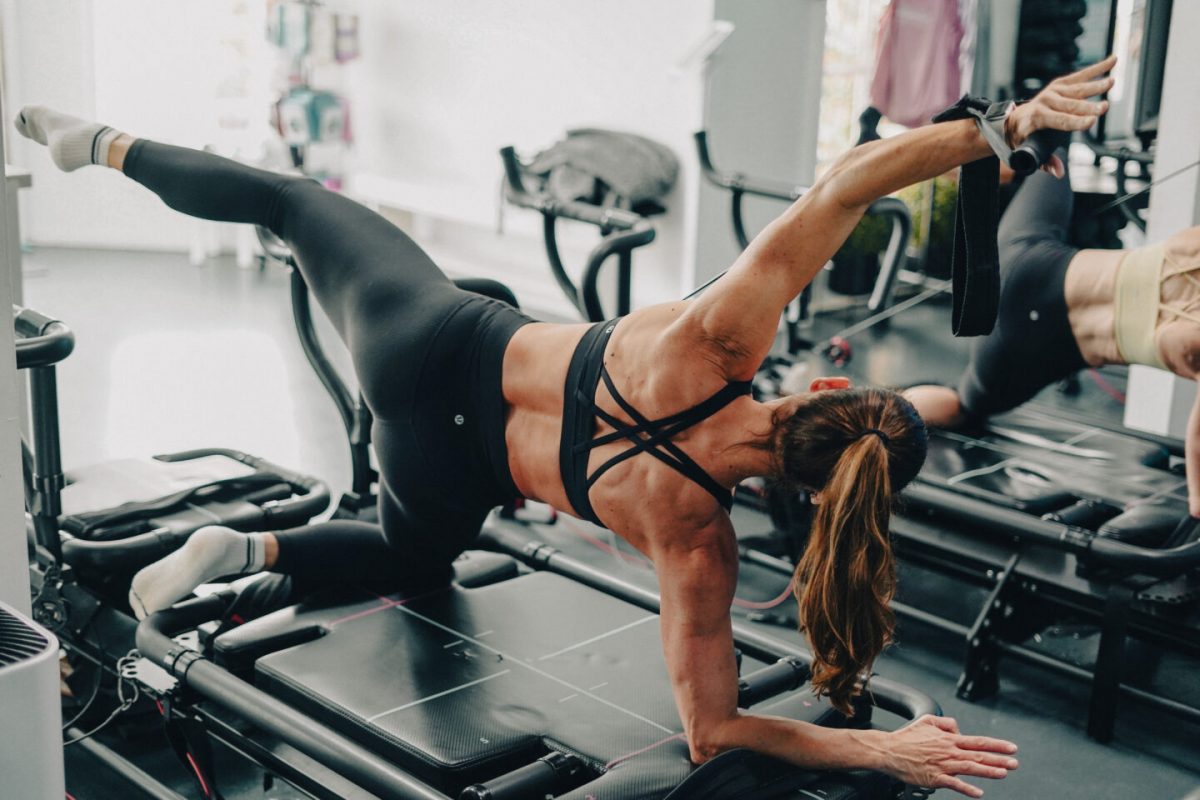

If you’ve spent any time around fitness studios lately, you’ve probably heard the comparison come up: Pilates vs Lagree.
At first glance, they look almost identical. Slow movements. Machines with springs. People moving with intense focus (and occasionally shaking like they’ve just discovered a new level of discomfort).
So naturally, the assumption is that they’re basically the same thing.
They’re not.
And understanding the difference matters, especially if you’re trying to find a workout that actually fits where you’re at right now. Whether you’re easing back into movement after a long Edmonton winter, looking for something low-impact, or just tired of the same gym routine, knowing what each offers can save you time—and a bit of confusion.
What Pilates Actually Is (And Why It’s Still So Popular)
Pilates has been around for a long time, and there’s a reason it hasn’t gone anywhere.
Originally developed by Joseph Pilates, the method was designed to improve strength, posture, flexibility, and overall body awareness. It’s often associated with rehabilitation and injury prevention, but over time it’s evolved into a widely accessible form of exercise that appeals to just about everyone.
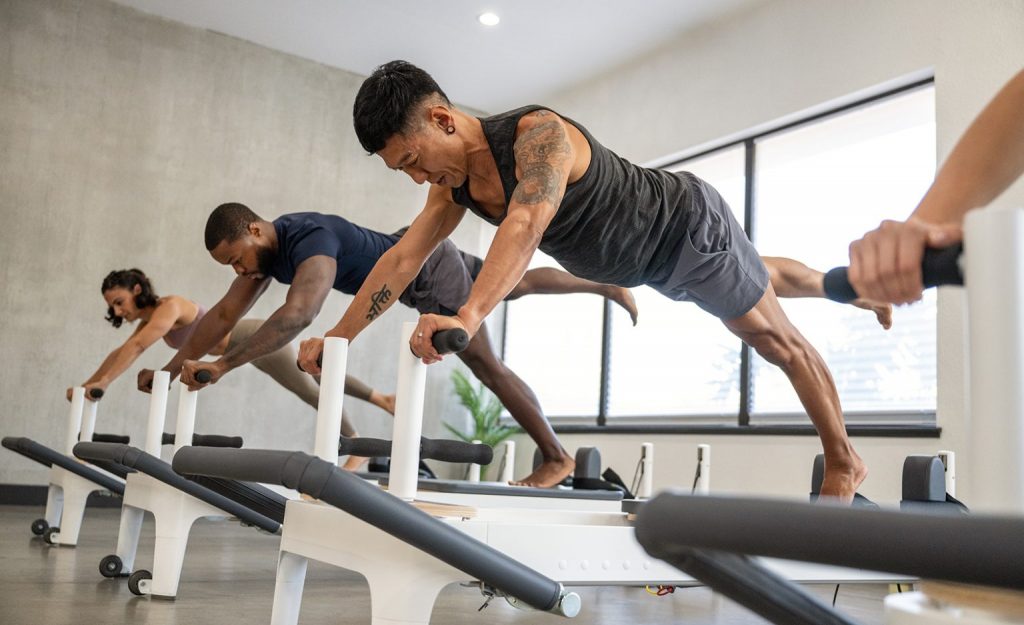
At its core, Pilates is about control.
Movements are slow and deliberate. You’re focusing on alignment, breathing, and engaging the right muscles at the right time. It’s not about pushing to exhaustion. It’s about building a strong, stable foundation that supports everything else you do.
For many people, Pilates becomes a reset button. It helps reconnect you to your body, especially if you’ve been dealing with discomfort, poor posture, or just feeling a bit disconnected from movement altogether.
It’s also incredibly adaptable. Whether you’re on a mat or using a reformer, the intensity can be adjusted to meet you where you are. That’s why it’s often recommended for beginners, people recovering from injury, or anyone looking for a lower-impact way to build strength.
What Lagree Is (And Why It Feels So Different)
Lagree, on the other hand, takes some of those same foundational ideas and pushes them in a very different direction.
Created by Sebastien Lagree, this method is built around a machine called the Megaformer. While it may look similar to a Pilates reformer, the experience is noticeably different once you start moving.
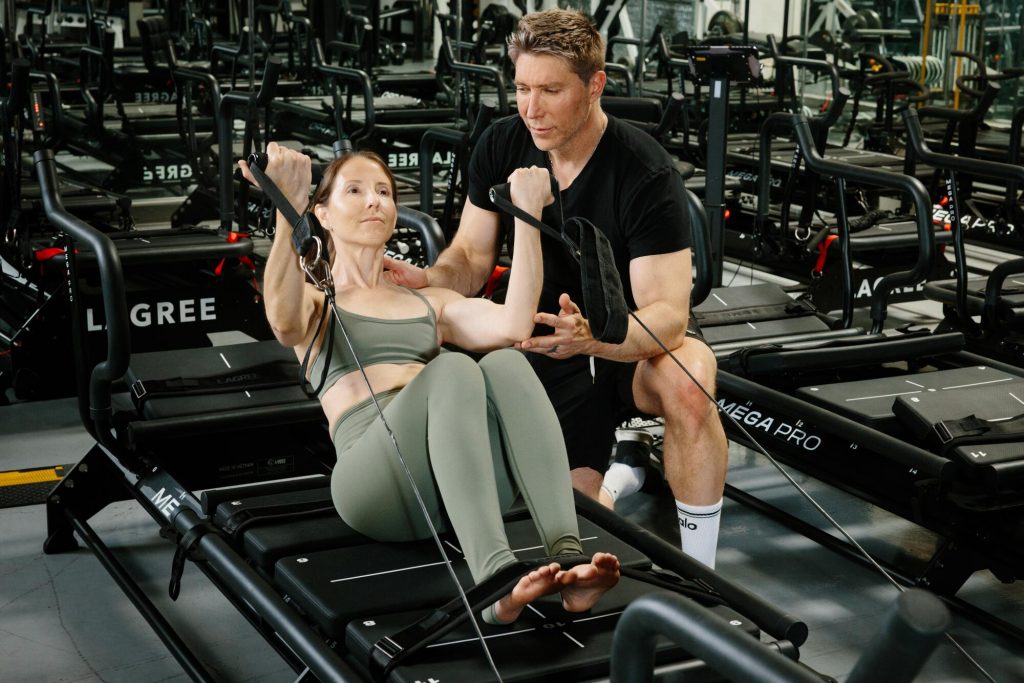
Lagree is designed to be intense—but without impact.
Instead of focusing primarily on control and alignment, Lagree emphasizes time under tension. Movements are still slow, but they’re continuous. There’s very little rest. Muscles are kept under constant load, which leads to that familiar shaking feeling people talk about after their first class.
It’s not about how fast you move or how heavy the resistance is. It’s about how long you can sustain the effort.
A typical Lagree class is relatively short, often around 40 to 50 minutes, but it doesn’t feel short. By the end, you’ve worked your entire body—legs, core, arms—without ever needing to jump, run, or lift traditional weights.
For people who want something efficient, challenging, and still joint-friendly, Lagree tends to hit that sweet spot.
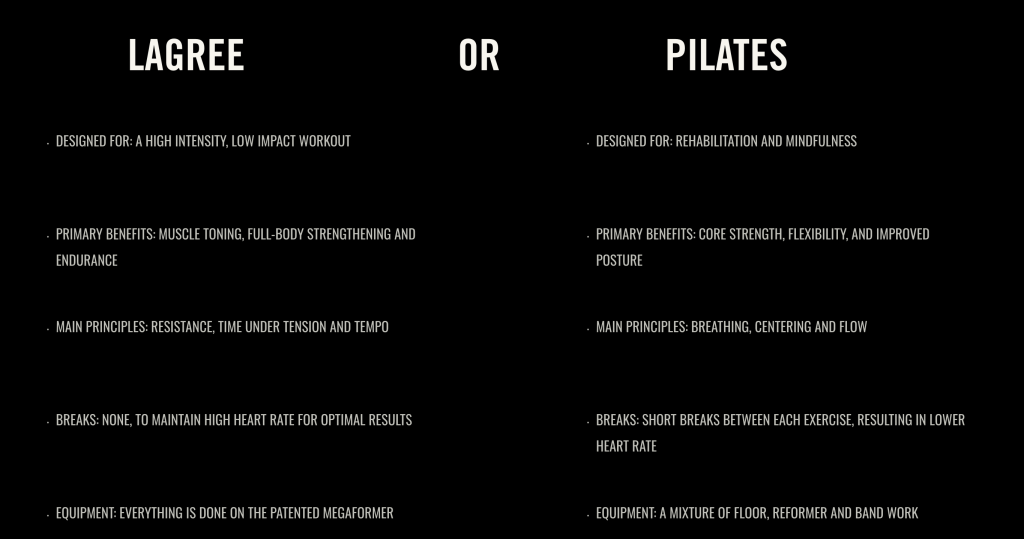
Pilates vs Lagree: The Key Differences That Actually Matter
When comparing Pilates vs Lagree, it helps to move beyond how they look and focus on how they feel.
The first major difference is intensity.
Pilates generally sits in the low to moderate range. It can be challenging, especially as you progress, but it’s not designed to push you to the point of muscle fatigue in every session. Lagree, on the other hand, is intentionally structured to do exactly that. The goal is to fatigue the muscles quickly and efficiently.
The second difference is how movement is structured.
In Pilates, there are natural pauses between exercises. You reset, adjust, and move into the next sequence. In Lagree, the transitions are tighter, and the tension rarely lets up. You move slowly, but continuously, which creates a very different kind of demand on the body.
The third difference is equipment.
While both use spring-based machines, the Pilates reformer and the Megaformer are not interchangeable. The Megaformer is specifically designed for Lagree’s style of training, allowing for longer ranges of motion and more dynamic positioning. That design is part of what makes Lagree feel more intense, even when the movements look similar from the outside.
Finally, there’s the overall goal.
Pilates focuses on building a strong, functional foundation—improving posture, mobility, and stability. Lagree leans more toward muscular endurance and strength, with a clear emphasis on pushing your limits in a controlled way.
Where They Overlap (And Why That Confuses People)
Despite their differences, Pilates and Lagree do share some important similarities.
Both are low-impact, which makes them appealing for people who want to avoid the stress that comes with high-impact workouts like running or jumping. Both focus heavily on the core, which is why you’ll often feel it the next day no matter which one you choose.
They also both require a level of focus that’s different from traditional gym workouts. You’re not just going through the motions. You’re paying attention to how your body is moving, how muscles are engaging, and how to maintain control throughout each exercise.
This overlap is exactly why people tend to group them together. From the outside, they look similar. But once you’re in the middle of a Lagree set, holding a slow lunge while your legs start to shake, you quickly realize it’s a different experience.
Lagree in Edmonton: A Workout That’s Gaining Momentum
Edmonton’s fitness scene has evolved a lot over the past few years. There’s a growing shift toward workouts that are not only effective but also sustainable and accessible.
Lagree fits into that shift in an interesting way.
It offers intensity without impact, which appeals to people who want a challenging workout but aren’t interested in high-impact training. It also works well for people who are short on time. You can get a full-body workout in under an hour and leave feeling like you actually did something.
Studios like House of Lagree have started to introduce this style of training to more people across the city, creating spaces where the workout is the focus, but the environment still feels approachable.
That balance matters.
Trying something new can be intimidating, especially when the workout itself has a bit of a reputation. But when the space feels welcoming and the instruction is clear, it becomes a lot easier to step in and give it a shot.
So… Which One Should You Choose?
This is usually the point where people want a definitive answer.
Pilates or Lagree?
The reality is, it depends on what you’re looking for.
If your goal is to build a strong foundation, improve posture, and move in a more controlled, intentional way, Pilates is a great place to start. It’s especially useful if you’re coming back from an injury or easing into a more consistent routine.
If you’re looking for something that feels more like a workout—something that challenges your muscles, pushes your endurance, and leaves you feeling like you’ve been tested—Lagree might be the better fit.
That said, it’s not an either-or situation.
A lot of people benefit from doing both at different times. Pilates can support recovery and movement quality, while Lagree can provide that higher-intensity stimulus that builds strength and endurance.
The Best Way to Understand It Is to Experience It
You can read about Pilates vs Lagree. You can watch videos. You can compare descriptions.
But the real difference shows up when you’re actually doing it.
It’s in the moment where your muscles start to shake and you realize you’ve been holding tension longer than you thought possible. It’s in how your body feels afterward—worked, but not beaten up.
That’s when it clicks.
Final Thought
You don’t need to completely overhaul your routine to get back into movement.
Sometimes, all it takes is trying something different.
Pilates and Lagree both offer a way to reconnect with your body, just in slightly different ways. One builds the foundation. The other challenges it.
And in a city like Edmonton, where getting back into a routine after winter can feel like a reset, having options like these makes it a little easier to start again.
FAQ: Pilates vs Lagree
In most cases, yes. Lagree is designed to create muscular fatigue more quickly through continuous tension.
Yes, but it may feel challenging at first. The movements are simple, but the intensity builds quickly.
Generally, yes. Pilates is often used in rehabilitation settings because of its focus on control and alignment.
Absolutely. Many people use Pilates for recovery and movement quality, and Lagree for strength and endurance.