


There’s a version of life that has quietly become normal for many people across North America.
You wake up.
You go to work.
You come home.
Dinner gets ordered with a few taps on your phone. A show goes on in the background. You scroll a bit. Maybe answer a few messages. Maybe not.
Before long, the day is over.
And then it repeats.
On the surface, it feels efficient. Comfortable, even. Everything you need is right there—food, entertainment, communication—all without leaving your home.
But beneath that convenience, something important is slowly disappearing.
Connection.
How Isolation Became the Default
Technology has made it incredibly easy to live a full life without actually leaving your space.
Food delivery apps replace restaurants.
Streaming replaces shared experiences.
Social media replaces conversation.
None of these things are inherently bad. They solve problems. They save time. They offer flexibility.
But when they become the default, something shifts.
Instead of occasionally choosing a quiet night in, many people now live most of their lives indoors, interacting with screens more than with other humans.
This pattern is becoming increasingly common across North America. And while it may feel normal, it’s not necessarily healthy.
Because humans were never designed to live this way.
The Science of Connection vs Isolation
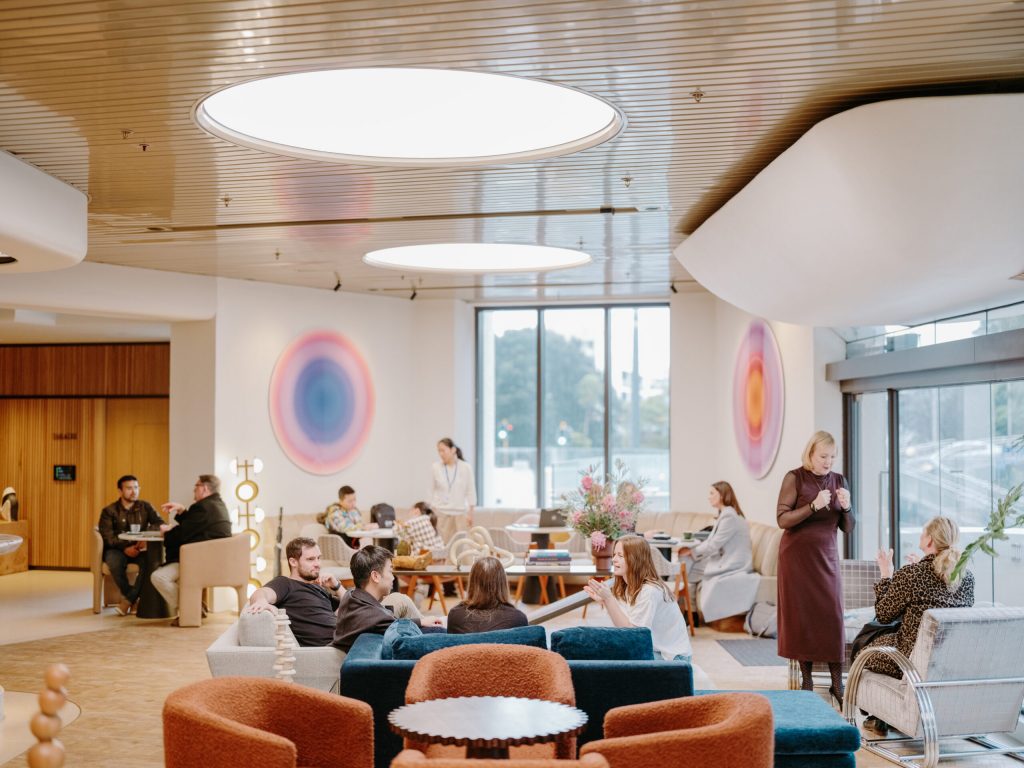
Human beings are biologically wired for connection.
When we spend time with others—talking, laughing, sharing experiences—the body releases chemicals like oxytocin and serotonin. These help regulate mood, reduce stress, and create a sense of safety and belonging.
Connection doesn’t just feel good. It has measurable effects on health.
Research has shown that strong social connections are associated with:
- Lower levels of stress and anxiety
- Improved immune function
- Better cardiovascular health
- Longer life expectancy
On the flip side, chronic isolation can have the opposite effect.
Prolonged loneliness has been linked to increased cortisol levels (the body’s primary stress hormone), higher inflammation, disrupted sleep, and a greater risk of depression and anxiety.
Some studies even suggest that long-term social isolation can have a health impact comparable to smoking or physical inactivity.
That’s how significant it is.
Why Being Alone Feels Easier (But Costs More)
One of the reasons isolation becomes a habit is that it’s easy.
Staying home requires less effort.
There’s no planning.
No coordination.
No small talk.
And after a long day, that ease is appealing.
But ease doesn’t always equal wellbeing.
Connection requires effort. It involves showing up, engaging, and sometimes stepping outside your comfort zone. But that effort is exactly what creates meaningful experiences.
When we avoid that effort consistently, we may feel comfortable in the short term—but more disconnected over time.
How Other Cultures Stay Connected

If you travel to many parts of Europe, South America, or Asia, you’ll notice something different about daily life.
People gather.
Not just occasionally, but regularly.
Meals are shared.
Public spaces are used.
Evenings are social.
In many European cities, it’s common to see people lingering over meals for hours, talking and connecting without rushing. In parts of South America, social life often revolves around community, family, and spontaneous gatherings. In many Asian cultures, shared meals and group activities are deeply embedded in daily routines.
The pace may be different. The priorities are often different too.
Connection is not treated as something extra.
It’s part of everyday life.
What We Can Learn From That
The lesson isn’t that we need to move across the world to live differently.
It’s that we can intentionally bring elements of those cultural habits into our own lives.
Connection doesn’t require a major lifestyle overhaul. It starts with small shifts:
- Choosing to meet a friend instead of texting
- Sitting down for a meal without distractions
- Taking a walk with someone instead of alone
- Spending time in shared spaces instead of always staying home
These moments may seem simple, but they create opportunities for real interaction.
And over time, those interactions build stronger relationships and a greater sense of belonging.
Edmonton Is Built for Connection
One of the most overlooked aspects of living in Edmonton is how many opportunities there are to connect.
The River Valley trails.
Local cafés.
Community events.
Neighbourhood spaces.
These places exist for more than just passing through. They create environments where people can gather, talk, and spend time together.
At its core, that’s what YEG Thrive has always been about—bringing people together and building a stronger sense of community.
And it’s also the idea behind initiatives like the Offline Collective.
Creating spaces where people can step away from screens and reconnect in real life.
Not in a forced or structured way.
Just naturally.
Reversing the Trend of Isolation
If isolation has quietly become part of your routine, the solution isn’t to overhaul your entire life overnight.
It’s to start small.
Connection grows the same way fitness does—through consistency.
You might begin with:
- One coffee meet-up per week
- One walk with a friend
- One shared meal without phones
These aren’t big changes.
But they add up.
And over time, they begin to shift how connected you feel to the people and world around you.
The Bigger Picture
The modern world offers more convenience than ever before.
But convenience has a trade-off.
The easier it becomes to stay home, the more intentional we have to be about stepping out.
Because while it’s possible to live much of life alone, it doesn’t mean it’s good for us.
Connection is not a luxury.
It’s a biological need.
And in a world that increasingly pulls us inward, choosing connection may be one of the most important wellness decisions we can make.