
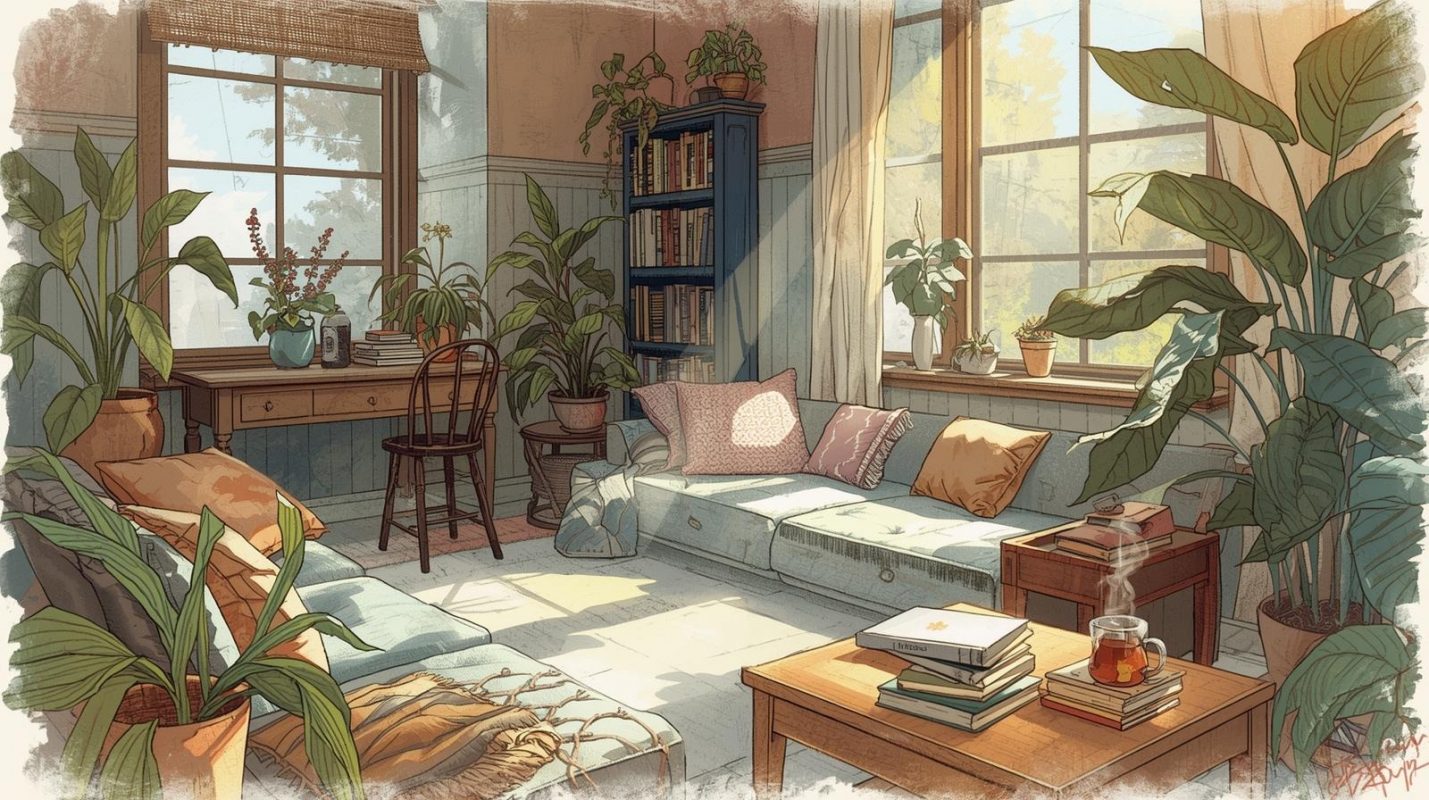

Creating an analog room at home is one of the simplest ways to reclaim focus, rest, and creativity in a world dominated by screens.
We’ve optimized our homes for speed. Smart thermostats. Smart TVs. Smart speakers. Smart watches. Laptops on kitchen tables. Phones on nightstands. Tablets on couches.
But here’s a quiet question worth asking:
Where in your home can you sit without a device within arm’s reach?
For many people, the answer is nowhere.
That’s where the idea of an analog room comes in — a deliberate space in your home where technology is not allowed. No screens. No notifications. No background streaming. Just space for reading, writing, listening, thinking, napping, or simply being.
This isn’t about rejecting modern life. It’s about balancing it. And increasingly, society is rediscovering that balance.
Why We’re Craving Analog Spaces Again
Over the past decade, attention has become our most valuable commodity. Social media platforms, streaming services, AI tools, and constant connectivity are designed to reduce friction and maximize engagement.
But humans are not built for endless stimulation. We are built for rhythm.
When stimulation never pauses, we see predictable effects:
- Increased anxiety
- Reduced attention span
- Mental fatigue
- Sleep disruption
- Decreased creativity
- Emotional overwhelm
In response, a quiet cultural shift is happening.
People are:
- Returning to print books
- Buying physical planners
- Listening to vinyl records
- Hosting phone-free dinners
- Creating “device drop zones” in their homes
- Seeking out offline gatherings and slower experiences
This isn’t nostalgia. It’s nervous system regulation. An analog room is simply a physical expression of that shift.
What Is an Analog Room at Home?
An analog room is not necessarily a whole room. It’s a designated space — large or small — where:
- No phones are brought in
- No laptops are opened
- No tablets are used
- No TVs are installed
- No smart speakers are active
It’s a space intentionally protected from digital interruption.
It can be used for:
- Reading physical books
- Journaling or creative writing
- Meditation or quiet reflection
- Listening to music (without screens)
- Stretching or gentle movement
- Afternoon naps
- Conversation
- Thinking
The purpose isn’t productivity. It’s presence.
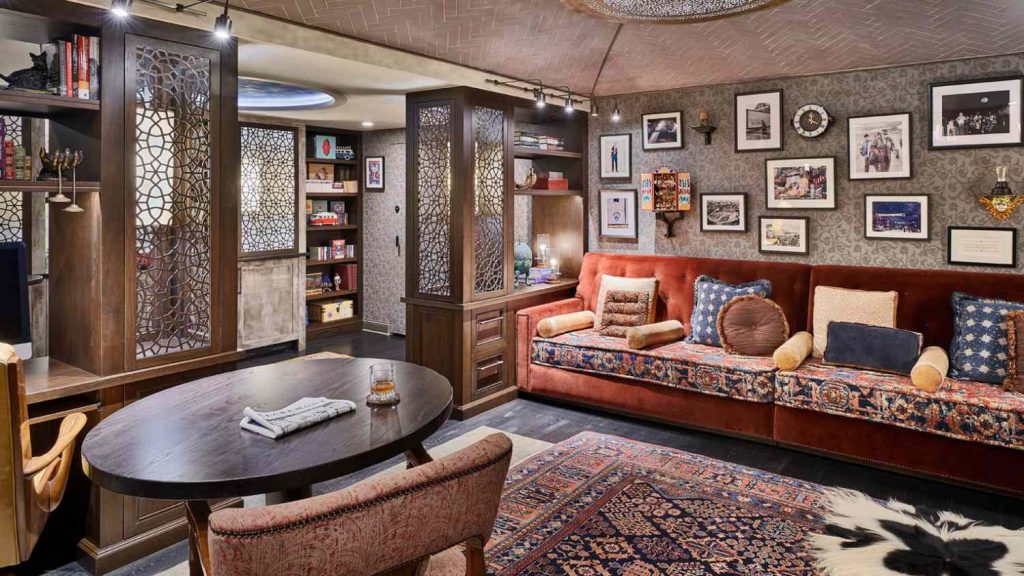
The Mental Health Benefits of an Analog Room
When devices are removed, something subtle happens. Your nervous system shifts.
Screens stimulate dopamine. They fragment attention. They invite constant comparison. Even passive scrolling keeps the brain in a heightened state.
Analog activities do the opposite.
Reading a book slows eye movement and breathing.
Writing by hand engages deeper cognitive processing.
Listening to music without multitasking allows emotional regulation.
Resting without background noise lets the brain integrate information.
This kind of space:
- Lowers stress hormones
- Improves focus
- Strengthens memory consolidation
- Supports emotional processing
- Enhances creativity
In a world of instant response, it teaches patience.
How Society Is Embracing Analog Living
The return to analog isn’t accidental.
Bookstores are seeing renewed interest. Libraries are busier. Sales of printed books remain strong despite digital alternatives. Board games and puzzles have surged in popularity. Film photography is quietly reappearing among younger generations.
There’s also a growing awareness around:
- Digital minimalism
- Screen time boundaries
- Phone-free social gatherings
- “Slow living”
- Mindful consumption
People are realizing that constant connection doesn’t equal meaningful connection. An analog room becomes a personal anchor within that broader cultural shift.
How to Create an Analog Room at Home
One of the biggest misconceptions is that creating an analog room requires extra square footage. It doesn’t.
You need:
- A defined boundary
- A clear rule
- A few intentional elements
Here’s how to create one using the space you already have.
Step 1: Choose a Zone (Not Necessarily a Room)
Your analog space could be:
- A corner of your bedroom
- A chair by a window
- A small section of your basement
- A reading nook in your living room
- A converted guest room
- A section of your home office
What matters is that it feels separate, even symbolically. A physical boundary helps — a rug, a bookshelf divider, a specific chair. The brain responds to cues.
Step 2: Remove the Devices Completely
This is non-negotiable.
Not “face down.”
Not “silent.”
Not “on airplane mode.”
Removed.
Create a charging station somewhere else in your home. The analog room should not contain:
- Charging cables
- Screens
- Wearable tech
- Background television
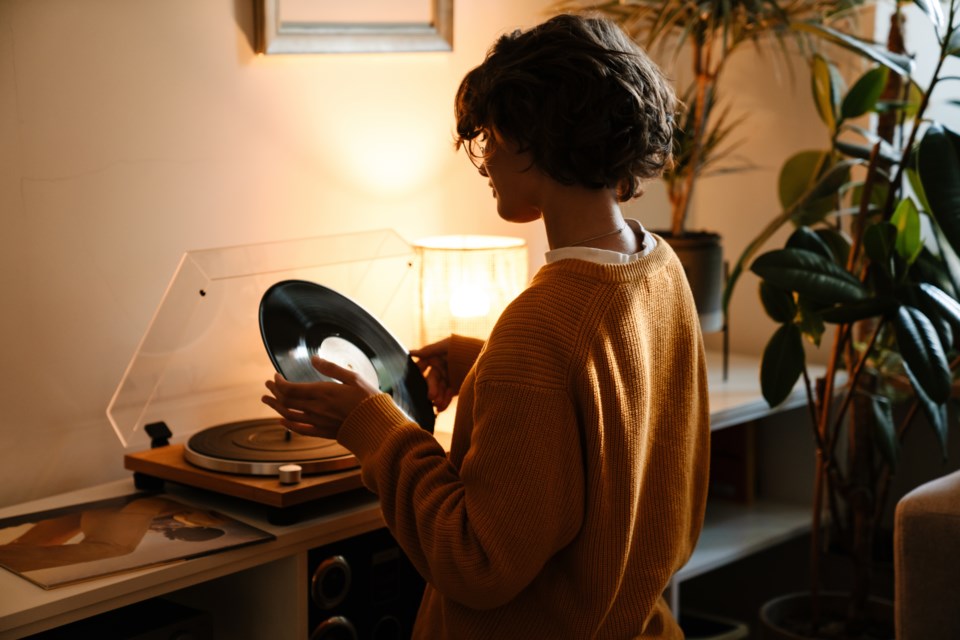
If music is part of your analog space, use:
- A record player
- A CD player
- A basic radio
- A pre-downloaded device that doesn’t require interaction
The goal is reduced decision-making and zero notifications.
Step 3: Design for Comfort and Slowness
Analog spaces should feel inviting.
Focus on:
- Warm lighting (lamps over overhead lights)
- Comfortable seating
- Natural materials (wood, linen, cotton)
- Blankets or cushions
- Minimal clutter
- A small side table
Comfort reduces resistance.
If it feels stiff or staged, you won’t use it.
Step 4: Stock It With Analog Tools
Keep it simple.
Ideas include:
- Physical books
- A journal and pen
- A sketchbook
- A poetry collection
- A deck of cards
- A puzzle
- A yoga mat
- A notebook for long-form thinking
- A printed magazine
The tools should invite use without instruction.

Step 5: Create a Ritual Around It
Spaces gain meaning through repetition.
Try:
- 20 minutes of reading before bed
- Sunday afternoon journaling
- Morning coffee without a phone
- A weekly nap ritual
- Evening music listening
Consistency transforms novelty into habit.
What Happens When You Protect Analog Time
At first, it may feel uncomfortable.
Your brain will reach for stimulation. You may feel restless. You may think of emails, messages, unfinished tasks.
That’s normal.
Stillness reveals how stimulated we’ve become.
Over time, though, something shifts.
- Attention lengthens
- Thoughts deepen
- Creativity resurfaces
- Emotional clarity improves
- Sleep often improves
- Conversations become richer
It’s not dramatic. It’s subtle. But it’s powerful.
Why a Screen-Free Room Improves Focus
A screen-free room improves focus because it reduces overstimulation and removes digital distractions that fragment attention.
Digital platforms are designed to trigger dopamine — the brain’s reward chemical — through notifications, scrolling, and fast-paced content. Research in cognitive psychology suggests that repeated dopamine spikes from screens can condition the brain to seek constant stimulation, making slower, deeper activities like reading or reflective thinking feel more difficult. A no-tech space reduces this overstimulation and helps reset attention patterns.
Without alerts or visual interruptions, the brain can sustain concentration for longer periods. Studies on attention and multitasking consistently show that even the presence of a phone can reduce cognitive performance. Removing devices from the environment supports longer focus sessions and deeper mental engagement.
There is also a stress component. Constant digital availability can activate low-level stress responses, even when we are not actively responding. A dedicated screen-free room signals rest and psychological safety, helping lower cortisol levels and support emotional regulation.
Finally, creativity benefits from reduced input. Research on mind-wandering and creative thinking shows that unstructured, quiet time allows the brain’s default mode network to activate — a state associated with imagination and idea generation. By limiting external stimulation, an analog room creates the conditions where original thought can surface naturally.
The Science in Simple Terms
Less screen stimulation → fewer dopamine spikes → better focus → lower stress → more creativity.
For Families: Modeling Analog Living
If you live with children, an analog room can be transformative.
When adults protect device-free space, children learn:
- Boredom is safe
- Focus is normal
- Reading is enjoyable
- Rest is allowed
- Presence is valued
You don’t have to enforce rigid rules. Just model them. Children often mirror what they see.
The Cultural Rebalancing We’re Living Through
Every technological leap creates a counter-movement.
Industrialization led to nature preservation.
Fast food led to farm-to-table.
Social media led to digital detoxes.
AI and hyper-connectivity are now sparking a renewed appreciation for analog living. People aren’t rejecting progress. They’re protecting humanity within it.
Creating an analog room is not about stepping backward. It’s about ensuring we don’t lose the capacity for:
- Deep thinking
- Long-form attention
- Emotional nuance
- Creative exploration
- True rest
These are not outdated skills. They are future-proof ones.
The Simplest Way to Start
If the idea of a full analog room feels overwhelming, start with this:
- Choose one chair in your home.
- Declare it device-free.
- Place a book beside it.
- Sit there for 15 minutes tomorrow without your phone.
That’s it.
You don’t need aesthetic perfection.
You don’t need a renovation.
You don’t need a lifestyle overhaul.
You just need a boundary. And in today’s world, boundaries are one of the most radical forms of self-care.