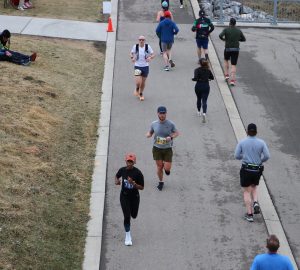


Every spring in Edmonton, something familiar happens. The snow melts, the sidewalks clear, and the River Valley trails begin to fill with runners again. After months of winter training indoors or shorter outdoor workouts, many people are eager to get back into a regular running routine. There is a renewed sense of energy in the city as people lace up their shoes and head outside.
For the YEG Thrive community, this isn’t surprising. Our audience is incredibly active, with the majority exercising several times each week and prioritizing movement as part of their lifestyle. When running season arrives, many people are ready to push themselves again. The enthusiasm is great—but it can also lead to one of the most common mistakes runners make every spring.
Doing too much too soon.
The good news is that with a few smart habits, runners can build their season gradually, stay healthy, and enjoy running throughout the entire year.
The Biggest Spring Running Mistake
When runners return outside after winter, their cardiovascular fitness often feels surprisingly strong. A few early runs might feel easy. Breathing is comfortable, pace improves quickly, and motivation is high. That early confidence can lead runners to increase mileage or intensity faster than their bodies are prepared for.
The challenge is that different parts of the body adapt at different speeds. Your heart and lungs improve relatively quickly with training. Muscles also strengthen fairly quickly. However, the connective tissues that support running—tendons, ligaments, and joint structures—adapt much more slowly.
Running places significant impact through the legs with every stride. Over the course of a run, that impact repeats thousands of times. When runners suddenly increase distance, speed, or frequency, those tissues may not yet be ready to absorb the extra stress. This is why many common injuries appear early in the running season, including:
- Runner’s knee
- Achilles tendon irritation
- Plantar fasciitis
- Shin splints
Most of these injuries are not caused by running itself. They are caused by building too quickly.
Why a Gradual Return Matters
One of the simplest ways to reduce injury risk is to increase running volume slowly. Many coaches recommend the “10 percent rule,” which suggests increasing weekly mileage by no more than about ten percent at a time. This guideline allows the body to adapt gradually without overwhelming the tissues that support running.
For example, if you ran fifteen kilometres total last week, a safe increase would bring you to about sixteen or seventeen kilometres the following week. The progression might feel slow, but that patience is what allows runners to stay consistent.
Consistency is far more valuable than short bursts of intense training. Runners who build gradually are far more likely to stay healthy and continue running throughout the entire season.
Mobility: The Missing Piece for Many Runners

Running is a repetitive movement pattern. Each stride involves the same forward motion repeated again and again. Over time, that repetition can lead to tightness in key areas of the body, especially the hips, calves, and ankles.
Limited mobility in these areas can change running mechanics and increase strain on other joints. For example, tight hips can place additional stress on the knees, while restricted ankle movement can increase impact forces in the lower leg.
A short mobility routine before running can help prevent these issues. Even five to ten minutes can make a difference in how the body moves during a run.
Some simple mobility movements runners benefit from include:
- Leg swings to loosen the hips
- Walking lunges to activate the glutes
- Ankle mobility drills to improve stride mechanics
- Hip circles to open the joints
These movements help prepare the body for the repetitive motion of running and reduce unnecessary strain during training.
Strength Training Helps Prevent Injuries
Another important but often overlooked component of running is strength training. Running builds endurance, but it does not always develop the strength needed to stabilize the body during impact.
Strong muscles help absorb forces that would otherwise place stress on joints and connective tissue. The glutes, hamstrings, calves, and core all play important roles in maintaining proper running mechanics.
Even two short strength sessions per week can support running performance and injury prevention. Exercises that are particularly beneficial for runners include:
- Squats
- Deadlifts
- Single-leg step-ups or lunges
- Core stability exercises
- Calf strengthening movements
Strength training does not need to be complicated. The goal is simply to build a stronger and more resilient body that can handle the repetitive nature of running.
Recovery Is Part of the Training Process

One of the biggest misconceptions among runners is that improvement happens during the workout itself. In reality, the body adapts during recovery.
When you run, you place stress on muscles and connective tissue. The body becomes stronger as it repairs and rebuilds after that stress. Without adequate recovery, the body never fully adapts, and fatigue begins to accumulate.
Several simple habits can support recovery throughout the running season:
- Getting consistent sleep
- Staying well hydrated
- Taking regular rest days
- Including light activity like walking or cycling on non-running days
Listening to the body is also important. Small aches or tightness can be early signals that the body needs more recovery or a slight adjustment in training.
Edmonton Is a Perfect City for Running

One of the best parts about running in Edmonton is the environment itself. The city’s River Valley trail system offers more than 160 kilometres of pathways that weave through parks, forests, and scenic overlooks. Runners have access to everything from flat paved paths to challenging hill climbs.
These trails make running enjoyable, but they also add variety and challenge compared to indoor treadmill running during the winter months. Hills and uneven terrain place additional demands on the body, which makes gradual progression even more important when transitioning outdoors.
Taking time to build mileage slowly allows runners to enjoy these trails without unnecessary strain or injury.
Building a Healthy Running Season
If you are returning to running this spring, the goal should not be to run your fastest pace right away. Instead, focus on building a strong foundation that allows you to run consistently throughout the season.
A simple approach might look like this:
- Start with shorter runs and comfortable pacing
- Increase distance gradually each week
- Include mobility work before running
- Add basic strength training twice per week
- Prioritize recovery and rest days
These habits help runners stay healthy while building fitness steadily over time.
The Real Goal: Staying on the Trails All Season
Anyone can push hard for a few weeks. The real goal is staying healthy enough to keep running all season long.
Runners who succeed are not always the fastest or most aggressive with their training. They are the ones who build gradually, pay attention to their bodies, and allow time for recovery.
In a city like Edmonton, with its incredible trail system and active community, running can become a lifelong habit. Building smart early in the season helps ensure that every run—whether it’s along the River Valley or through neighbourhood streets—remains something to enjoy rather than something that leads to injury.
Every spring in Edmonton, something familiar happens. The snow melts, the sidewalks clear, and the River Valley trails begin to fill with runners again. After months of winter training indoors or shorter outdoor workouts, many people are eager to get back into a regular running routine. There is a renewed sense of energy in the city as people lace up their shoes and head outside.
For the YEG Thrive community, this isn’t surprising. Our audience is incredibly active, with the majority exercising several times each week and prioritizing movement as part of their lifestyle. When running season arrives, many people are ready to push themselves again. The enthusiasm is great—but it can also lead to one of the most common mistakes runners make every spring.
Doing too much too soon.
The good news is that with a few smart habits, runners can build their season gradually, stay healthy, and enjoy running throughout the entire year.
The Biggest Spring Running Mistake
When runners return outside after winter, their cardiovascular fitness often feels surprisingly strong. A few early runs might feel easy. Breathing is comfortable, pace improves quickly, and motivation is high. That early confidence can lead runners to increase mileage or intensity faster than their bodies are prepared for.
The challenge is that different parts of the body adapt at different speeds. Your heart and lungs improve relatively quickly with training. Muscles also strengthen fairly quickly. However, the connective tissues that support running—tendons, ligaments, and joint structures—adapt much more slowly.
Running places significant impact through the legs with every stride. Over the course of a run, that impact repeats thousands of times. When runners suddenly increase distance, speed, or frequency, those tissues may not yet be ready to absorb the extra stress. This is why many common injuries appear early in the running season, including:
- Runner’s knee
- Achilles tendon irritation
- Plantar fasciitis
- Shin splints
Most of these injuries are not caused by running itself. They are caused by building too quickly.
Why a Gradual Return Matters
One of the simplest ways to reduce injury risk is to increase running volume slowly. Many coaches recommend the “10 percent rule,” which suggests increasing weekly mileage by no more than about ten percent at a time. This guideline allows the body to adapt gradually without overwhelming the tissues that support running.
For example, if you ran fifteen kilometres total last week, a safe increase would bring you to about sixteen or seventeen kilometres the following week. The progression might feel slow, but that patience is what allows runners to stay consistent.
Consistency is far more valuable than short bursts of intense training. Runners who build gradually are far more likely to stay healthy and continue running throughout the entire season.
Mobility: The Missing Piece for Many Runners
Running is a repetitive movement pattern. Each stride involves the same forward motion repeated again and again. Over time, that repetition can lead to tightness in key areas of the body, especially the hips, calves, and ankles.
Limited mobility in these areas can change running mechanics and increase strain on other joints. For example, tight hips can place additional stress on the knees, while restricted ankle movement can increase impact forces in the lower leg.
A short mobility routine before running can help prevent these issues. Even five to ten minutes can make a difference in how the body moves during a run.
Some simple mobility movements runners benefit from include:
- Leg swings to loosen the hips
- Walking lunges to activate the glutes
- Ankle mobility drills to improve stride mechanics
- Hip circles to open the joints
These movements help prepare the body for the repetitive motion of running and reduce unnecessary strain during training.
Strength Training Helps Prevent Injuries
Another important but often overlooked component of running is strength training. Running builds endurance, but it does not always develop the strength needed to stabilize the body during impact.
Strong muscles help absorb forces that would otherwise place stress on joints and connective tissue. The glutes, hamstrings, calves, and core all play important roles in maintaining proper running mechanics.
Even two short strength sessions per week can support running performance and injury prevention. Exercises that are particularly beneficial for runners include:
- Squats
- Deadlifts
- Single-leg step-ups or lunges
- Core stability exercises
- Calf strengthening movements
Strength training does not need to be complicated. The goal is simply to build a stronger and more resilient body that can handle the repetitive nature of running.
Recovery Is Part of the Training Process
One of the biggest misconceptions among runners is that improvement happens during the workout itself. In reality, the body adapts during recovery.
When you run, you place stress on muscles and connective tissue. The body becomes stronger as it repairs and rebuilds after that stress. Without adequate recovery, the body never fully adapts, and fatigue begins to accumulate.
Several simple habits can support recovery throughout the running season:
- Getting consistent sleep
- Staying well hydrated
- Taking regular rest days
- Including light activity like walking or cycling on non-running days
Listening to the body is also important. Small aches or tightness can be early signals that the body needs more recovery or a slight adjustment in training.
Edmonton Is a Perfect City for Running
One of the best parts about running in Edmonton is the environment itself. The city’s River Valley trail system offers more than 160 kilometres of pathways that weave through parks, forests, and scenic overlooks. Runners have access to everything from flat paved paths to challenging hill climbs.
These trails make running enjoyable, but they also add variety and challenge compared to indoor treadmill running during the winter months. Hills and uneven terrain place additional demands on the body, which makes gradual progression even more important when transitioning outdoors.
Taking time to build mileage slowly allows runners to enjoy these trails without unnecessary strain or injury.
Building a Healthy Running Season
If you are returning to running this spring, the goal should not be to run your fastest pace right away. Instead, focus on building a strong foundation that allows you to run consistently throughout the season.
A simple approach might look like this:
- Start with shorter runs and comfortable pacing
- Increase distance gradually each week
- Include mobility work before running
- Add basic strength training twice per week
- Prioritize recovery and rest days
These habits help runners stay healthy while building fitness steadily over time.
The Real Goal: Staying on the Trails All Season
Anyone can push hard for a few weeks. The real goal is staying healthy enough to keep running all season long.
Runners who succeed are not always the fastest or most aggressive with their training. They are the ones who build gradually, pay attention to their bodies, and allow time for recovery.
In a city like Edmonton, with its incredible trail system and active community, running can become a lifelong habit. Building smart early in the season helps ensure that every run—whether it’s along the River Valley or through neighbourhood streets—remains something to enjoy rather than something that leads to injury.