
Spend enough time scrolling through wellness content and eventually someone will tell you to stop eating ultra-processed foods.
The advice usually comes with a dramatic trip through the grocery store.
Don’t eat this bread. Look at all those ingredients.
That yogurt is ultra-processed.
Those veggie burgers? Basically chemicals.
Then comes the inevitable solution: eat only foods your great-grandmother would recognize, preferably purchased from a farmers market while carrying them home in a wicker basket.
There is an important conversation happening around ultra-processed foods, and research increasingly suggests diets containing large amounts of them deserve our attention. Higher consumption has been associated with increased risks of several health problems, including cardiovascular disease, type 2 diabetes and premature death.
But social media has done what social media does best: taken an evolving area of nutrition science and turned it into a binary argument.
Ultra-processed equals bad.
Natural equals good.
If only nutrition were that easy.
The reality is considerably more interesting. What qualifies as ultra-processed can be confusing, foods within the category aren’t nutritionally identical, and processing itself isn’t automatically something we should fear.
So before you throw out everything in your pantry containing an ingredient you can’t pronounce, let’s talk about what ultra-processed food actually means.
First, Almost Everything We Eat Is Processed
The word processed has developed an unnecessarily sinister reputation.
Processing simply means something has been done to a food before we eat it.
Frozen blueberries are processed.
Milk is pasteurized.
Coffee beans are roasted.
Oats are rolled.
Vegetables are chopped and frozen.
Canned beans are cooked and preserved.
Olive oil has been extracted from olives.
Unless you’re standing in your garden eating a tomato directly off the plant, there’s a pretty good chance some form of processing happened before your food reached you.
And that’s often a very good thing.
Processing can improve food safety, extend shelf life, make nutritious foods more affordable and allow us to eat foods that otherwise wouldn’t be available year-round.
The question isn’t really whether food has been processed.
It’s how much, why and what the final product looks like nutritionally.
So What Makes Something Ultra-Processed?
Much of the current discussion comes from a food-classification system called NOVA.
NOVA separates foods into four broad categories based primarily on the nature and purpose of processing rather than simply their calories or nutrient content.
At one end are unprocessed or minimally processed foods such as fruits, vegetables, eggs, milk and grains.
Then there are processed culinary ingredients such as oils, butter, sugar and salt, followed by processed foods including things like some cheeses, canned vegetables and freshly made breads.
The fourth category contains ultra-processed foods.
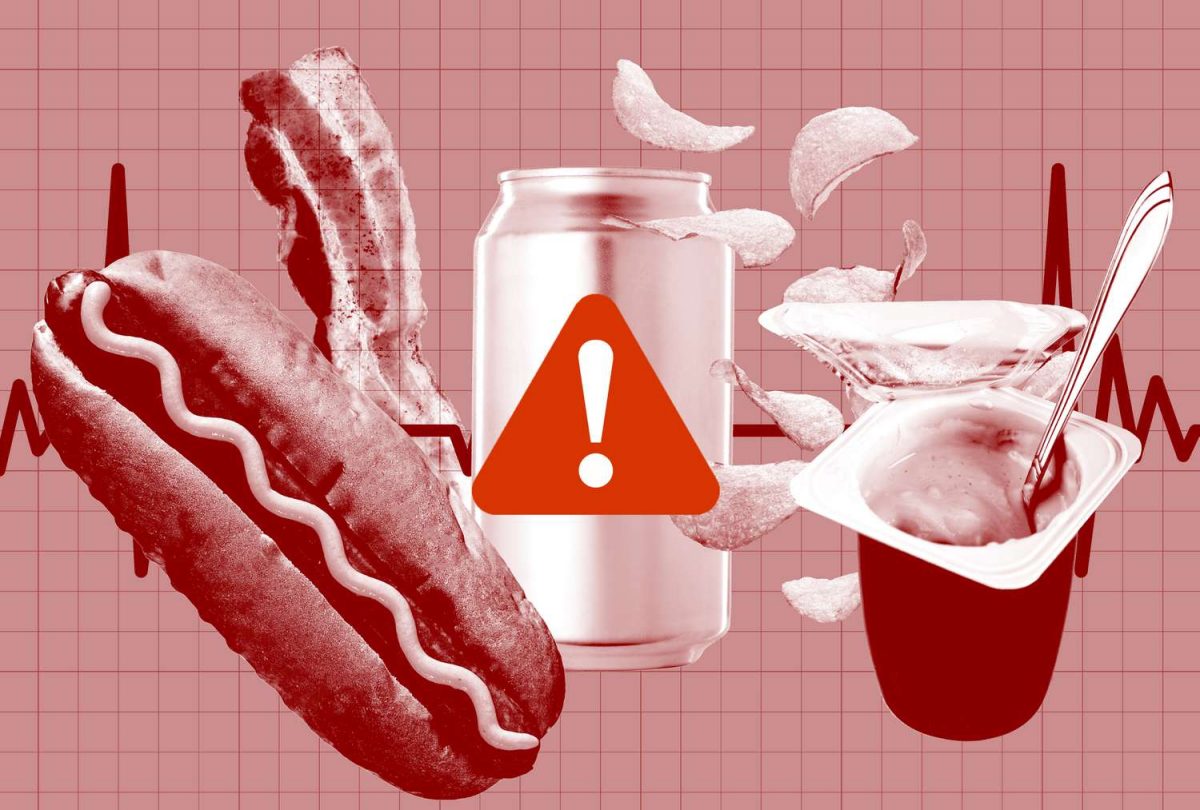
These are generally industrial formulations containing ingredients or additives that wouldn’t commonly be used in a home kitchen. Examples can include soft drinks, packaged snacks, confectionery, instant noodles, some ready-to-eat meals and reconstituted meat products.
That seems straightforward until you start applying the classification to an actual grocery store.
Things get messy surprisingly quickly.
Your Whole-Grain Bread Might Be Ultra-Processed
Here’s where the TikTok version begins falling apart.
Depending on its ingredients and how it was manufactured, packaged whole-grain bread may qualify as ultra-processed.
So might flavoured yogurt.
Breakfast cereal.
Plant-based milk.
Protein bars.
Some meat alternatives.
Certain high-fibre cereals.
Meanwhile, foods that aren’t classified as ultra-processed aren’t automatically nutritional superstars.
Butter isn’t suddenly broccoli because it sits in a different processing category.
That’s because NOVA wasn’t designed primarily as a nutrient-ranking system. It classifies food according to processing.
This distinction matters.
Imagine comparing a high-fibre whole-grain breakfast cereal with a bottle of sugary soda. Both could fall within the broad ultra-processed category, yet pretending they’re nutritionally equivalent isn’t particularly useful.
It’s one reason researchers continue debating how we should interpret the category and whether all ultra-processed foods should be treated similarly. Critics of NOVA have also pointed to difficulties consistently classifying some foods.
That doesn’t make the concept useless.
It means we need nuance.
Nutrition’s least marketable word.
The Health Evidence Still Deserves Attention
Here’s the other mistake we shouldn’t make.
Recognizing limitations in the definition of ultra-processed foods doesn’t mean dismissing the research showing associations with poorer health.
A major 2024 umbrella review published in The BMJ examined 45 pooled analyses involving almost 10 million participants. Greater exposure to ultra-processed food was associated with higher risk across 32 of the 45 health outcomes examined. The strongest evidence included associations involving cardiovascular disease-related mortality, type 2 diabetes and several other outcomes.
That’s significant.
But there’s an important scientific distinction between association and causation.
Much of the long-term evidence comes from observational research. Researchers examine what people eat and track health outcomes over time. These studies can reveal important patterns, but separating ultra-processing itself from the overall nutritional characteristics and lifestyles associated with high-UPF diets is difficult.
The same BMJ review rated only four of its pooled analyses as moderate-quality evidence under the GRADE framework. Twenty-two were considered low quality and 19 very low.
So “scientists have proven all ultra-processed food causes disease” would be an exaggeration.
“There’s enough evidence to take high consumption seriously” is much more reasonable.
Why Might Ultra-Processed Foods Be a Problem?
This is one of the big unanswered questions.
Is there something uniquely harmful about ultra-processing itself?
Or do people who eat lots of ultra-processed foods simply tend to consume more calories, added sugar, sodium and refined carbohydrates while eating less fibre, fruit and vegetables?
The answer may eventually turn out to be some combination of factors.
Many ultra-processed foods are engineered to be incredibly easy and pleasurable to eat. They’re soft, convenient, calorie-dense and often combine fat, refined carbohydrates, salt and flavourings in ways that encourage us to keep eating.
Think about the difference between eating a baked potato and eating potato chips.
Nobody has ever accidentally eaten seventeen baked potatoes while watching Netflix.
There are also questions about food structure, additives, emulsifiers and how processing changes the way nutrients are absorbed. These are active areas of research, and we shouldn’t pretend every mechanism has already been settled.
Convenience Isn’t a Moral Failure
There’s another problem with telling everyone to simply eliminate ultra-processed foods.
It ignores how people actually live.
People work long hours. Parents have children to feed. Food is expensive. Not everyone has access to a full grocery store, a large kitchen or several hours every Sunday to meal prep aesthetically pleasing glass containers.
Convenience matters.
The BMJ researchers themselves noted that public-health strategies need to consider access to fresh food and the additional time, effort and, in some situations, cost involved in preparing less-processed meals.
A jar of pasta sauce can help someone get dinner on the table.
Frozen meals can be useful on busy evenings.
Whole-grain packaged bread makes breakfast easier.
A protein bar might be considerably more practical than carrying grilled chicken around in your pocket.
We should be able to discuss nutrition without attaching moral value to convenience.
Don’t Let an Ingredient List Scare You
Another popular social-media rule is avoiding anything containing ingredients you don’t recognize.
That sounds sensible until you remember that chemistry doesn’t become dangerous simply because its vocabulary is unfamiliar.
An ingredient with a long scientific name isn’t automatically harmful, just as something being “natural” doesn’t automatically make it healthy.
What matters is what the ingredient does, how much is present and what evidence exists about its safety.
This doesn’t mean ingredient lists are useless.
They can help you compare products. You might notice one cereal contains considerably more added sugar than another or choose a bread where whole grains appear prominently.
But counting ingredients isn’t a scientifically meaningful shortcut to determining whether a food is healthy.
Five ingredients aren’t automatically good.
Fifteen aren’t automatically bad.
Look at the Whole Food Instead
For everyday grocery shopping, a more practical approach may be combining awareness of processing with what we already know about nutrition.
Rather than asking only, Is this ultra-processed?, ask a few additional questions:
- Does it provide fibre?
- Is it high in added sugar or sodium?
- Does it provide useful protein or other nutrients?
- Will it help me eat more fruits, vegetables, legumes or whole grains?
- How often am I eating it?
- What does the rest of my diet look like?
Suddenly a packaged whole-grain bread and a bag of candy don’t look particularly similar anymore, even if both technically meet a processing definition.
Context matters.
The 80/20 Approach Makes More Sense Than Fear
You don’t need to identify the NOVA classification of everything you eat.
You probably already know what a generally nutritious diet looks like.
Build most meals around vegetables and fruit, whole grains, beans and lentils, nuts and seeds, quality protein sources and minimally processed foods when practical.
Cook when you can.
Use convenient foods when they make life easier.
Enjoy chips sometimes.
Eat the cookie.
The goal isn’t achieving a perfect processing score.
If a large percentage of your diet consists of sugary drinks, packaged snack foods, fast food and ready-to-eat products while fruits, vegetables, legumes and whole grains rarely make an appearance, there’s good reason to change that balance.
But swapping a nutritious packaged yogurt for plain yogurt because TikTok told you the first one was “toxic” probably isn’t where your nutritional energy needs to go.
We Don’t Need Another Food Fear
Nutrition advice has spent decades giving us things to be afraid of.
Fat was bad.
Then carbs were bad.
Sugar became toxic.
Gluten briefly appeared responsible for almost everything.
Seed oils are currently enjoying their turn as the internet’s nutritional supervillain.
Now processing risks becoming another shortcut for dividing foods into morally good and bad categories.
We can do better than that.
The research on ultra-processed foods is important and increasingly difficult to ignore. Diets dominated by them appear to be associated with poorer health, and understanding why should remain a major research priority.
But that’s very different from saying every food classified as ultra-processed is equally harmful or that anything manufactured in a factory should be avoided.
The Bottom Line on Ultra-Processed Foods
Maybe the most sensible lesson from the research isn’t particularly revolutionary.
Eat more actual plants.
Cook more often when you realistically can.
Get enough fibre.
Choose whole grains.
Eat beans, lentils, nuts and seeds.
Limit sugary drinks and foods that provide lots of calories without much nutritional value.
And don’t panic because your whole-grain bread contains an emulsifier.
Healthy eating isn’t determined by whether every ingredient in your kitchen would have been available to your great-grandmother.
It’s determined by the overall pattern of what you eat.
Unfortunately, “eat mostly nutritious food, enjoy some less-nutritious food and don’t obsess about individual ingredients” doesn’t make a particularly dramatic 30-second TikTok.
It does, however, make considerably more sense.