
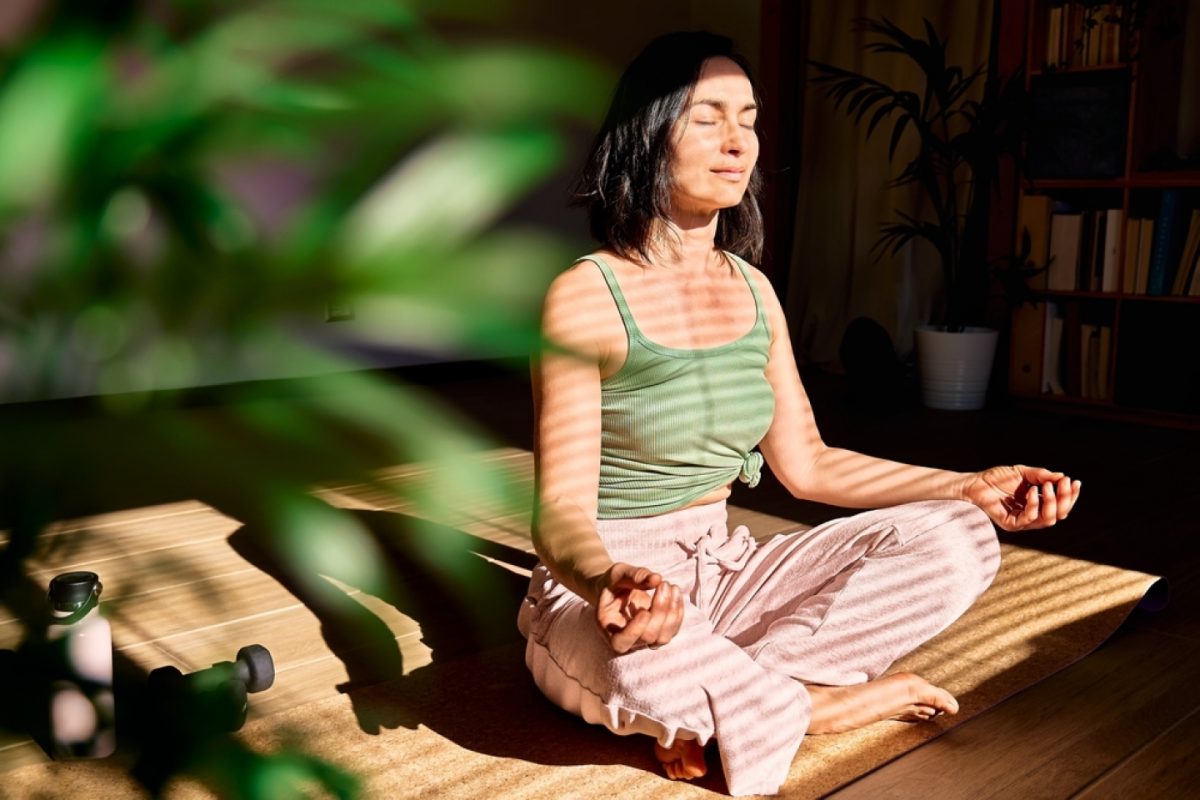

Creating a mindful relaxation routine isn’t about doing more — it’s about slowing down with intention. In a world that constantly demands your attention, having a simple way to reset your mind and body can make a meaningful difference.
Among the culprits that prevent relaxation are caffeine and nicotine. As the most common stimulants, they both block adenosine, a brain chemical that is responsible for building pressure to sleep and signals the body that it’s time to rest. In addition, both raise levels of cortisol, the “stress hormone” in your body, and push the nervous system chemically into a state of activity instead of relaxation. It turns into a vicious cycle because people often use caffeine and nicotine to manage their stress, without realizing these substances are reinforcing their stress levels.
To exit this cycle, it’s important to first understand the physiology of relaxation and then to gradually replace your undesired habits with healthy ones.
What Research Says About Relaxation and Stress
Research in neuroscience and psychology shows that intentional relaxation practices can help regulate the nervous system by reducing cortisol levels and activating the parasympathetic “rest and digest” response. Even short periods of mindful activity — such as slow breathing, walking, or journaling — can improve mood, increase focus, and support long-term mental wellbeing.
Build a digital sunset
Your brain doesn’t simply transition from being active to calm. It goes through a series of brainwave states – from high-beta (alert and processing information) then down through alpha and theta (relaxed and slightly drowsy). The thing is, blue light from your computer, phone, and tablet interrupts this descent by halting melatonin production. And melatonin is how your body knows that it’s time to start getting to sleep.
So get to that one hour before bed, with no exceptions. Screen free, as in not even glance. This isn’t about being a better person because you spend less time staring at a screen – it’s about giving your circadian rhythm the signaling chemicals it needs to properly function. Also, dim your overhead lights. Most people are floored at how much faster they drift when that 60 minutes is spent under warm, low light. It’s way more effective than you’re guessing.
Replace the ritual, not just the substance
Many people don’t use stimulants for the stimulant itself, but for the associated behavior – taking a break, bringing their hand to their mouth, or having a moment from work. When individuals go cold-turkey giving up caffeine or nicotine, they realize they also miss the habit which goes along with the drug.
Instead of relying on willpower, sensory substitution can come to the rescue. The idea is to fulfill the habit-forming cue without the stimulant that breaks sleep and drives up your heart rate. Herbal teas provide a hot liquid and hand-to-mouth action to emulate sipping a warm beverage. Controlled breathing repeats the breathing in and blowing out movement of smoking.
For those who want to continue the vaping or smoking ritual without the added stimulant, nicotine-free vape options from HealthVape preserve the inhalation habit while leaving out the psychostimulant. The ritual of hand-to-mouth is replicated, while the adenosine blockade is not.
Use breathing to force the shift
Taking deep breaths isn’t helpful simply because breathing slowly calms you down. Deep breaths work because they restore the ideal balance of oxygen and carbon dioxide in your system, and signal your parasympathetic nervous system to chill out if everything’s basically okay.
Doctor-developed box-breathing cues like this: breathe in for four seconds, hold for four, exhale for four, and hold that exhale for four before breathing in again. Four parts, all the same length, hence the box. It’s basically a form of meditation. The popular 4-7-8 method has you breathing in for four, holding for seven, and exhaling for eight. They – whoever “they” are – say it’s the extended exhale that lowers your heart rate most effectively.
Micro-rest over marathon recovery
A study conducted by the American Psychological Association found that 45% of adults report lying awake at night due to stress. Interestingly, research shows that individuals who use active relaxation techniques to cope with stress have significantly fewer physical stress symptoms than those who use passive distractions.
The problem with passive distractions is that they don’t metabolize the cortisol in your system. Overall, your cortisol level is too high for deep, restorative sleep because you didn’t spend enough of the day “resting” in some form. Watching a movie or TV show is partially engaging but also somewhat worrying (life is happening to the characters when they don’t want it to), so it’s not fully engaging in the way that creative expression or problem-solving is. It’s also not restful like a good book might be.
Micro-rest – two to five minutes of complete stillness – is enough to turn the system down before it turns you off in the middle of your life. System resets throughout the day are the best way to make sure stress doesn’t compound. A refreshing walk to plan the day in the morning or a minute of deep breathing before you pull out of the work parking lot can total a few minutes minimum of deliberate recovery spread across your day.
Adaptogens and supplements worth considering
Ashwagandha is the most studied herb in modulating cortisol response and does cushion the increase in cortisol levels induced by stress. It is not sedative. It decreases reactivity (hyper-reactivity) which also has the potential to strengthen the feedback systems stopping us from producing high levels of stress hormones in response to a stressor. Vitamin B12 does help in the regulation of energy and doesn’t cause extreme crashes that lead to exhaustion, as is the case with caffeine, making it ideal for someone looking to discontinue the use of stimulants. Aromatherapy with lavender or bergamot oil modulates the parasympathetic nervous system and does promote relaxation, although not to the extent of having a narcotic impact.
They can all help you build a healthier routine. They can’t create one on their own.
The real difference is until you get better at investing in relaxation, you’ll have to be willing to treat it like any other skill that requires effort. Create the context for it. Swap out the crutches for healthier habits. Give yourself the right environment to relax. Your body can take care of the rest if you let it.