


When comparing reading paper books vs digital devices, the mental health and focus benefits of print often stand out.
Most of us read all day.
Emails.
Texts.
Headlines.
Captions.
Comments.
But reading a paper book is different.
It asks you to slow down. To sit. To focus on one voice, one idea, one page at a time. No notifications. No hyperlinks. No tabs competing for your attention.
And increasingly, people are rediscovering that reading print books — not just reading anything — changes how they feel mentally.
Let’s talk about why.
Reading Paper Books vs Digital: What’s the Difference?
Reading on your phone or tablet is convenient. E-readers are lightweight. Audiobooks are portable. There’s no denying the access digital offers.
However, when we compare reading paper books vs digital ones, research and lived experience both suggest meaningful differences in:
- Focus and retention
- Mental fatigue
- Emotional immersion
- Sleep quality
- Stress levels
The issue isn’t that digital reading is “bad.” It’s that screens are layered with distraction.
When you read on a phone, even in airplane mode, your brain associates the device with:
- Alerts
- Messages
- Dopamine spikes
- Task-switching
A paper book carries none of that history. It’s cognitively quieter.
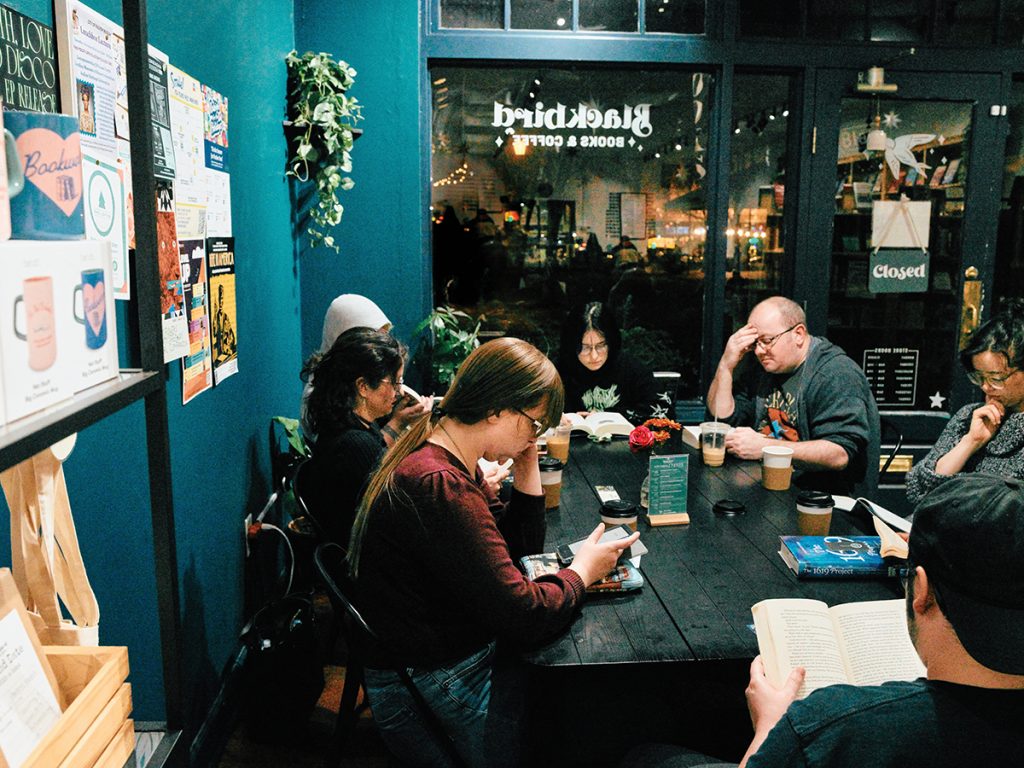
How Reading Paper Books vs Digital Impacts Mental Health
1. Deeper Focus
When you read a paper book, your attention narrows. There are no pop-ups. No backlit glow. No infinite scroll. This supports sustained attention — a skill that has quietly eroded in a notification-driven world.
Over time, reading print strengthens:
- Concentration
- Patience
- Cognitive endurance
It’s like endurance training for your brain.
2. Better Retention and Comprehension
Multiple studies suggest that people often retain information better when reading in print compared to digital formats — especially for longer texts.
Why?
Because paper reading:
- Slows you down
- Engages spatial memory (you remember where something was on the page)
- Reduces skimming behaviour
Digital reading encourages scanning. Print invites absorption.
3. Reduced Mental Fatigue
Screens emit blue light and require constant micro-adjustments from your eyes. Even if you don’t notice it consciously, digital reading can feel mentally “noisier.”
Paper books reduce:
- Eye strain
- Cognitive overload
- Subtle task-switching
Reading print feels calmer because it is calmer.
4. Emotional Regulation
There’s something grounding about holding a physical book. The weight. The texture. The turning of pages.
Reading fiction in particular improves empathy and emotional awareness. And when done in print — without background notifications — immersion deepens.
It becomes an experience, not just consumption.
5. Better Sleep
Reading on a phone in bed exposes you to light and the temptation to keep scrolling.
Reading a paper book:
- Signals wind-down time
- Reduces screen exposure before sleep
- Creates ritual
Many people who switch from phone reading to print report falling asleep faster and sleeping more deeply.
Why We Drifted Toward Digital (And Why It’s Understandable)
Phones are always with us. Books are not.
Digital reading is:
- Portable
- Instant
- Space-saving
- Often cheaper
But convenience doesn’t always equal mental benefit. In the same way we’re rethinking screen time more broadly, many people are re-evaluating how and where they read.
This shift is part of a larger return to analog living — choosing slower, more intentional habits in a fast environment.
How to Read More Paper Books (Without Making It Complicated)
If you want to shift from digital to print reading, you don’t need a dramatic lifestyle overhaul.
Start small.
1. Create a Device-Free Reading Spot
Choose one chair or corner in your home that’s:
- Screen-free
- Well-lit
- Comfortable
Keep a book there at all times. When your phone is not within reach, your focus naturally improves.
2. Replace 15 Minutes of Scrolling
Don’t eliminate digital reading entirely. Replace a small portion of it.
Try:
- Reading 15 pages before bed
- Bringing a paperback to a coffee shop
- Reading during your commute (if possible)
Small swaps compound.
3. Make It Visible
Keep books:
- On your coffee table
- Beside your bed
- In your bag
If it’s visible, you’ll reach for it.
4. Join a Book Club
Reading becomes easier when it’s social.
Book clubs:
- Provide accountability
- Encourage discussion
- Deepen understanding
- Create community
It doesn’t have to be formal. A small group of friends meeting monthly works beautifully.
If you’re craving a real-world way to put this into practice, we’re hosting our first Slow Sunday Gathering on March 15 from 4–6pm at Fawkes Café. The first hour is dedicated to quiet, analog time — bring a paper book, journal, or sketchpad and unplug completely (yes, no phones). The second hour opens up for relaxed connection, light conversation, or even a board game if that’s your style. It’s a simple way to protect your attention, reset your nervous system, and experience what reading offline actually feels like in community. You can find the registration link in our bio or on our events page.
Opportunities in Edmonton to Get Back to Print
If you’re looking to lean into a more analog reading habit, Edmonton offers plenty of options.
Visit Your Local Library
The Edmonton Public Library is one of the most powerful analog lifestyle resources in the city.

Beyond lending books, EPL offers:
- In-person book clubs
- Author talks
- Quiet reading spaces
- Community events
Libraries remove financial barriers and make print accessible.
Explore Independent Bookstores
Supporting local bookstores strengthens community and keeps analog culture alive.
A few worth visiting:
Audrey’s Books
An Edmonton staple known for curated selections and thoughtful staff recommendations.
Daisy Chain Book Co
Small, beautifully curated, and community-focused — ideal for discovering something unexpected.
The Edmonton Book Store
A treasure trove of used and rare books for those who love hunting for hidden gems.
Walking into a bookstore slows you down. It invites browsing rather than scrolling.
Start or Join a Local Reading Group
Community leagues, cafés, and libraries often host informal book discussions.
Alternatively, start your own:
- Choose a theme (fiction, nonfiction, local authors)
- Meet monthly
- Keep expectations relaxed
Analog connection amplifies analog habits.
Digital Reading Isn’t the Enemy
This isn’t about declaring digital reading wrong. E-readers are useful. Audiobooks are valuable. Accessibility matters. The question is balance.
If your entire day is screen-based, adding one analog ritual can be surprisingly powerful.
Paper reading gives your brain a different kind of input — slower, deeper, quieter. And in a world optimized for speed, quiet depth feels different.
A Small Experiment
Tonight, instead of reaching for your phone in bed, try this:
Pick up a paper book.
Read ten pages.
Notice how your body feels.
You might find:
- Your breathing slows
- Your thoughts settle
- Time stretches differently
Reading print books won’t fix everything. But it might restore something subtle — your ability to sit with one idea at a time.
And that skill? That’s future-proof.
Top 5 Books to Read This Spring (To Reset Your Mind and Energy)
Spring feels like possibility. The light lingers longer. The air softens. Energy shifts.
It’s the perfect season to read something that feels expansive — not heavy winter introspection, but not summer fluff either. Spring books should feel like open windows.
Here are five books that pair beautifully with longer evenings, slower mornings, and fresh-start energy.
1. Braiding Sweetgrass
If spring had a literary soulmate, this might be it.
Part science, part memoir, part philosophy, this book gently reframes how we see nature, reciprocity, and our place in the world. It’s reflective without being preachy.
Best read:
- In small sections
- With a notebook nearby
- On a quiet Sunday afternoon
Spring invites us back outside. This book deepens that experience.
2. The Comfort Crisis
Winter makes us comfortable. Spring reminds us we’re capable of more.
This nonfiction read explores how modern comfort has made us softer — physically and mentally — and how deliberate discomfort can sharpen resilience and focus.
It’s motivating without being extreme.
If you’re thinking about:
- Moving more
- Getting outside
- Trying something new
This is a strong seasonal nudge.
3. The Paris Library
Spring is a beautiful season for immersive fiction.
This novel blends history, courage, and the power of books during difficult times. It’s layered but accessible, emotional without being overwhelming.
It also quietly celebrates reading itself — which makes it perfect for anyone leaning into an analog lifestyle.
Pair it with:
- A local coffee shop
- A sunny park bench
- Or your favorite chair at home
4. Wintering
Yes, technically it’s about winter — but spring is the best time to read it.
This book reframes hard seasons of life not as failures, but as necessary pauses. Reading it in spring creates a powerful contrast — you begin to see your own “winter” differently.
It’s thoughtful, calm, and grounding.
And it pairs beautifully with reflection about where you’re headed next.
5. Atomic Habits
If spring energy makes you want to reset routines, this is the practical choice. It’s straightforward and highly actionable — but the magic is in applying it slowly.
Instead of dramatic life overhauls, this book supports:
- Small habit shifts
- Environmental design
- Sustainable momentum
Which, honestly, is very spring.
How to Choose the Right Spring Read
Instead of asking, “What should I read?” try asking:
- What kind of energy do I need right now?
- Do I want reflection or momentum?
- Fiction escape or practical structure?
- Something slow or something sharp?
Spring is about expansion — not pressure.
Make It Analog This Season
If you’re inspired to pick up one of these books, try reading it in print.
Visit your local bookstore. Browse. Touch the covers. Ask for recommendations. Or head to the Edmonton Public Library and wander the shelves.
There’s something about walking out with a physical book in your hands that feels aligned with the season. Longer light. Slower evenings. Fewer screens.
Spring is a reset — and a good book is one of the simplest ways to begin.