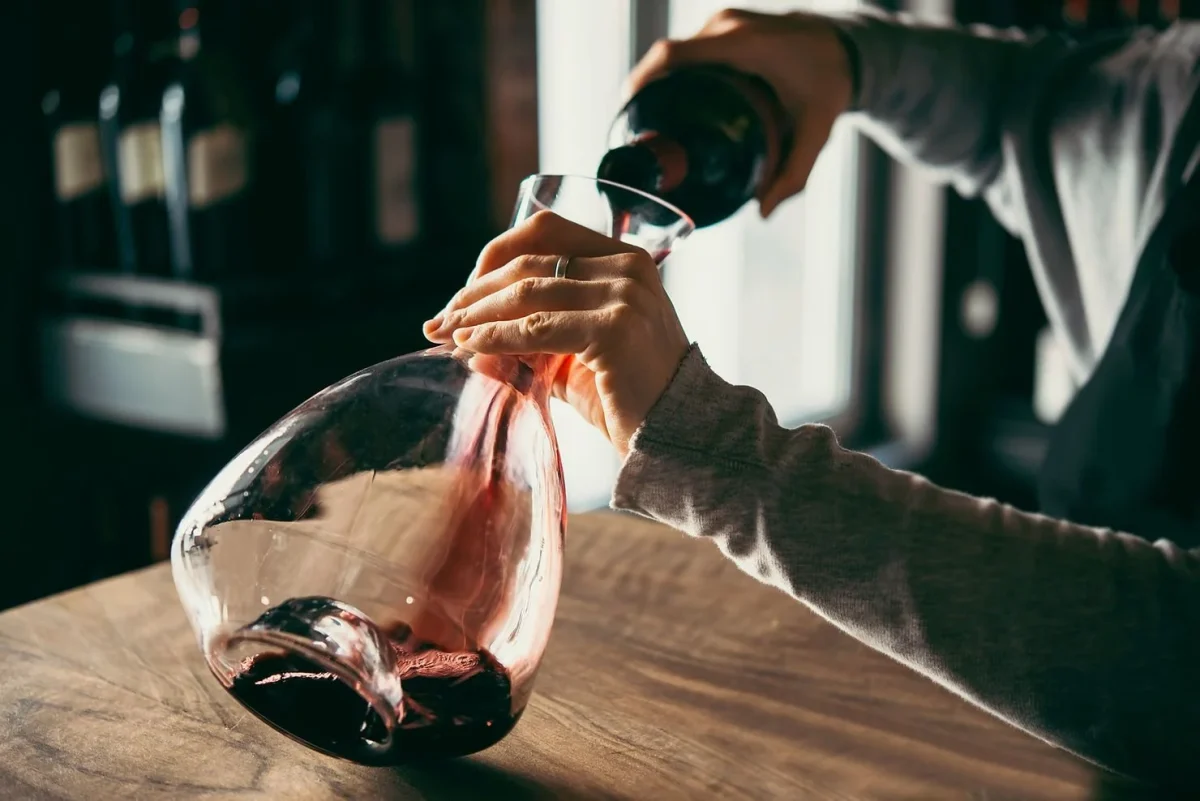

When to decant wine is a question that often arrives with a very attractive object. A glass vessel appears on the table, the bottle is poured with considerable seriousness and everyone understands that something important is happening. Whether the wine needed that step is a separate matter.
As fall dinners move indoors, a decanter can be part of an enjoyable hosting ritual. It can also be an unnecessary complication for an everyday bottle. Understanding the purpose helps you decide whether to use it, rather than assuming every red wine needs a compulsory waiting period.
Start with two different questions. Does the bottle contain sediment you want to leave behind? And are you deliberately experimenting with how exposure to air affects the wine? Those are distinct reasons, and they call for different decisions.
Give the decanter a job
WSET’s questions and answers on wine service explains that some wines develop a deposit and may be decanted to separate it. Many everyday wines are unlikely to need that step. It also notes that aeration as a reason for decanting is debated and that there is no universal timing rule for young wines.
For a shopper or host, this means the first task is understanding the bottle. Ask whether it is likely to have sediment and whether the producer or retailer suggests any particular service approach. A specific answer is more helpful than a general rule about all red wines.
If you are opening a straightforward dinner bottle with no deposit, serving it directly may be entirely appropriate. The absence of a decanter does not make the evening less thoughtful. You can put the saved effort toward making sure everyone has a comfortable seat.
Separate sediment from aeration
Sediment gives decanting a clear practical purpose: you want the liquid in one vessel and the deposit left behind. That is different from pouring the wine broadly to expose it to air. The handling should reflect which outcome you want.
If sediment is involved, follow suitable guidance for the bottle and move it gently. Pour slowly and watch as the deposit approaches, stopping before it enters the receiving vessel. If the bottle is unfamiliar, a knowledgeable retailer can explain an appropriate approach.
Avoid combining every piece of wine advice into one ritual. A method designed to disturb a young wine as much as possible is not the same as carefully separating an older wine from a deposit. Identifying the purpose prevents the procedure from becoming contradictory.
Be cautious with a bottle you cannot replace
If you have saved an older or particularly meaningful bottle, ask for advice before opening it. Explain what it is, how it has been stored and whether you can see sediment. An expert with information about that wine can give more useful guidance than a generic countdown.
Do not assume that an older bottle needs hours of air simply because it has spent years closed. More time is not automatically an improvement. The practical decision should account for the wine itself and the reason you are using a decanter.
You can also plan the meal around a simple service approach rather than building pressure around a special bottle. Have an ordinary alternative available if needed, and let the evening remain enjoyable even if the wine behaves differently from your expectations.
Try a small comparison with an everyday wine
If you are curious about aeration, use a familiar, replaceable bottle. Taste a small amount when you open it and make a brief note. If you choose to decant some, compare later with the original impression. You are asking whether you notice a change you enjoy.
Keep the comparison modest. You do not need to open several bottles or drink more to complete the exercise. Share small tasting amounts with interested adults or use a spittoon if you are concentrating on assessment. It is fine to stop when the curiosity has been satisfied.
Try to keep serving conditions similar. If one sample is much warmer, your comparison includes more than the effect of air. Be honest about that limitation. A casual experiment can still be useful without claiming to settle a scientific debate.
Notice rather than perform
Describe what you smell and taste in ordinary language. Has a particular aroma become easier to identify? Does the wine seem different with the food? Do you actually prefer it, or are you looking for a change because you expect the decanter to deliver one?
The WSET guide to tasting wine offers a structured way to consider appearance, aromas and palate. A simple version can help you make comparisons without reaching for impressive vocabulary.
You can conclude that you noticed very little. That is a valid observation. You can also find that the bottle was enjoyable immediately. Neither result means you have missed an essential part of being a wine drinker. The best service choice is one that contributes something useful to your experience.
Keep equipment clean and practical
Use a clean vessel appropriate for food and drink, with no lingering detergent smell. Consider whether you can comfortably pour from it and clean it afterward. A dramatic shape may look appealing while making those everyday tasks more difficult.
You do not need to buy the most elaborate option before learning whether you use a decanter regularly. Borrowing a suitable one or choosing a straightforward design can let you explore the practice without making it an expensive commitment.
If the piece is awkward to handle, practise pouring water first. A dinner party is an unnecessarily exciting setting to discover that the elegant object behaves like a badly designed watering can. Function matters, especially when the table is already crowded.
Remember that service is only part of enjoyment
Clean glasses, appropriate temperature and a wine you enjoy can matter more to your evening than an extra pouring step. Ask about those basics when buying the bottle. A useful conversation considers the whole experience rather than focusing on one accessory.
WSET’s explanation of why wine is aged also shows that maturation is a process with its own purposes. A brief encounter with air should not be treated as a substitute for ageing or a guaranteed way to transform a bottle.
For your next Edmonton dinner at home, decide whether the decanter has a clear role. Use it when it helps, experiment when you are curious and leave it in the cupboard when the bottle is ready to enjoy. Wine service can be thoughtful without becoming ceremonial, and dinner can begin before anyone starts a stopwatch.