
A small space home workout begins with a question that fitness videos rarely address: where does the coffee table go? The room on screen has excellent lighting, an empty floor and apparently no other purpose. Your room contains furniture, a pet, yesterday’s mail and someone who would like to watch television.
As Edmonton moves toward winter, having an indoor exercise option can make your routine more flexible. That option does not require a dedicated gym room. It requires enough suitable space for the activity you choose, a safe arrangement and a way to start without rearranging the entire household.
The best setup is one you can use repeatedly. Before buying equipment, consider what you want to do, what your home can accommodate and what will make the routine easier for everyone sharing the space.
Choose the activity before the equipment
Start with a movement plan that fits your ability and preferences. You might want familiar strength exercises, comfortable mobility work or an indoor option for moving during the day. Each calls for a different amount of space and preparation.
If you are unsure what movements are suitable, get instruction from a qualified professional. Tell them that you want options for the space you actually have. A programme designed around a full gym is unlikely to become convenient simply because you purchased one resistance band.
The CDC’s explanation of what counts as physical activity includes different ways to be active and strengthen muscles. You have options beyond a particular online routine. Choose movements you understand and can perform comfortably rather than trying to reproduce everything happening on a screen.
Check the usable space
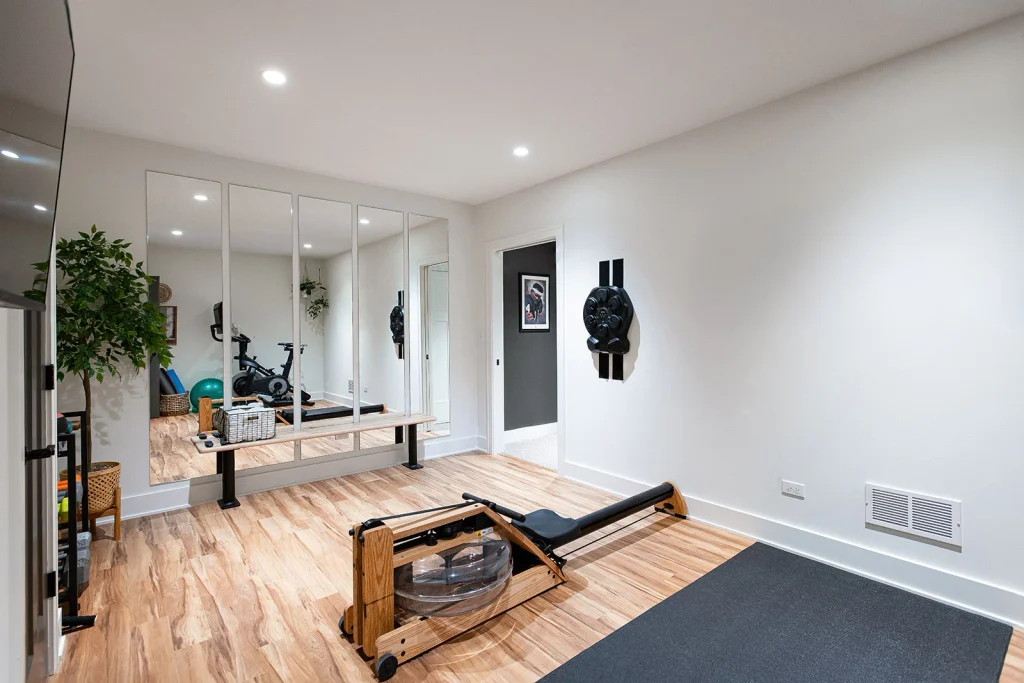
Stand where you intend to exercise and look around. Is the floor clear and stable? Can you move without striking furniture? Are there rugs that may shift, loose cords or objects within reach? Consider the full movement, not just whether a mat can fit between the sofa and the wall.
If an exercise uses a chair or other support, make sure it is appropriate and stable for that purpose. A piece of furniture that works for sitting may not suit every exercise. Avoid improvising supports or attachment points without suitable guidance.
Think about overhead space as well. Lights, shelves and low ceilings can limit movement. The goal is a predictable environment where you can concentrate on the activity. If the room cannot support an exercise comfortably, choose a different movement rather than trying to squeeze it in.
Consider the people around you
In an apartment, jumping and heavy impacts may be inconvenient for neighbours and unsuitable for your space. You can ask an instructor for lower-impact options that fit your goals. A quieter routine can still be challenging; noise is not a required measure of effort.
Within the household, agree on a useful time. You might need twenty minutes with the room available, while another person needs a quiet call or a clear route through it. A simple conversation can prevent the workout from becoming a daily conflict over furniture and floor space.
Keep children and pets out of the immediate exercise area when needed. Store equipment safely afterward, especially anything that could create a trip hazard or be misused. Sharing a home means the routine should include putting the space back into ordinary use.
Buy only what solves a clear problem
A mat, appropriate resistance or another small item may help, but begin with the activities you have chosen. Ask what equipment is actually needed and what specifications matter. Buying a bundle of accessories can leave you with storage problems and no clearer plan.
Consider where each item will live. If getting ready requires searching three cupboards, the setup may discourage use. Keep suitable equipment accessible while following storage guidance and protecting it from damage. A container in a sensible location may be enough.
Before buying used equipment, assess its condition and whether you can verify that it is appropriate to use. A low price is not helpful if the item is unstable, damaged or wrong for the movement. Be particularly careful with anything that bears weight or needs secure installation.
Make the starting routine brief
Choose a simple beginning that tells you the session is underway. Clear the space, put on appropriate footwear or clothing and open the plan you intend to follow. Have water nearby if you want it. Remove the decisions that otherwise consume your available time.
Keep a written or saved version of exercises you have already learned. You should not have to browse for a new video every time. That search can turn a twenty-minute opportunity into an extended tour of people else’s beautifully organised homes.
The NIH Physical Wellness Toolkit discusses practical surroundings and habits as part of supporting health. A useful home application is to prepare the environment so the activity is easier to begin, then adjust based on what gets in the way.
Give the session a smaller version
Some days offer less time or energy. Decide in advance what a shorter session could look like, using familiar movements and an appropriate workload. The shorter option should be straightforward enough that you can choose it without negotiating with yourself for fifteen minutes.
It does not have to match the effect of the full workout. Its value may be maintaining familiarity and providing movement on a busy day. Your longer-term plan can still include sessions elsewhere and other forms of activity.
If you are unwell, injured or experiencing concerning symptoms, adapt or pause and seek advice as appropriate. A home routine should be flexible enough to reflect your condition. Keeping a streak is not a reason to ignore what your body is telling you.
Put a boundary around digital guidance
Online classes can be convenient, but assess whether the instructor explains options and technique clearly. Choose content suited to your experience rather than a session selected only because it promises dramatic results. Pause when needed, and do not feel obliged to follow the pace exactly.
Keep the device where you can see or hear it without awkwardly turning during movements. If you spend the entire exercise craning toward a small phone, the arrangement needs adjustment. Learn the sequence before trying to move quickly through it.
Treat comparison as optional. The person demonstrating has a different background, body and job. Your useful question is whether the session fits you and whether you can perform it appropriately.
Review the setup after a few uses
Ask what actually helped. Did storage make preparation faster? Was the time convenient? Did the space feel safe? Was the activity enjoyable enough to repeat? Change the practical issue you noticed before adding more equipment.
A workable home exercise space can be modest. It may appear for half an hour and disappear again when the room returns to family life. That is enough. You have created a useful option for October and the months ahead, without requiring your home to audition for a fitness catalogue.