
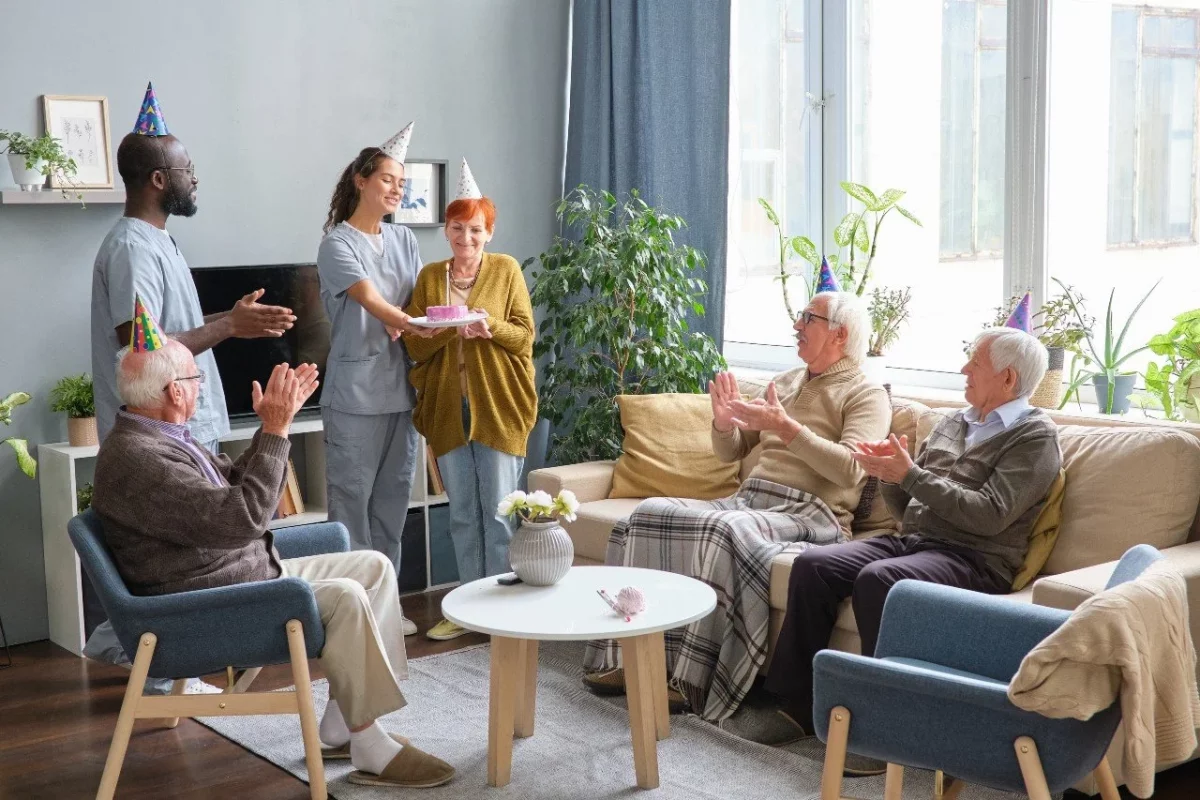

The most difficult aspect of moving a parent into memory care isn’t the bureaucracy or the expense; it’s the sense that you’re making a trade: their freedom for their safety. Contemporary memory care design throws down the gauntlet to that trade-off. Today’s best facilities don’t decide between safety and independence, they create conditions in which they coexist.
Invisible Architecture Does the Heavy Lifting
The old model of memory care was anchored in physical and pharmaceutical restraint. Locked doors. Constant supervision. Minimal stimulation. The real-world effect, tragically, was to make people with dementia so anxious and agitated that they were routinely medicated into stupor. Meanwhile, the dementia progressed faster. All considered, the model was safe and clean in a narrow, deeply offensive sense. We could do better by imprisoning fewer felons.
The new model takes a different view of safety, its practitioners say. Last year, one of America’s largest dementia-care providers, Silverado, and the architecture firm D2, which designs many of its facilities, published a manifesto of sorts in Healthcare Design Magazine. Safety, they wrote, “begins with the reduction and/or elimination of physical and chemical restraints and the freedom from psychotropic medications.”
Over the past decade, architects thanklessly striving for these aims have largely reconceived the routine institutional architecture of memory care. First, they eliminated sensical catalysts of anxiety. Researchers estimate that as many as 75 percent of people with dementia who attempt to leave a memory-care unit believe that they are returning to an earlier, happier place, but they are often stopped by a key code or alarm. So new buildings hide the exits. A door might appear to be a bookshelf or a pantry or a fake garden wall. Or, sometimes, an exit is not hidden. It’s left wide open. Because it leads not into the outside world, where certain harm might lie, but into a calm garden courtyard.
Positive Risk-Taking Isn’t Negligence
In clinical settings, we often strive to remove all possible risks. A resident who wishes to help fold laundry might be instead redirected because it is too unsafe or because they might potentially drop something. That’s not the right way to weigh the risks and benefits.
Positive risk-taking and allowing residents to engage with meaningful but familiar tasks, like helping with the laundry, tending a small garden, even handling some aspects of food preparation, do so even if the task performance is imperfect or slow. The rewards well outweigh the risks. Environmental modifications and person-centered care in dementia units can reduce the frequency of agitation and neuropsychiatric symptoms by 30% (The Lancet Public Health). Engagement with activities of meaning and purpose can drive that change.
The right formulation here is “calibrated” risk, not zero risk. And it’s important to note that the number of staff available in relation to the number of residents is critical. To truly support independence, there must be enough staff on the floor to allow a resident with low vision, for instance, to continue to look through their family photos even though it poses a possible risk over time that the photos will become too tattered and they will upset by that. Staff must be present to guide, reorient, console in the moment, and to come back the next day to simultaneously mitigate that future upset and encourage the continued engagement.
Technology Creates Space Without Removing Oversight
Passive monitoring has shifted what supervision means. Fall detection sensors in floors, or discreetly worn, can send a staff alert within seconds of a fall. So, you don’t have to send someone to physically check a resident every 20 minutes, and residents get more real private time in quarters. Wearable GPS does that for taking a stroll. Secure gardens and courtyards are now memory care 101, and they’re seriously worth your time and attention. Fresh air and daylight help regulate sleep, lower cortisol, and lower the incidence of behavioral outbursts. If your loved one can’t go outside, these issues are likely part of the equation. It’s not a treat; it’s a tool of the trade.
The dementia “village” model developed in the Netherlands goes a step further, creating a sort of secure “neighborhood” within the care center where a resident can wander outside to visit a little café or common shop. The village model hasn’t scaled, yet, but it’s influenced how many facilities think about programming and space.
Finding the Right Fit Requires Local Expertise
There is no one-size-fits-all solution here, either. Some communities will be well-equipped to stay with a resident as they age; some will not. Families navigating these decisions benefit from working with advisors who know which local facilities actually deliver on these promises. Dementia care services Minneapolis can connect families with senior living advisors who have direct knowledge of which communities have invested in person-centered design and which haven’t caught up yet.
Safety and Freedom Aren’t Opposites
Instead, families should ask whether the places they’re considering are secure in the right way and for the right reasons. Enclosed courtyards, security devices, and well-trained staff are all necessary components of physical safety and psychological comfort, but they’re meaningless without the inward, mental feedback loop that confirms a person can wear their slippers all day long if they choose.