
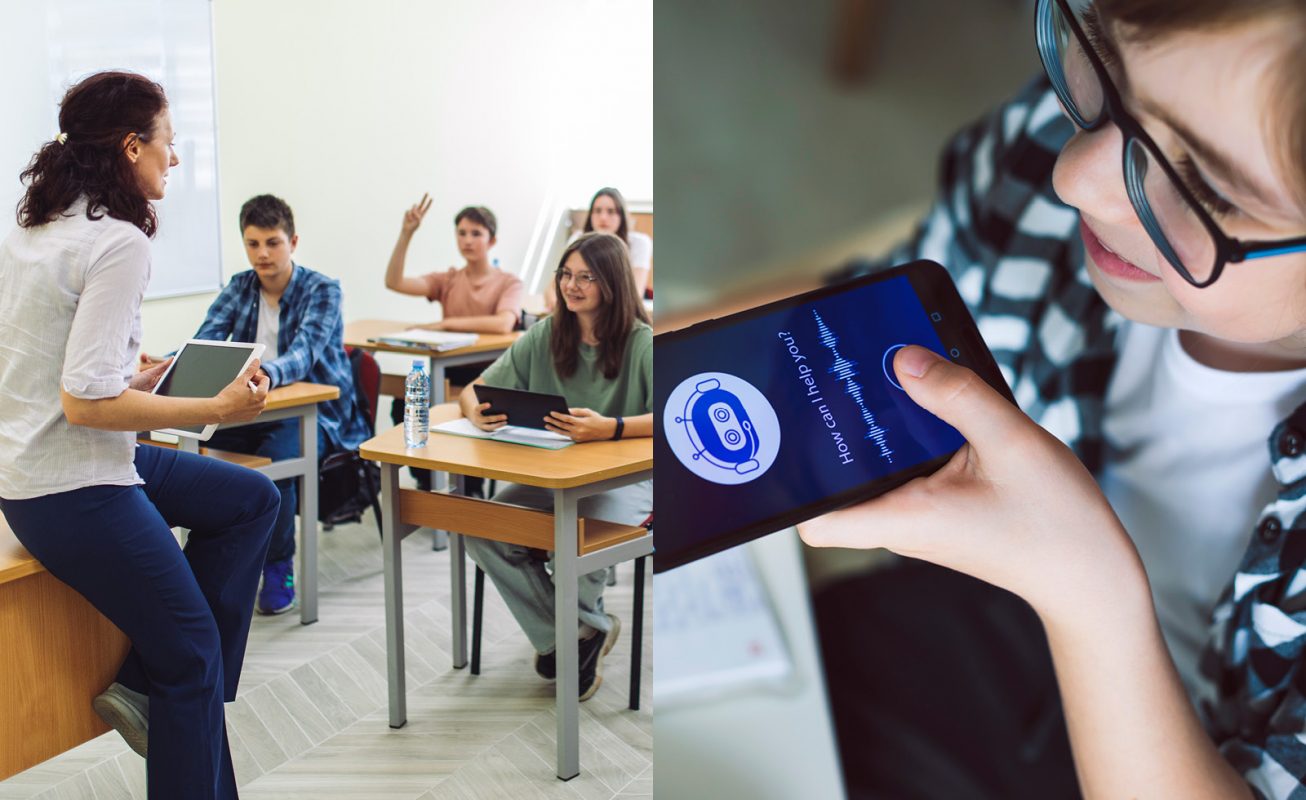

The conversation around screens and children’s mental health has intensified in recent years, especially as AI tools become more integrated into classrooms and daily life.
Screens are everywhere — classrooms, homes, pockets, backpacks, wrists. Artificial intelligence now sits quietly behind search engines, homework helpers, writing tools, and learning platforms, offering instant answers with astonishing confidence.
None of this is inherently bad.
Technology has opened doors to access, creativity, and connection that previous generations could only imagine. But there’s a growing concern among educators, psychologists, and parents alike:
What happens when screens — and now AI — begin to replace the cognitive struggle that learning actually requires?
Because learning isn’t just about answers.
It’s about thinking.
And thinking takes time, effort, frustration, and boredom — the very states screens are designed to eliminate.
How Screens Affect Children’s Mental Health
Over the past decade, children’s daily screen time has increased dramatically. Screens now dominate:
- Education
- Entertainment
- Social interaction
- Homework
- Relaxation
At the same time, we’ve seen sharp increases in:
- Anxiety and depression
- Attention difficulties
- Emotional dysregulation
- Sleep disturbances
- Reduced resilience to stress
While screens are not the sole cause, research increasingly shows strong correlations between excessive screen exposure and poorer mental health outcomes in children and adolescents.
One of the most concerning shifts isn’t just how much screen time children have — but what kind of cognitive engagement screens replace.
What Screens Displace: The Hidden Cost
Every hour spent on a screen is an hour not spent doing something else.
That “something else” often includes:
- Free, imaginative play
- Face-to-face conversation
- Deep reading
- Physical movement
- Problem-solving without hints
- Boredom (which fuels creativity)
These experiences are not optional extras. They are foundational to brain development.
When screens dominate, children lose opportunities to practice:
- Sustained attention
- Emotional regulation
- Independent thinking
- Frustration tolerance
- Social nuance
And this shows up clearly in classrooms.
The Impact on Skills Required in School
Teachers across North America report similar patterns, regardless of grade level or subject area.
Students are increasingly struggling with:
- Following multi-step instructions
- Reading for meaning
- Writing coherent explanations
- Persisting through challenging problems
- Thinking through ambiguity
- Generating original ideas
These are not intelligence issues. They are skill erosion issues.
Learning requires effort. Screens optimize for ease.
Attention Is the First Casualty
Digital platforms are built to capture and retain attention through:
- Rapid feedback
- Novelty
- Infinite scrolling
- Visual stimulation
School learning, by contrast, requires:
- Sustained focus
- Delayed gratification
- Mental effort
- Sitting with uncertainty
When children are conditioned to constant stimulation, traditional learning environments can feel intolerably slow — even when the material is appropriate.
Where AI Enters Children’s Learning and Mental Health
Artificial intelligence adds a new layer to this issue — one that deserves careful thought rather than blind enthusiasm.
AI tools can:
- Instantly generate answers
- Solve complex problems
- Write essays
- Summarize readings
- Explain concepts clearly
For adults, this can be a powerful support tool.
For children, especially during formative learning years, the risks are significant if AI is used as a replacement rather than a support.
When AI Solves the Problem, the Brain Doesn’t
Cognitive development depends on productive struggle — the act of wrestling with a problem long enough for understanding to form.
If a child:
- Asks AI to solve a math problem
- Uses AI to write an assignment
- Relies on AI to explain instead of grappling
- Accepts generated answers without evaluation
They may complete the task — but they bypass the learning.
This creates the illusion of competence without the foundation.
Critical Thinking Requires Friction
Critical thinking develops when students must:
- Analyze information
- Question assumptions
- Make mistakes
- Revise thinking
- Explain reasoning
AI removes friction. Learning needs it.
Without intentional boundaries, AI risks becoming:
- A shortcut culture
- A dependency tool
- A thinking substitute
And once dependency forms, it’s hard to reverse.
The Emotional Impact of Outsourced Thinking
There’s also an emotional and psychological cost to over-reliance on AI.
Children who don’t practice thinking through challenges may develop:
- Lower confidence in their own reasoning
- Avoidance of difficulty
- Anxiety when answers aren’t immediate
- Reduced sense of competence
Struggle, when age-appropriate, builds resilience.
Removing struggle removes growth.
The Impact of AI on Critical Thinking Skills
The concern isn’t just academic performance — it’s future readiness.
The skills most needed in adulthood are not factual recall. They are:
- Problem-solving
- Judgment
- Creativity
- Adaptability
- Ethical reasoning
- Interpersonal skills
Ironically, these are the very skills that automation cannot replace — and the ones most threatened when thinking is outsourced too early.
In the Workplace
Future adults who rely on AI for answers may struggle when:
- Problems don’t have clear inputs
- Situations require judgment
- Context matters
- Ethics are involved
- Human nuance is required
AI can assist — but it cannot replace thinking responsibility.
In Civic and Social Life
A population less practiced in critical thinking is more vulnerable to:
- Misinformation
- Manipulation
- Oversimplified narratives
- Reduced civic engagement
Democracy depends on people who can evaluate information, not just consume it.
This Is Not an Anti-Technology Argument
It’s important to be clear: technology and AI are not the enemy.
The problem is uncritical adoption without developmental guardrails.
Used well, AI can:
- Support differentiated learning
- Help explain difficult concepts
- Assist teachers with planning
- Provide accessibility tools
But for children, especially in elementary and middle years, AI should support thinking — not replace it.
What Children Actually Need More Of
The solution is not banning screens entirely. It’s rebalancing.
Children need:
- More unstructured time
- More hands-on learning
- More reading without shortcuts
- More discussion
- More problem-solving without hints
- More boredom
- More face-to-face interaction
They need adults who value process over speed.
What Parents and Educators Can Do
Adults play a critical role in shaping how technology is used.
Helpful questions include:
- “How did you figure that out?”
- “What do you think comes next?”
- “What part was hardest?”
- “What would you try if you didn’t have a device?”
These questions reinforce thinking, not just answers.
Teaching AI Literacy, Not AI Dependence
If children use AI, they should also learn:
- How AI generates responses
- Why it can be wrong
- How bias enters systems
- Why human judgment still matters
AI literacy should strengthen critical thinking — not erode it.
Why This Matters for Mental Health
Mental health isn’t just about emotions. It’s about agency.
Children who feel capable of thinking, solving, and understanding develop:
- Confidence
- Emotional resilience
- Self-trust
When thinking is outsourced, agency weakens.
And agency is protective.
What Research Says About Screens and Children’s Mental Health
Research into screens and children’s mental health has grown significantly over the past decade. Studies suggest that excessive screen time — particularly unstructured or passive consumption — may be associated with increased anxiety, reduced attention span, sleep disruption, and difficulty with emotional regulation. While screens themselves are not inherently harmful, how they are used matters greatly.
Sleep researchers have noted that blue light exposure before bed can interfere with melatonin production, affecting both sleep quality and mood. Other studies point to the impact of constant notifications and fast-paced digital content on developing attention systems, particularly in younger children whose executive functioning skills are still forming.
When it comes to AI-powered learning tools, emerging research highlights both promise and concern. AI can personalize education and provide instant feedback, but overreliance may limit opportunities for struggle-based learning — the kind of productive challenge that builds resilience and critical thinking. The key takeaway from current research is not to eliminate technology, but to use it intentionally and developmentally appropriately.
A Slower, More Human Path Forward
Learning is not meant to be efficient.
It’s meant to be formative.
Children don’t need faster answers.
They need deeper understanding.
They don’t need constant stimulation.
They need space to think.
Technology will continue to evolve. AI will become more powerful. Screens will not disappear.
The question is whether we design childhood — and education — in a way that preserves what makes humans capable of navigating complexity.
Because the future doesn’t belong to those who can generate answers instantly.
It belongs to those who can think well when answers aren’t obvious.
Frequently Asked Questions About Screens and Children’s Mental Health
There is no single number that applies to every child, but experts recommend balancing screen use with sleep, physical activity, and in-person interaction.
AI tools can support learning when used properly, but overreliance may reduce opportunities to practice problem-solving and critical thinking skills.
Excessive or unregulated screen use has been linked to increased anxiety, sleep disruption, and reduced attention span in some children.
Setting boundaries, modeling healthy behaviour, and encouraging offline activities can help children build a balanced relationship with technology.