
We have a strange relationship with exercise.
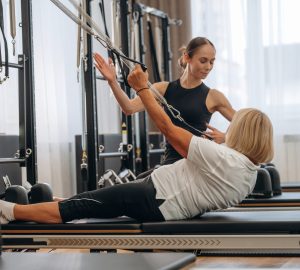
Somewhere along the way, we decided that if a workout doesn’t involve changing clothes, driving to a gym, exercising for 45 minutes and emerging sweaty enough to justify a shower, it probably doesn’t count.
No time for all that? Maybe tomorrow.
But what if your approach to fitness looked less like three large meals and more like snacking throughout the day?
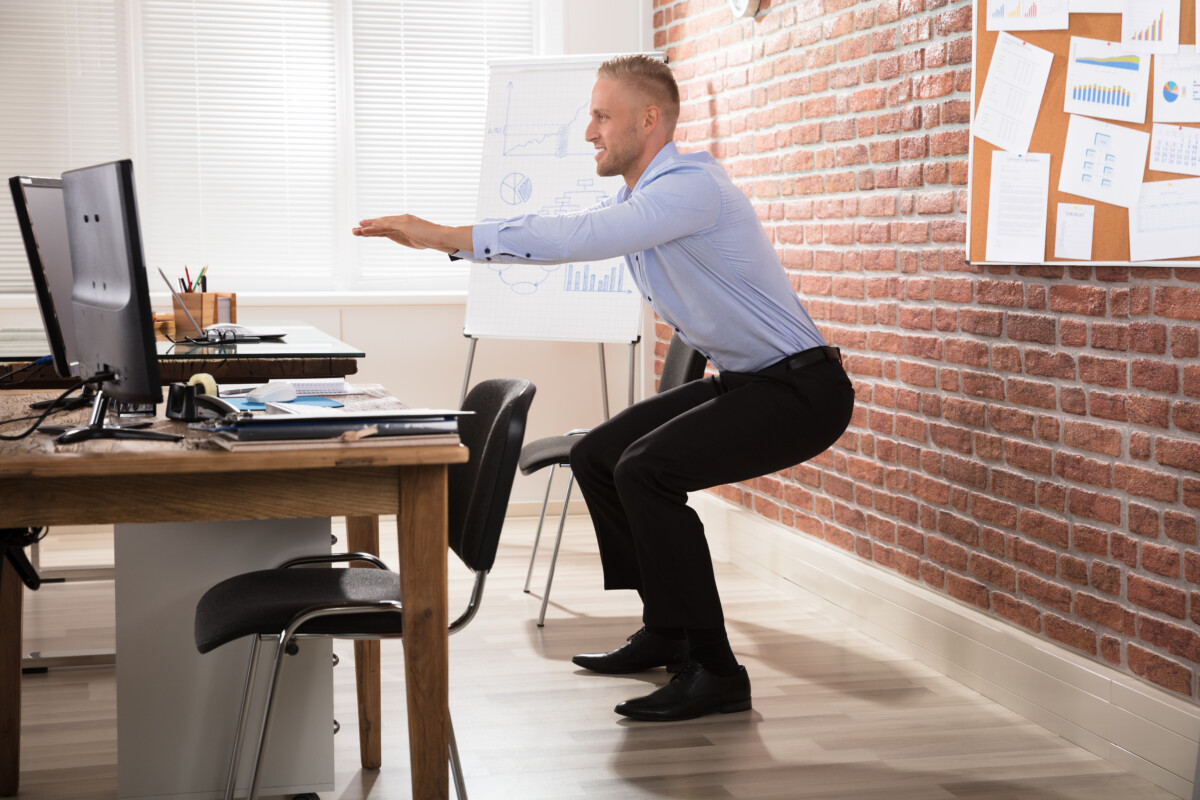
That’s the idea behind exercise snacks: short bursts of intentional movement scattered throughout your day rather than relying exclusively on longer, structured workouts. You might climb the stairs quickly for two minutes, perform five minutes of bodyweight exercises between meetings, take a brisk walk around the block or do a few squats while waiting for dinner to cook.
It sounds almost too easy.
After years of being told we need long workouts to improve our health, can five minutes of exercise really accomplish anything?
Increasingly, research suggests the answer is yes.
That doesn’t mean five minutes magically replaces a complete fitness routine. But the emerging science around short bouts of physical activity is challenging one of fitness culture’s most persistent assumptions: exercise doesn’t have to be long to matter.
And for people who struggle to find time for traditional workouts, that could change everything.
What Exactly Is an Exercise Snack?
Thankfully, an exercise snack has nothing to do with eating a protein bar while walking on a treadmill.
The term generally refers to brief bouts of physical activity performed periodically throughout the day. Rather than completing one continuous 30- or 60-minute workout, you accumulate movement in smaller pieces.
An exercise snack could be:
- Five minutes of brisk walking
- A few flights of stairs
- Bodyweight squats and lunges
- Push-ups against a wall, desk or floor
- A short mobility routine
- A quick burst on a stationary bike
- Carrying groceries home rather than driving
- Walking quickly up a hill
The intensity can vary considerably. Some research has specifically examined short bursts of vigorous activity, while other work supports the broader idea that accumulating movement throughout the day matters.
The concept is appealing because it removes one of the biggest barriers people report when it comes to exercise: time.
Finding an uninterrupted hour can be difficult.
Finding five minutes is considerably harder to argue with.
We Used to Think Exercise Had to Be Longer
For years, physical activity recommendations placed considerable emphasis on sustained bouts of exercise. The thinking was that activity needed to continue for a certain amount of time before it provided meaningful health benefits.
That has changed.
Current World Health Organization recommendations emphasize that all physical activity counts, whether it happens through exercise, transportation, work, household activities or everyday movement. Adults are still encouraged to accumulate 150 to 300 minutes of moderate-intensity aerobic activity per week, or 75 to 150 minutes of vigorous activity, alongside muscle-strengthening exercise.
The difference is that we no longer need to assume those minutes only matter if they’re packaged into traditional workouts.
That opens the door to a much more flexible approach.
A ten-minute walk before work counts. So does walking quickly to pick up lunch. Taking the stairs contributes something. Five minutes of movement between meetings contributes something too.
Rather than thinking of exercise as something that happens only at the gym, physical activity can become something we accumulate throughout our day.
The Research on Tiny Bursts Is Surprisingly Interesting
One of the most fascinating areas of research involves something scientists call vigorous intermittent lifestyle physical activity, thankfully shortened to VILPA.
Think of it as accidental high-intensity interval training.
Running to catch a bus. Quickly climbing several flights of stairs. Carrying something heavy. Power-walking up a steep hill.
Researchers examining more than 25,000 people who didn’t regularly exercise found that participants who accumulated just a few short bursts of vigorous activity throughout the day had substantially lower mortality risks than those who did none.
The median amount wasn’t 30 minutes.
It was around four to five minutes per day.
That’s an observational finding, so it doesn’t prove that four minutes of rushing up stairs directly causes someone to live longer. People who naturally move vigorously throughout the day may differ in other ways from people who don’t.
But the association is compelling, particularly because wearable devices allowed researchers to capture tiny bursts of activity that traditional exercise questionnaires often missed.
It suggests that the body notices movement even when your fitness app doesn’t congratulate you for completing a workout.
Five Minutes Can Challenge Your Heart
The important word in much of this research is intensity.
Walking casually around your kitchen for five minutes isn’t physiologically equivalent to climbing stairs quickly for five minutes.
When movement becomes more vigorous, your heart rate increases, breathing becomes harder and your cardiovascular system has to respond.
That means a small amount of challenging movement can create a surprisingly significant stimulus.
Recent wearable-device research has strengthened the idea that intensity matters. Vigorous activity appears to deliver health benefits more efficiently per minute than moderate or light movement.
This doesn’t mean every exercise snack needs to leave you gasping for air.
It means that when time is limited, occasionally increasing the intensity of a short bout can make those minutes more meaningful.
Take the stairs rather than the elevator—and take them with some purpose.
There’s your snack.
No gym bag required.
Exercise Snacks Can Break Up Sitting
There’s another reason short bouts of movement make sense that has nothing to do with replacing workouts.
Many of us sit far too much.
We sit while working, commuting, watching television and scrolling through our phones. You can even complete a hard workout at 6 a.m. and then spend most of the remaining day sitting at a desk.
Exercise snacks create natural interruptions in that sedentary time.
Instead of remaining seated for three or four hours, you might get up every hour and move for several minutes.
Walk around the building. Do some squats. Climb the stairs. Stretch your hips. Walk outside and back.
The individual activity may seem insignificant, but you’ve changed the pattern of your day from sit, sit, sit, sit, workout to something much more active.
That’s an important distinction because excessive sedentary behaviour is independently associated with poorer health outcomes.
They May Help With Blood Sugar Too
Short bouts of activity around meals are another particularly interesting area of research.
When we eat carbohydrates, blood glucose rises and the body releases insulin to help move glucose into cells. Contracting muscles can also take up glucose, which is one reason physical activity can influence blood sugar regulation.
Research has found that short bouts of exercise can improve measures of post-exercise glucose control, although the ideal timing, intensity and exercise type continue to be studied.
Practically, this gives us another reason to embrace the simple after-dinner walk.
You don’t necessarily need to turn it into a training session.
Eat dinner. Put on your shoes. Walk around the neighbourhood for ten minutes.
It’s movement, fresh air and a break from the screen—and your body doesn’t care whether Strava knows about it.
The Psychological Benefit Might Be Just as Important
Exercise snacks also remove one of the biggest psychological barriers to becoming more active: the all-or-nothing mentality.
We often tell ourselves:
“I don’t have time to work out today.”
What we usually mean is:
“I don’t have 45 uninterrupted minutes to work out today.”
Those are two very different statements.
If exercise has to be a major production, it’s easy to skip it when life becomes busy. But five minutes feels manageable.
And once you start moving, something interesting often happens.
Five minutes becomes ten.
A walk around the block becomes two.
You do a few squats and decide to add some push-ups.
The hardest part of exercise is frequently starting, and exercise snacks dramatically lower that barrier.
What Could an Exercise-Snack Day Look Like?
You don’t need to schedule seven miniature workouts into your calendar. The easiest approach is attaching movement to things you already do.
A typical workday might look like this:
Morning: Take five minutes to do squats, lunges and some mobility after getting dressed.
Mid-morning: Walk briskly outside or climb several flights of stairs.
Lunch: Take a ten-minute walk after eating.
Afternoon: Get up from your desk for five minutes of movement rather than automatically checking your phone.
Evening: Walk around the neighbourhood after dinner.
None of those activities is particularly impressive on its own.
Together, however, you’ve potentially accumulated 25 to 30 minutes of additional movement without ever finding a traditional 30-minute exercise window.
Repeat that pattern regularly and those minutes begin adding up.
Strength Training Can Be Snacked On Too
Exercise snacks don’t have to be exclusively cardiovascular.
You can apply exactly the same idea to strength.
Imagine doing three short sets of squats while making coffee in the morning. Push-ups before your shower. Calf raises while brushing your teeth. A couple sets of split squats while dinner is cooking.
Is that the ideal program for maximizing strength and muscle?
Probably not.
But that’s the wrong comparison.
The useful comparison is between doing something and doing nothing.
For someone who currently performs no resistance training, small bouts of bodyweight exercise can provide a starting point. As fitness improves, resistance can increase through dumbbells, bands or more challenging variations.
Eventually, you may decide that dedicated strength sessions make sense.
The exercise snack got you through the door.
But Five Minutes Isn’t a Fitness Loophole
This is where social media will inevitably ruin a perfectly sensible idea.
Exercise snacks aren’t proof that nobody needs to work out anymore.
Five minutes of movement doesn’t provide every benefit of a balanced fitness program. Longer aerobic sessions develop endurance in ways a two-minute stair climb can’t. Progressive resistance training is still important for maintaining muscle and strength. Balance and mobility deserve attention as we age.
Adults should still work toward recommended overall physical activity levels and include strength training at least twice per week.
Think of exercise snacks as an addition, an entry point or a backup plan rather than a magical replacement for everything else.
If you already exercise regularly, they can reduce the amount of time you spend sedentary.
If you’re struggling to exercise at all, they can make starting feel possible.
And on the day when life completely blows up your planned workout?
Five minutes is still considerably better than zero.
Stop Waiting for the Perfect Workout
Perhaps the most valuable thing about exercise snacks isn’t physiological at all.
They change how we think about movement.
Fitness doesn’t have to happen inside a gym. It doesn’t require matching workout clothes, a smartwatch or an hour blocked off in your calendar.
Sometimes fitness is simply choosing to move when you otherwise wouldn’t.
Take the stairs.
Walk after lunch.
Do ten squats while the coffee brews.
Carry the groceries.
Bike somewhere you’d normally drive.
Spend five minutes moving instead of five minutes scrolling.
Those choices don’t look particularly impressive on Instagram, which may be exactly why they’re so useful.
Because improving your health was never supposed to be a performance.
And your body doesn’t care whether you exercised for five minutes or fifty before deciding those minutes count.
It just knows that you moved.