
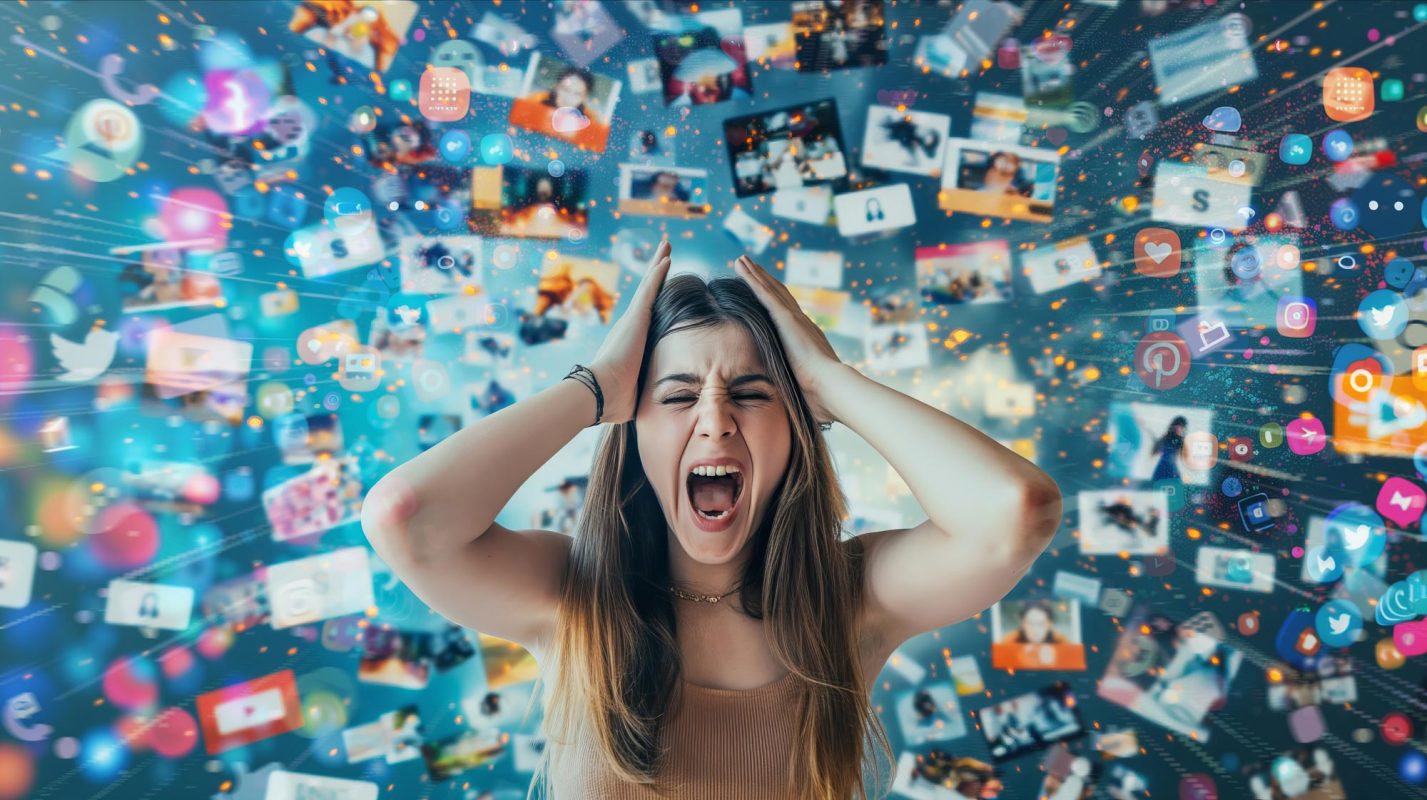

The relationship between constant notifications and mental health is becoming impossible to ignore. From text messages and emails to social media alerts and app reminders, our attention is being pulled in dozens of directions every day—and it’s taking a toll on our focus, energy, and emotional wellbeing.
For many of us, this constant stream of interruptions has become so normal that we barely notice it anymore. Notifications are woven into the fabric of modern life. They help us stay connected, informed, and organized. They remind us of appointments, alert us to messages from people we care about, and keep us up to date with the world around us.
But what if the very things designed to make our lives easier are quietly making us more anxious, distracted, and mentally exhausted?
The hidden cost of constant notifications isn’t simply that they steal a few seconds of our attention. It’s that they slowly chip away at our ability to focus, rest, and be present. Over time, they can contribute to a state of low-level mental overload that many of us have come to mistake as normal.
The Attention Economy Is Competing for Your Brain
Every notification that lights up your phone is asking the same question:
“Pay attention to me. Right now.”
That’s not an accident.
Modern apps and platforms are designed around the attention economy. The longer they can hold your focus, the more likely you are to engage, click, purchase, or return later. Your attention has become one of the most valuable commodities in the digital world, and countless companies are competing for it every day.
The problem is that our brains aren’t particularly well suited to this constant state of interruption.
Although many of us pride ourselves on being excellent multitaskers, research suggests that what we’re actually doing is rapidly switching between tasks. Every time we pause to check a notification, our brain must disengage from one activity and reorient itself to another. Even if the interruption only lasts a few seconds, there is a cognitive cost associated with making that transition.
Over the course of a day, those small moments accumulate. You may not notice it immediately, but by evening, the mental fatigue begins to show up as irritability, forgetfulness, difficulty concentrating, or the sense that you’re exhausted despite never having done anything physically demanding.
Why Notifications Feel Impossible to Ignore
If notifications leave us feeling stressed, why do we keep checking them?
Part of the answer lies in how our brains process reward.
Dopamine is often referred to as the brain’s “feel-good” chemical, but researchers now understand that it’s more closely linked to anticipation and motivation. A notification carries the possibility of something rewarding. It might be good news, a message from a loved one, validation through likes and comments, or information that feels urgent or important.
The uncertainty is what makes it powerful.
Psychologists call this a variable reward system. It’s the same principle that makes slot machines so compelling. Most notifications aren’t especially meaningful, but occasionally one delivers something we genuinely value. Because we don’t know which one that will be, our brains become conditioned to keep checking.
This doesn’t mean technology is manipulating us against our will. It simply means that our brains respond predictably to unpredictable rewards. Understanding that dynamic can help explain why so many of us instinctively reach for our phones even when we know there’s probably nothing urgent waiting for us.
The Link Between Notifications and Anxiety
One of the less obvious effects of constant notifications is the way they shape our emotional state.
When our devices are always demanding our attention, they create a subtle sense that we should always be available. There’s always another message to answer, another email to read, another headline to process. Even during moments of rest, part of our brain remains on standby, waiting for the next interruption.
Over time, this can keep our nervous systems in a state of heightened alertness.
Many people report experiencing:
- Increased feelings of anxiety
- Difficulty relaxing or “switching off”
- Trouble concentrating on one task
- Sleep disruptions
- A persistent sense of being overwhelmed
It’s not necessarily that any one notification is stressful. Rather, it’s the cumulative effect of never feeling fully off duty.
Our brains need periods of focused attention and periods of genuine recovery. Constant interruptions interfere with both.
What We’re Losing in the Process
Perhaps the greatest cost of notification overload isn’t what it adds to our lives. It’s what it quietly takes away.
When our attention is constantly fragmented, we lose opportunities to immerse ourselves in activities that require depth and presence. We struggle to sink into meaningful conversations without glancing at our phones. We find it harder to read a book, sit with our thoughts, or simply notice what’s happening around us.
We also lose something increasingly rare: boredom.
Boredom has an unfortunate reputation, but psychologists have long understood its value. Moments of mental downtime often foster creativity, reflection, and problem-solving. Some of our best ideas emerge while walking, showering, driving, or staring out the window—not while responding to notifications.
Without those quiet spaces, our brains never fully process, wander, or recover.
Why Notifications Are So Hard to Resist
Notifications tap into the brain’s reward systems by introducing novelty and unpredictability. Because we don’t know whether the next alert will contain something important, exciting, or socially rewarding, our brains become conditioned to check repeatedly. This cycle can make it increasingly difficult to sustain attention on a single task.
Reclaiming Your Attention
The solution isn’t to throw your phone into the North Saskatchewan River.
Technology isn’t inherently harmful, and for many of us, it plays an essential role in our personal and professional lives. The goal isn’t disconnection for the sake of disconnection. It’s intentional use.
Small changes can have a surprisingly significant impact:
- Turn off notifications from apps that don’t genuinely add value.
- Create phone-free periods during meals, walks, and workouts.
- Use “Do Not Disturb” settings strategically.
- Keep your phone out of sight during conversations.
- Leave space in your day without constant digital input.
These changes aren’t about restriction. They’re about choice.
They allow you to decide when and how your attention is directed rather than outsourcing that decision to whatever app happens to buzz next.
Why Offline Moments Matter
This growing awareness around digital overwhelm is one reason so many people are gravitating toward offline experiences.
Community walks. Fitness classes. Book clubs. Farmers markets. Dinner with friends. Slow mornings without immediately reaching for a screen.
At YEG Thrive, it’s also part of the reason we created the Offline Collective. We weren’t interested in rejecting technology altogether. Instead, we wanted to create opportunities for people to reconnect with themselves, their communities, and one another without the constant pull of notifications.
Because sometimes the most powerful thing you can do for your mental health isn’t downloading another mindfulness app.
It’s silencing your phone long enough to have a real conversation, take a walk through the river valley, or simply sit in a café without feeling the need to document the moment.
Final Thoughts
Notifications aren’t the villain of modern life. They help us stay informed, maintain relationships, and navigate increasingly busy schedules. But like many tools, they work best when used intentionally.
If you’ve been feeling mentally drained, distracted, or unusually anxious, it may be worth paying attention to how often your attention is being pulled in different directions throughout the day.
You don’t need to become a digital minimalist overnight. You don’t need to disappear from social media or stop answering texts.
You may simply need a little more quiet.
A few fewer alerts. A few more uninterrupted conversations. A few more moments where your attention belongs entirely to you.
Because your focus is finite. Your energy is precious. And your mental health deserves more than whatever happens to buzz first.