
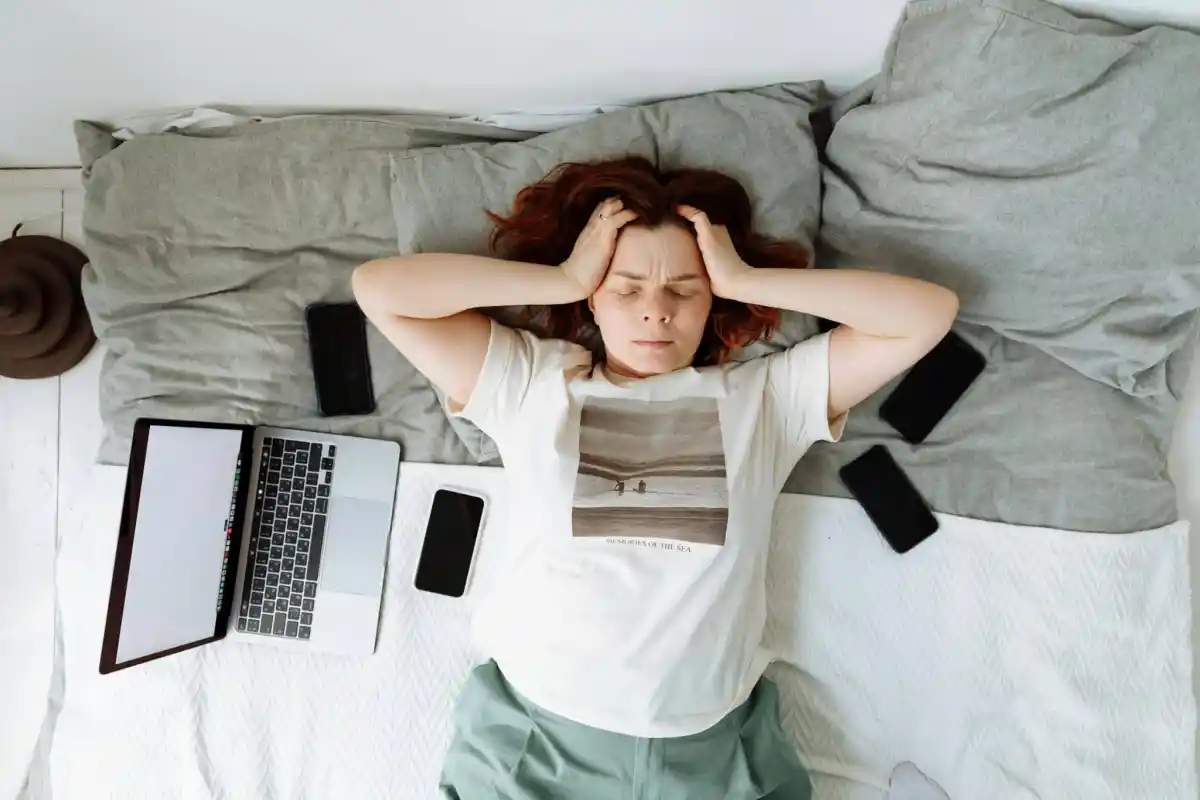

Screen overstimulation has become one of the biggest hidden drains on energy, focus, and mental clarity in modern life. Many people mistake this constant exhaustion for laziness when it’s actually a nervous system overloaded by nonstop stimulation.
They feel:
- Mentally drained
- Unmotivated
- Foggy
- Weirdly tired all the time
Even after resting.
And because modern culture loves turning every human experience into a productivity problem, the conclusion many people land on is:
“I’m lazy.”
But what if you’re not lazy at all?
What if your brain is just completely overloaded?
Because there’s a very real difference between being unmotivated… and being overstimulated.
And right now, most of us are absolutely cooked.
Your Brain Wasn’t Designed for This Much Input
Think about how much information your brain processes in a single day now.
Before you even leave bed, you might:
- Check Instagram
- Read texts
- Open emails
- Watch videos
- Scan headlines
- Listen to podcasts
- Jump between five different conversations
All before your coffee has fully kicked in.
Your brain never really gets silence anymore.
And while technology has made life more convenient in many ways, it’s also created a nonstop stream of stimulation our nervous systems were never designed to handle 24/7.
That constant input has consequences.
Dopamine Isn’t the Enemy — But We’ve Hijacked It
Research in psychology and neuroscience suggests that constant digital stimulation can fragment attention, increase cognitive fatigue, and overstimulate dopamine-driven reward systems. Frequent notifications, multitasking, and rapid content consumption can make it harder for the brain to rest and sustain focus over time.
Dopamine is often called the “feel-good chemical,” but it’s more accurately tied to:
- Motivation
- Reward
- Anticipation
Your brain releases dopamine when it expects something rewarding.
Social media platforms are incredibly effective at exploiting this system.
Every:
- Notification
- Scroll
- Like
- Video
- Refresh
…creates a tiny dopamine loop.
The problem isn’t dopamine itself.
The problem is the volume and frequency of stimulation.
Your brain gets stuck constantly chasing the next little hit of novelty.
And eventually, normal life starts feeling… flat.
Why Scrolling Feels Weirdly Exhausting
This is the part people don’t fully realize.
Scrolling often feels passive, but cognitively, it’s incredibly demanding.
Your brain is rapidly processing:
- Images
- Sounds
- Emotions
- Information
- Ads
- Opinions
- Comparisons
- News
- Arguments
- Entertainment
All within minutes.
One second it’s a recipe.
Then war headlines.
Then vacation photos.
Then fitness advice.
Then a guy pressure-washing a driveway for some reason.
Your nervous system doesn’t fully differentiate between all these rapid emotional shifts.
It just experiences constant stimulation.
That creates mental fatigue.
Which is why you can spend an hour scrolling while technically “doing nothing”… and still feel exhausted afterward.
Attention Fragmentation Is Quietly Wrecking Us
One of the biggest side effects of screen overload is something called attention fragmentation.
Your focus keeps getting interrupted before your brain fully settles into anything.
You start:
- Half-reading articles
- Half-watching shows
- Checking your phone during conversations
- Switching tasks constantly
Your brain never fully lands.
And over time, this fragmented attention creates:
- Mental fatigue
- Reduced focus
- Increased stress
- Lower motivation
- Difficulty feeling present
Ironically, many people think they’re tired because they’re not doing enough.
When in reality, their brains are overstimulated from trying to process too much.
Why You Feel “Too Tired” to Do Healthy Things
This is where it really starts affecting wellness.
People often wonder why they:
- Don’t feel motivated to exercise
- Can’t focus long enough to read
- Avoid social plans
- Feel drained by simple tasks
But overstimulation burns mental energy.
Your brain starts craving:
- Easy dopamine
- Passive entertainment
- Low-effort stimulation
Which makes healthy habits feel harder than they actually are.
Not because you’re incapable.
Because your nervous system is overloaded.
Rest Isn’t Working Because You’re Not Actually Resting
This is the sneaky part.
A lot of us think we’re resting when we’re actually just consuming more content.
Laying on the couch scrolling TikTok isn’t true recovery for your brain.
Neither is:
- Watching three screens at once
- Constantly checking notifications
- Endless background noise
Real mental recovery usually involves:
- Reduced stimulation
- Presence
- Movement
- Silence
- Nature
- Human connection
That’s why people often feel dramatically better after:
- Walks
- Camping trips
- Long conversations
- Time outside
- Phone-free experiences
Their brains finally get space to breathe.
The Nervous System Was Never Meant to Be “On” All Day
Humans evolved with natural cycles of stimulation and recovery.
Now many people exist in a constant state of low-level activation:
- Notifications
- Emails
- Group chats
- News alerts
- Social feeds
- Streaming content
There’s no off switch.
And eventually your body responds with:
- Fatigue
- Irritability
- Brain fog
- Anxiety
- Reduced motivation
Not because you’re weak.
Because your nervous system is overwhelmed.
Why Offline Experiences Feel So Different
Have you ever noticed how different you feel after:
- A long walk with someone
- Dinner without phones
- A weekend away
- Sitting around a fire
- Exploring a neighbourhood
You feel calmer. Lighter. More awake somehow.
That’s not accidental.
Offline experiences reduce attention fragmentation and give your brain something it desperately needs:
Sustained presence.
Your brain finally gets to focus on one thing at a time.
And that’s incredibly restorative.
This Is Exactly Why the Offline Collective Resonates
A huge reason the YEG Thrive Offline Collective has connected with people is because many are quietly craving relief from overstimulation.
Not everyone wants:
- Another productivity app
- Another online challenge
- More screen time disguised as wellness
Sometimes people just want:
- Walks
- Conversation
- Community
- Simpler experiences
- Space to think again
Things like:
- Community walks
- Slow Sundays
- Wellness meetups
- Phone-free connection
…aren’t just trendy ideas.
They’re responses to a very real problem.
You Probably Don’t Need More Motivation
This is important.
If you’ve been struggling lately, the answer may not be:
- More discipline
- More hustle
- More optimization
You may simply need less stimulation.
Less noise.
Less input.
Less fragmentation.
Your brain might not be lazy.
It might just be exhausted.
Final Thought: Your Brain Needs Recovery Too
We’ve become very good at protecting physical energy:
- Rest days
- Sleep tracking
- Recovery tools
But mentally?
Most people never truly unplug.
And the human brain was never designed for endless consumption.
So if you’ve been feeling:
- Unmotivated
- Disconnected
- Mentally fried
- Constantly tired
…it might not be a character flaw.
It might just be a nervous system asking for a little quiet.
Go outside.
Put the phone down for a while.
Have a real conversation.
Take a walk without headphones.
Your brain will probably thank you for it.