
There’s a funny thing that happens when people walk into their first wine tasting.
Perfectly confident, successful adults suddenly become convinced they’re about to be exposed as wine frauds.
They clutch their tasting glass a little tighter. They glance around the room, noticing someone confidently swirling their wine while another guest casually mentions aromas of cedar, graphite or “forest floor.” Before long, they’re wondering if they should have studied before showing up.
The reality is almost always much less intimidating.
Most people attending a wine tasting know a little about wine, some know a lot, and many are there for exactly the same reason you are—to drink something interesting, spend time with friends, and maybe discover a bottle they’d like to buy later. The person pouring the wine isn’t waiting for you to identify obscure tasting notes or pronounce every French village correctly. They’re simply hoping you’ll enjoy what they’ve chosen to share.
That’s the beauty of a good wine tasting.
It’s not about proving how much you know.
It’s about discovering how much there still is to enjoy.
If this is your first tasting, you’re about to realize something that experienced wine lovers figured out years ago: wine becomes a lot more fun when you stop worrying about getting it right.
Forget About Finding “The Best Wine”
One of the biggest misconceptions surrounding wine tastings is that you’re supposed to determine which wine is objectively the best.
We hear wine critics talk about points, medals and awards, so it’s easy to assume every tasting is some kind of competition where one bottle wins and the others don’t quite measure up.
That’s not how most people actually enjoy wine.
The goal isn’t to leave saying, “The third wine was technically superior.” The goal is to leave saying, “I can’t wait to drink that one again.”
Those are very different things.
One of the best questions you can ask yourself after each pour is remarkably simple:
Would I happily order another glass of this?
If the answer is yes, you’ve learned something valuable.
If the answer is no, you’ve learned something equally valuable.
Wine tasting isn’t about discovering the world’s greatest wine. It’s about discovering your next favourite wine. And that’s a journey that’s completely personal.
You’ll probably find yourself enjoying wines that someone else at your table doesn’t care for, and they’ll fall in love with bottles that leave you completely indifferent.
Neither of you is wrong.
That’s one of the reasons wine is so interesting. Our preferences are shaped by our experiences, the food we’re eating, the weather, and even our mood that day. There’s no universal “best wine” waiting to be discovered—only wines that are right for you.
Slow Down—You’re Not Trying to Finish First
At many first tastings, people instinctively move through the wines far too quickly.
A sip. A decision. Onto the next glass.
Wine doesn’t really work that way.
Unlike many drinks, wine evolves in the glass. As it mixes with oxygen, aromas begin to open up and flavours become more expressive. A wine that feels quiet or closed during the first sip can become dramatically more interesting five or ten minutes later.
That’s why experienced wine drinkers often spend more time with a single glass than beginners expect.
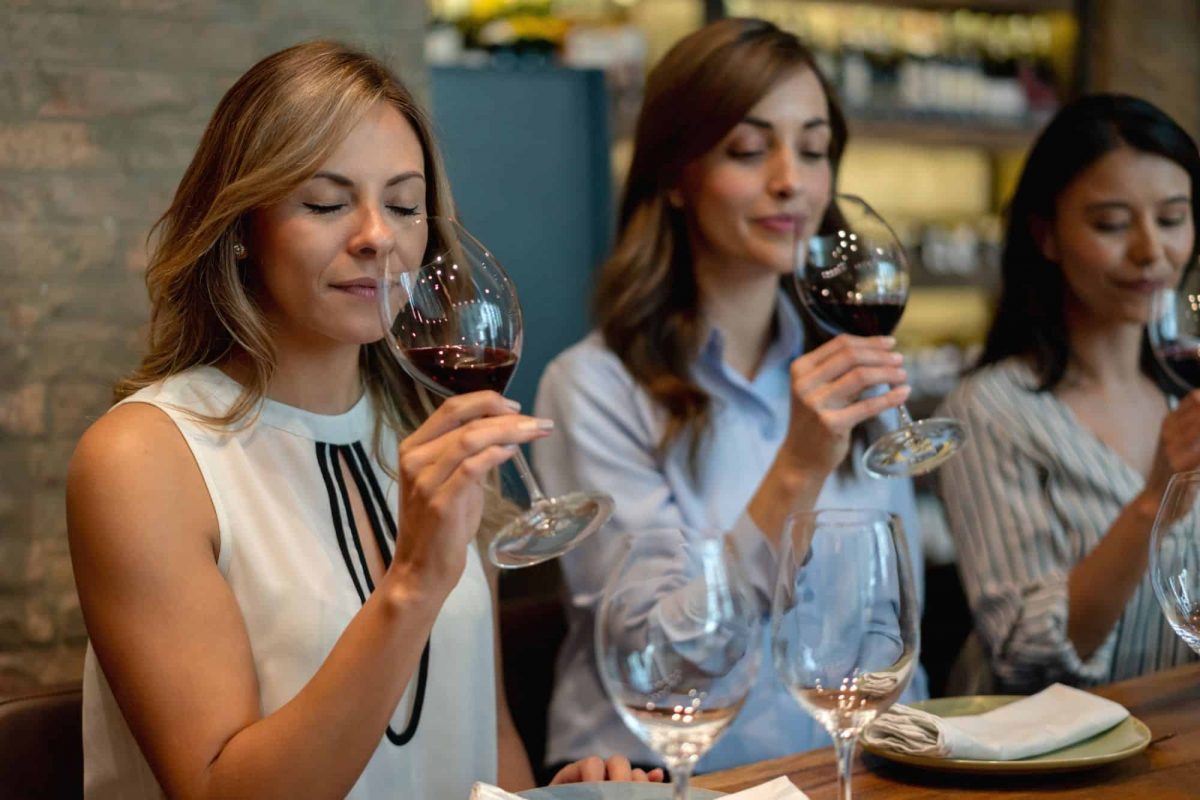
Take a moment to look at the wine before you taste it. Notice its colour. Give the glass a gentle swirl—not because it looks sophisticated, but because it helps release aromas. Bring the glass to your nose before taking your first sip.
Then don’t rush to judge it. Have another sip a few minutes later. You may be surprised how much it changes.
The same thing happens once food enters the equation. A red wine that seemed a little dry or tannic on its own may suddenly become beautifully smooth alongside a bite of steak or aged cheese. A crisp Sauvignon Blanc can seem even brighter with seafood, while an off-dry Riesling suddenly makes spicy food feel perfectly balanced.
One of the biggest lessons you’ll learn at any wine tasting isn’t just about the wines themselves. It’s discovering how dramatically food can transform what’s in your glass.
Stop Trying to Sound Like a Wine Expert
If there’s one piece of advice that instantly makes wine more enjoyable, it’s this:
Don’t borrow someone else’s vocabulary.
Wine has earned an unfair reputation for being filled with strange descriptions that sound more like poetry than beverages. We’ve all heard people describe wines with references to cigar boxes, pencil shavings, saddle leather or damp forest floors.
Sometimes those aromas are genuinely there. Sometimes they’re not. And sometimes people are trying just a little too hard.
You don’t need to speak “wine” to appreciate wine. In fact, using words that make sense to you is far more helpful than trying to memorize tasting terminology.
Maybe one wine reminds you of fresh strawberries. Another tastes like peach or lemon. Perhaps one simply feels crisp and refreshing while another feels rich and smooth.
Those are perfectly good tasting notes. The purpose of describing a wine isn’t to impress the people around you. It’s to help you remember what you enjoyed.
If all you write down is, “Loved this one—it would be great on a patio,” you’ve already created a tasting note that’s far more useful to your future self than pretending you detected hints of graphite because someone else mentioned it first.
Wine should feel personal. Not performative.
Curiosity Will Take You Further Than Knowledge
One of the nicest surprises about attending your first wine tasting is realizing just how approachable most wine educators and winery staff actually are.
They’re not hoping you’ll ask complicated questions. They’re hoping you’ll ask honest ones.
If you enjoy a particular wine, ask what grape it’s made from. If you normally drink Chardonnay but find yourself loving an Albariño, ask what makes them different. If you discover a red wine that feels lighter than your usual Cabernet Sauvignon, ask what else you might enjoy that’s similar.
These conversations are where confidence starts to grow.
Wine educators generally agree that tasting different wines side by side is one of the fastest ways to develop confidence. Comparing acidity, sweetness, body, tannins, and aromas helps beginners recognize patterns and better understand their own preferences. The goal isn’t memorization—it’s curiosity.
Instead of memorizing facts from books, you’re building a mental library of wines you’ve actually tasted. Over time you’ll begin noticing patterns. Maybe you consistently gravitate toward wines with bright acidity. Perhaps lighter-bodied reds appeal to you more than powerful, tannic styles. You may discover that sparkling wine is far more versatile than you ever imagined.
Those patterns become incredibly useful the next time you’re standing in a wine store.
Rather than staring at hundreds of bottles wondering which label looks nicest, you’ll have a much clearer idea of what you’re actually looking for.
That’s how confident wine buyers are made. Not by memorizing French regions. By paying attention to their own preferences.
A Wine Tasting Is the Perfect Place to Be Adventurous
Most of us fall into comfortable routines when buying wine.
We pick up the same Sauvignon Blanc we’ve always enjoyed. We grab another bottle of Cabernet Sauvignon because we know it’s a safe choice. There’s absolutely nothing wrong with that, but it also means we miss out on an enormous world of wines waiting to be discovered.
Wine tastings remove much of that risk.
Instead of committing to an entire bottle you’ve never heard of, you’re trying a small pour in a relaxed environment with someone there to answer questions.
That makes it the perfect opportunity to say yes to something unfamiliar.
Try the Austrian white with the impossible-to-pronounce name. Taste the Spanish grape you’ve never seen before. Give the Portuguese blend a chance.
Some of the best value wines in the world come from regions and grape varieties that haven’t become household names yet. Because demand is lower, prices are often surprisingly reasonable despite exceptional quality.
Many people leave their first tasting talking less about the Cabernet they expected to enjoy and more about the grape they had never heard of before.
Those are the wines that make wine exciting.
They remind us that there’s always something new to discover.
The Best Thing You’ll Take Home Isn’t a Bottle
If you’re lucky, you’ll leave your first wine tasting with a new favourite bottle tucked under your arm. But that’s probably not the most valuable thing you’ll bring home. The real takeaway is confidence.
Not confidence that you suddenly know everything about wine—you won’t, and neither do most wine professionals. It’s confidence that you don’t need to.
You’ll discover that asking questions is encouraged. That your opinions matter. That it’s perfectly acceptable to dislike a wine everyone else seems to love, and equally acceptable to fall in love with an inexpensive bottle that never receives a critic’s score.
Wine becomes infinitely more enjoyable the moment you stop worrying about what you’re supposed to like and start paying attention to what you actually enjoy.
That’s the philosophy behind every great wine tasting.
It’s certainly the philosophy behind Wine Without the Snobbery. The more wines you taste, the more you’ll realize that wine isn’t about passing a test or impressing the table beside you. It’s about curiosity, conversation, good food, and sharing experiences with people you enjoy spending time with.
So when you walk into your first wine tasting, leave the pressure outside. Bring your curiosity. Bring your questions. Bring a willingness to try something you’ve never heard of.
You may discover a new favourite wine. More importantly, you’ll discover that wine was never nearly as intimidating as you thought. And if you leave smiling, having found one bottle you’d happily drink again, then your first wine tasting was a complete success. Because at the end of the day, the best wine isn’t the one with the highest score or the fanciest label.
It’s the one that makes you want another glass.