
Learning how to go wine tasting isn’t about memorizing grape varieties or using complicated tasting notes. The best wine tastings are about curiosity, discovering new wines, and building confidence one glass at a time. Whether you’re attending your first event or your fiftieth, wine should always be enjoyable—not intimidating.
Wine tasting has changed a lot over the past twenty years.
It used to feel like something reserved for serious collectors, industry professionals, or people who owned sweaters tied around their shoulders. Today, wine tourism is one of the fastest-growing travel experiences in North America. Couples plan entire vacations around wineries, friends organize weekend tasting trips, and even people who know very little about wine are discovering that spending an afternoon among vineyards is one of the most relaxing ways to travel.
The funny part is that many first-time visitors still arrive feeling like they need to know something before they’re allowed to be there.
Nothing could be further from the truth.
The best wineries don’t expect you to identify aromas of wet slate or distinguish between French and American oak. They simply want you to enjoy yourself, learn something new, and hopefully discover a bottle you’ll remember long after your vacation ends.
If you’ve been thinking about planning your first wine country trip—or you’ve been to a winery once and want to get more out of the experience—here’s how to approach wine tasting like someone who’s done it before, without pretending to be someone you’re not.
Your Job Isn’t to Judge the Wine—It’s to Discover It
One of the biggest mistakes people make during a tasting is treating it like a competition.
They spend every pour trying to decide whether a wine is “good enough.”
Instead, flip the question around.
Ask yourself whether it’s a wine you’d actually enjoy drinking.
That’s a surprisingly different mindset.
The goal isn’t to crown the best Cabernet Sauvignon of the day. It’s to discover the bottle you’d happily buy and open with friends next weekend.
Some wines impress you intellectually.
Others simply make you smile.
I’d take the second one every time.
One of the reasons I enjoy visiting wineries is that they often introduce me to wines I probably never would have picked up in a liquor store. Tasting rooms are where you’ll find small-production wines, experimental blends, and lesser-known grape varieties that never make it onto supermarket shelves.
Those unexpected discoveries are often the highlights of the day.
Slow Down—This Isn’t a Pub Crawl
One of the easiest ways to spot a first-time wine tourist is how quickly they move from one glass to the next.
Wine tasting isn’t about quantity.
It’s about attention.
Give yourself time with each pour. Notice the colour. Smell it before tasting it. Take a sip, then come back to it a few minutes later after it’s had a chance to open up in the glass.
Even more importantly, enjoy the setting.
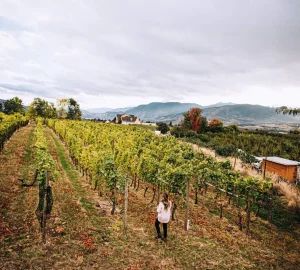
Some of the best wineries in North America are located in spectacular landscapes. You’re not just paying for wine. You’re paying for the vineyards stretching over rolling hills, the conversations with passionate staff, the history behind the winery, and the opportunity to slow down for a couple of hours.
One of my favourite wine travel tips is to book fewer wineries than you think you’ll have time for.
Three great visits where you can relax and enjoy the experience are almost always better than trying to squeeze seven tastings into one afternoon.
Ask Better Questions
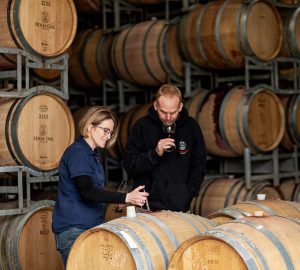
The people pouring your wine know those bottles better than anyone.
Most love talking about what they produce, but they appreciate genuine curiosity more than rehearsed wine terminology.
Instead of trying to impress them, ask questions that actually help you become a better wine drinker.
Questions like:
- What makes this region unique?
- Which wine are you personally most proud of?
- What local foods pair well with this?
- If I normally enjoy Pinot Noir, what else should I try?
- Which bottle surprises visitors the most?
Those conversations often become the most memorable part of the visit.
Wine has always been about stories as much as flavours.
The more you hear about the people behind the bottle, the more meaningful the wine becomes.
Wine education organizations such as WSET offered by Fine Vintage encourage tasters to focus on observation, curiosity, and understanding style rather than searching for a single “correct” answer.
Don’t Feel Obligated to Buy the Most Expensive Bottle
It’s easy to assume the reserve wines or limited releases must automatically be the best.
Sometimes they are.
Sometimes they simply represent a different style or are intended for long-term aging.
One of the best bottles I brought home from a recent trip cost less than half of the winery’s flagship wine.
Buy the wine you enjoyed the most—not the one you think you’re supposed to buy.
You’ll appreciate it far more when you open it later.
The Best Wine Regions in North America
One of the great things about North America is that world-class wine regions are scattered across the continent, each with its own personality. If you’re planning a wine-focused getaway, these are some of the destinations that deserve a place on your list.
Napa Valley, California
Napa is the name most people know, and for good reason.
This is luxury wine tourism at its finest. The wineries are beautiful, hospitality is exceptional, and Cabernet Sauvignon reigns supreme. You’ll also find outstanding Chardonnay, Merlot, and sparkling wines.
Napa can be expensive, but it’s one of those destinations every wine lover should experience at least once.
Sonoma County, California
Just west of Napa sits Sonoma, which many visitors end up preferring.
The atmosphere feels a little more relaxed, tasting fees are often lower, and there’s greater diversity in both wineries and wine styles. Pinot Noir, Chardonnay, Zinfandel and sparkling wines all shine here.
If Napa feels polished, Sonoma feels welcoming.
Both are outstanding.
Willamette Valley, Oregon
If you love Pinot Noir, this should be near the top of your travel list.
The Willamette Valley has earned an international reputation for producing elegant, cool-climate Pinot Noir that rivals some of the world’s best examples.
The scenery is stunning, the pace is slower than Napa, and many wineries remain family-owned.
It’s one of the easiest places to spend an entire day without ever feeling rushed.
Okanagan Valley, British Columbia
Canadians are finally beginning to appreciate just how remarkable the Okanagan has become.
Stretching for more than 250 kilometres, this region offers dramatic lake views, warm summers, and an astonishing diversity of wines.
You’ll find everything from crisp Riesling and Pinot Gris to Syrah, Merlot, Cabernet Franc, and exceptional sparkling wines.
Many visitors arrive expecting decent Canadian wine.
They leave wondering why more people aren’t talking about it.
Niagara Peninsula, Ontario
Ontario’s Niagara region continues to impress with cool-climate Chardonnay, Pinot Noir, Riesling, Cabernet Franc, and its world-famous Icewine.
Its proximity to Toronto makes it an easy weekend getaway, while the historic town of Niagara-on-the-Lake adds plenty of charm between winery visits.
Finger Lakes, New York
This region remains one of North America’s hidden gems.
The deep lakes create an ideal climate for growing Riesling, and many producers are making some of the continent’s most exciting cool-climate white wines.
If you enjoy fresh, vibrant wines with incredible acidity, the Finger Lakes should absolutely be on your radar.
Wine Country Is About More Than Wine
The best wine trips are never just about drinking.
They’re about slowing down.
They’re long lunches overlooking vineyards, conversations with people passionate about what they create, local cheeses, fresh bread, beautiful scenery, and afternoons where nobody feels the need to check the time.
Some of my favourite memories from wine regions aren’t tied to a particular bottle at all.
They’re tied to sitting outside with friends overlooking rows of vines, talking about everything except wine.
Ironically, that’s when wine seems to taste its best.
The Best Wine Tourists Stay Curious
The people who get the most out of wine country aren’t necessarily the ones who know the most.
They’re the ones who remain curious.
They taste the grape they’ve never heard of.
They ask questions.
They buy the bottle that surprised them instead of the famous one.
They enjoy the scenery as much as the tasting notes.
Most importantly, they remember that wine is supposed to be fun.
The more relaxed you are, the more you’ll notice.
The more you notice, the more confident you’ll become.
And eventually you’ll discover that “going wine tasting like a pro” has very little to do with knowing everything about wine.
It has everything to do with approaching every tasting with an open mind, a little curiosity, and the willingness to discover something new.
Because that’s what wine country does best.
It reminds us that the next great bottle is often the one we never expected to love.