

Fitness trends arrive faster than most of us can buy a new pair of running shoes. Yet the most useful question is often much simpler: how can strength training after 40 improve everyday life in a way that is realistic, enjoyable and sustainable? For Edmonton readers, winter weather, family schedules and access to facilities all shape the answer. This guide looks beyond the headline to the habits worth keeping.
What strength really protects
After 40, strength becomes less about adding plates to a bar and more about the freedom to enjoy daily life. Carrying groceries, climbing stairs, travelling with luggage and getting off the floor all ask our muscles to work. Muscle strength and power can decline with age, especially when activity becomes limited, but that trajectory is not fixed. Resistance exercise can improve strength and function across adulthood. A good plan should make the everyday tasks that matter to you easier, rather than making a workout itself the sole measure of success.
The 2026 research favours showing up
In 2026 the American College of Sports Medicine published updated guidance on resistance training for healthy adults. Its evidence review supports resistance exercise for improving strength and muscle growth, including with bands and home-based programmes. Training major muscle groups at least twice per week is a useful practical anchor. The guidance also distinguishes goals: maximizing muscle growth may involve greater weekly volume than maintaining general strength. Those nuances matter, but most beginners do not need advanced periodization to start improving. Consistency is more useful than constantly designing an entirely new routine.
A two-day starting routine
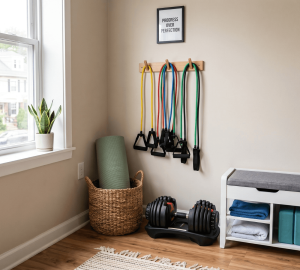
For session A, start with a sit-to-stand or squat, a row, an incline push-up, a hip bridge and a carry. For session B, use step-ups, a hip hinge, a different pulling movement, a press and a controlled trunk exercise. Begin with one or two comfortable sets and progress according to technique, recovery and ability. Leave a day between demanding sessions. There is no universal weight to lift: the resistance should feel meaningful without destroying your form. Ask a qualified trainer to demonstrate movements if you are unsure.
Progressive overload without heroics
Over time, your body needs a reason to adapt. That could mean a slightly heavier dumbbell, another controlled repetition, a larger range of motion or better technique at the same load. Keep a small training log. If your squat and row feel easier after several weeks, you have useful evidence of progress even if the bathroom scale has not moved. Not every session needs to be harder than the previous one, and some weeks should deliberately be lighter. Sharp pain, unusual symptoms or persistent problems deserve assessment rather than a motivational speech.
Why recovery is part of strength
Muscles do not become stronger simply because a session was exhausting. Training provides a stimulus; recovery helps the body adapt. Adequate sleep, regular meals, sufficient protein and enough time between demanding sessions all contribute. Soreness is not a reliable scorecard. In fact, being so sore that you dread your next workout is usually a sign to adjust the plan. A sustainable approach leaves room for walking, mobility, family life and ordinary fatigue. The aim is to train regularly for years, not to win an imaginary contest every Monday.
Cardio is still essential
Strength work complements aerobic movement rather than replacing it. Walking, cycling, swimming and other activities improve endurance and cardiovascular health, while strength work supports the ability to move and carry loads. Balance practice is also valuable, particularly as we age. Think of fitness as a diversified portfolio of abilities. If you have very little time, protect a couple of resistance sessions and keep walking where you can. If you have more flexibility, add activities you genuinely enjoy, because enjoyment is one of the easiest ways to make a habit last.
How to make the advice work in real life
Begin by looking honestly at the week you have rather than the week you wish you had. Block out your work, family obligations, commuting and rest, then identify two or three opportunities that would not require an extraordinary effort to protect. Short sessions at home may be more sustainable than an elaborate gym programme. If you already enjoy a sport or class, keep it; the aim is to fill gaps rather than replace everything familiar. Keep a backup option for days when Edmonton weather, travel or a scheduling surprise changes your plans.
A simple four-week experiment
During week one, choose manageable activities and record how they feel. In week two, repeat them and look for ways to make the routine easier to start: lay out clothing, book a class or arrange to meet someone. During week three, increase the challenge gently if your body is responding well. In week four, review what worked. The useful measure is not whether you achieved perfection but whether you found a pattern you would willingly repeat. If discomfort persists, or if you are managing a condition, get personalized advice.
What the research can and cannot promise
Population-level research can show that physical activity and resistance exercise improve important health outcomes, but no study can predict exactly how one person will respond to a specific routine. Different bodies, injuries, health histories and priorities matter. The best interpretation of evidence is therefore practical and humble. Use guidelines to establish direction, adapt intelligently and pay attention to results that matter outside a gym: steadier movement, strength for daily tasks, better endurance and greater confidence. A qualified professional can help when exercise choices feel uncertain.
Frequently asked questions
What is the best way to begin with strength training after 40? Start with one manageable choice and a reliable source of information. Match your plan to the situation rather than copying an idealized version from social media. What if my first attempt does not work? Adjust the timing, approach or expectations and try again. How do I know if something is right for me? Consider your goals, comfort, cost and whether the experience adds value rather than unnecessary pressure.
The YEG Thrive takeaway
A sensible fitness plan should make everyday life feel more capable, not become another source of judgement. Start with the smallest action worth repeating, adapt it to your health and circumstances, and use reputable guidance as a compass rather than a rigid checklist. Edmonton has many ways to move; your job is to find the combination you will actually continue.