
Pairing wine with takeout deserves the same curiosity we give a restaurant meal. The food may arrive in a cardboard box, but that does not prevent it from having acidity, spice, sweetness or enough personality to overwhelm an unsuitable bottle.
The trick is to look at what you are actually eating. “Pizza,” “curry” and “sushi” each describe a wide range of flavours. Tomato sauce behaves differently from cream sauce. A mild coconut curry asks different questions from a fiercely hot dish. A simple fish roll and a roll covered in sweet sauce are not interchangeable.
The suggestions below are starting points based on those flavour differences. They are not guarantees or rules that overrule your taste. If you enjoy the combination, you do not need an international committee to approve dinner.
Pizza: pay attention to the sauce
For a tomato-based pizza, a red with noticeable acidity is a useful place to start. Barbera or Sangiovese can offer the freshness to sit comfortably beside the tomato. WSET’s takeaway guide includes these among its suggested styles for tomato-based dishes. Ask for an example that fits your taste and budget rather than assuming every bottle made from the grape will behave identically.
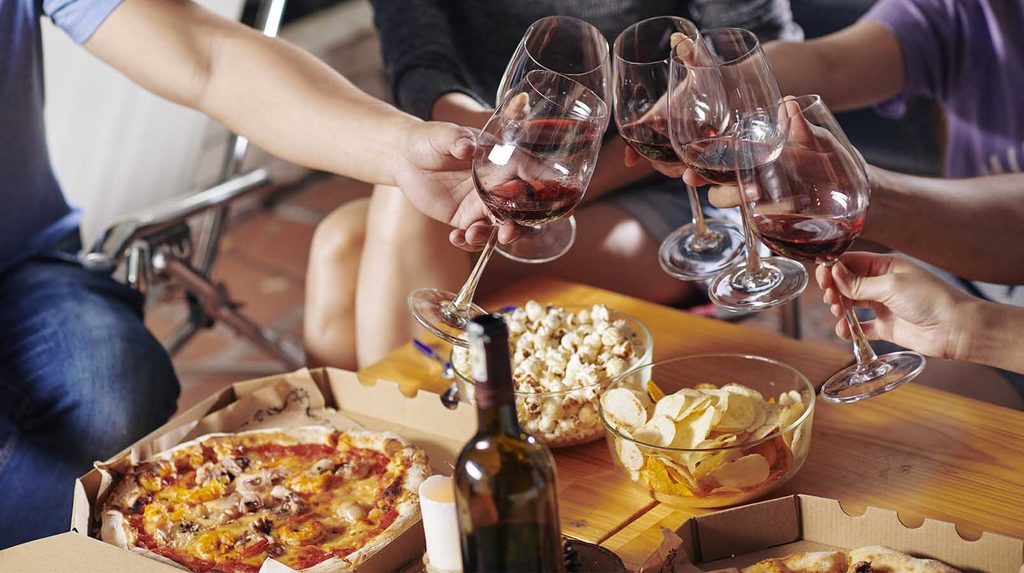
For a white pizza, shift your attention to the cheese, mushrooms or other toppings. A fresh white or a lighter red may suit you better than a heavily structured red. If the pizza comes with a generous drizzle of honey or a very spicy topping, mention that when asking for a recommendation. Small additions can change the pairing more than the size of the box suggests.
Curry: separate aromatic spice from chilli heat
Spice does not always mean heat. Fragrant spices, creamy sauces, tangy ingredients and chilli create different experiences. A slightly off-dry Riesling can be an interesting option with a dish that combines chilli heat and sweetness, while an aromatic white may appeal alongside a milder, fragrant curry.
Check the style rather than buying by grape alone: Riesling can be dry or sweet. Alcohol level is also worth considering because higher alcohol can intensify the perception of chilli heat. WSET’s guide to pairing Indian food discusses sweetness, acidity and alcohol as useful factors, while emphasizing the range of dishes involved.
If you love a dry wine, explain that instead of choosing a sweeter one solely because somebody called it the correct pairing. Ask the shop for an alternative suited to the dish and your preferences. The food should not force you into spending the evening with a wine you dislike.
Sushi: consider the condiments as well as the fish
A crisp white or a dry sparkling wine can be a useful experiment with a varied sushi order. Think about the rice seasoning, soy sauce, wasabi and any sweet or creamy toppings. These can influence the overall flavour as much as the fish or vegetables themselves.
Take a small taste of the wine, then try it after a bite of food. Does it feel sharper, softer, fruitier or less expressive? Food can change your perception of wine, and personal preferences vary. This simple comparison is more informative than trying to remember a perfect match for every possible roll.

For an Edmonton shopping conversation, bring the actual order to a bottle shop such as Sip Liquor Market or Vine Arts and ask what might suit it. Current selection and prices vary, so these are places to ask rather than promises about particular bottles being available.
Keep portions comfortable, offer an appealing alcohol-free option and remember that wine is optional. The point of wine with takeout is to enjoy the combination and perhaps discover something new. You have already avoided the dishes involved in cooking. There is no need to replace them with homework.