


A simple Sunday reset routine should leave you feeling more prepared for Monday. Somewhere along the way, it became a competitive event involving matching containers, immaculate cupboards and enough chopping to qualify as restaurant prep. By the time everything is organised, the weekend is over and the organiser needs another weekend.
October is a good time to simplify. Work schedules are busy, daylight feels more precious and the household calendar can fill quickly. A little preparation helps, but the preparation needs boundaries. Otherwise, a plan intended to reduce stress becomes another set of expectations you cannot quite meet.
Think of a reset as removing a few predictable obstacles. You are making tomorrow easier, rather than arranging your entire life into a row of labelled baskets. Start with the tasks that repeatedly cause friction, and leave the decorative organisation for another day.
Find the actual problem
If weekday mornings are chaotic, identify why. Are lunches undecided? Is everyone looking for keys? Does breakfast depend on having twenty minutes you never have? Each problem suggests a different solution. Cleaning the pantry may feel productive while doing very little for the Monday scramble.
The same applies to evenings. Perhaps you get home hungry and cannot decide what to cook. Maybe family members have different activities, so a shared dinner at six is unrealistic. Perhaps you plan meals that require more attention than you have left after work.
Write down the two situations you most want to improve. Use ordinary language: fewer last-minute grocery trips, an easier breakfast, less rushing before a class. Clear problems produce smaller, more useful tasks. Vague goals such as getting everything together tend to grow until they occupy the whole afternoon.
Plan meals around your calendar
Start with the week, then choose the food. A night with a late meeting might need leftovers or a quick assembly meal. An evening at home could suit a recipe you enjoy cooking. If Friday usually becomes takeout, acknowledge that pattern rather than buying ingredients that will sit unused.
Health Canada’s meal-planning guidance emphasises finding a plan that works for your lifestyle. You can apply that by choosing a few reliable meals, checking what is already available and making a focused shopping list. Planning does not require preparing every bite in advance.
Try a flexible structure: two meals you intend to cook, one leftovers night, one quick pantry option and room for changes. If someone brings food home or a dinner invitation appears, your plan still works. The food you buy should support the week, rather than dictate it.
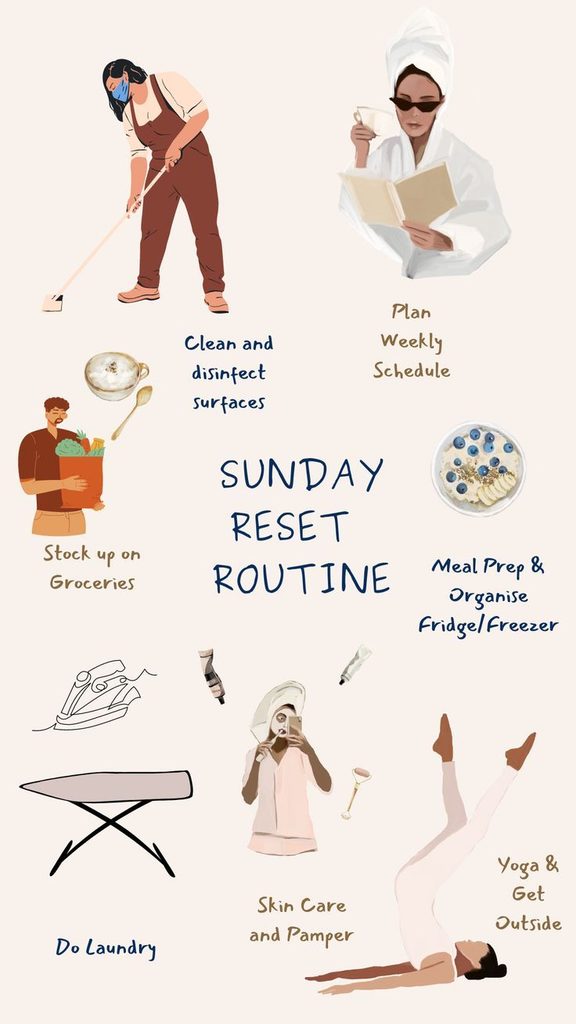
Prepare components you will actually use
You may find it useful to wash vegetables, cook a grain or make a dressing. Another household may benefit more from dividing a large purchase into portions or making one soup. Choose preparation based on repeated use, rather than what looks attractive in a video.
Imagine three lunches using the same ingredients differently. A grain bowl, a wrap and a plate of leftovers can share components without feeling like the same meal five times. Keep some items separate so people can adjust portions and combinations to their preferences.
Be honest about taste. If you dislike reheated chicken by Wednesday, stop building plans around it. If chopped salad becomes a container of disappointment, prepare something else. A routine is allowed to reflect the people eating the food. It does not need approval from the internet’s most organised stranger.
Give Monday morning a head start
Look at the first hour of the next day. Decide where the bag, keys and shoes will be. Check whether you need a transit card, an umbrella or a clean shirt for an evening activity. Place the important items together, particularly anything that needs to leave the house with you.
If you share a household, make the arrangement visible and simple. One place for outgoing items is more useful than five clever systems nobody remembers. A small note near the door may do more than another app that everyone needs to install.
You can also choose breakfast before bed. That might mean oats, toast, yogurt, leftovers or another option you enjoy. The benefit is a decision removed from a crowded morning. You do not need a photogenic breakfast; you need one that fits your time, appetite and budget.
Schedule movement with breathing room
Pick a couple of realistic opportunities to be active. Include the time required to get there and back. A class immediately after an appointment across the city may exist beautifully on your calendar while being impossible in Edmonton traffic.
Have a smaller option available if the day changes. You might walk near home, practise familiar exercises or choose a shorter session. Avoid treating the weekly plan as a contract you have breached whenever something unexpected happens. The plan is there to serve you.
Discuss shared responsibilities before the week begins. If one person gets exercise time because another absorbs every household task, the arrangement needs attention. A reset can include redistributing the practical work, rather than simply making the busiest person better at managing it.
Put a limit on the reset
Choose a finish time before starting. You might give yourself thirty or forty-five minutes for the essentials, then stop. If something takes longer, decide whether it matters today. Some laundry can wait. A shelf can remain imperfect. Your spice drawer is unlikely to lodge a formal complaint.
The NIH guide to creating healthy habits discusses planning, adjusting your surroundings and recognising setbacks as part of change. A practical interpretation is to make your reset small enough to repeat. A modest routine you can sustain is more helpful than a heroic one you abandon after a single weekend.
Save part of Sunday for something that feels like time off. Visit a friend, read, take a relaxed walk or watch a film. Rest does not have to become another performance category. It can simply be the part of the day that belongs to you.
Review what made a difference
By Thursday, you will know whether the reset helped. Did the shopping list reduce extra trips? Did the prepared ingredients get used? Was the calendar realistic? Keep the parts that worked and remove the ones that generated effort without improving the week.
Your routine may change as work hours, family needs or energy levels change. That flexibility is a strength. The point is to make everyday life slightly easier, then enjoy the time and attention you have freed up.
At its best, a Sunday reset ends with a manageable Monday and some weekend still remaining. You have prepared enough to move forward, without spending your day off rehearsing an idealised version of being organised.