

Good wine education should make choosing a bottle easier, not more intimidating. Crémant vs. Champagne is about finding pleasure in the differences between places, grapes and styles, and discovering how wine can complement food and conversation. A little background helps, but there is no requirement to speak fluent sommelier before inviting friends over.
What makes Champagne different?
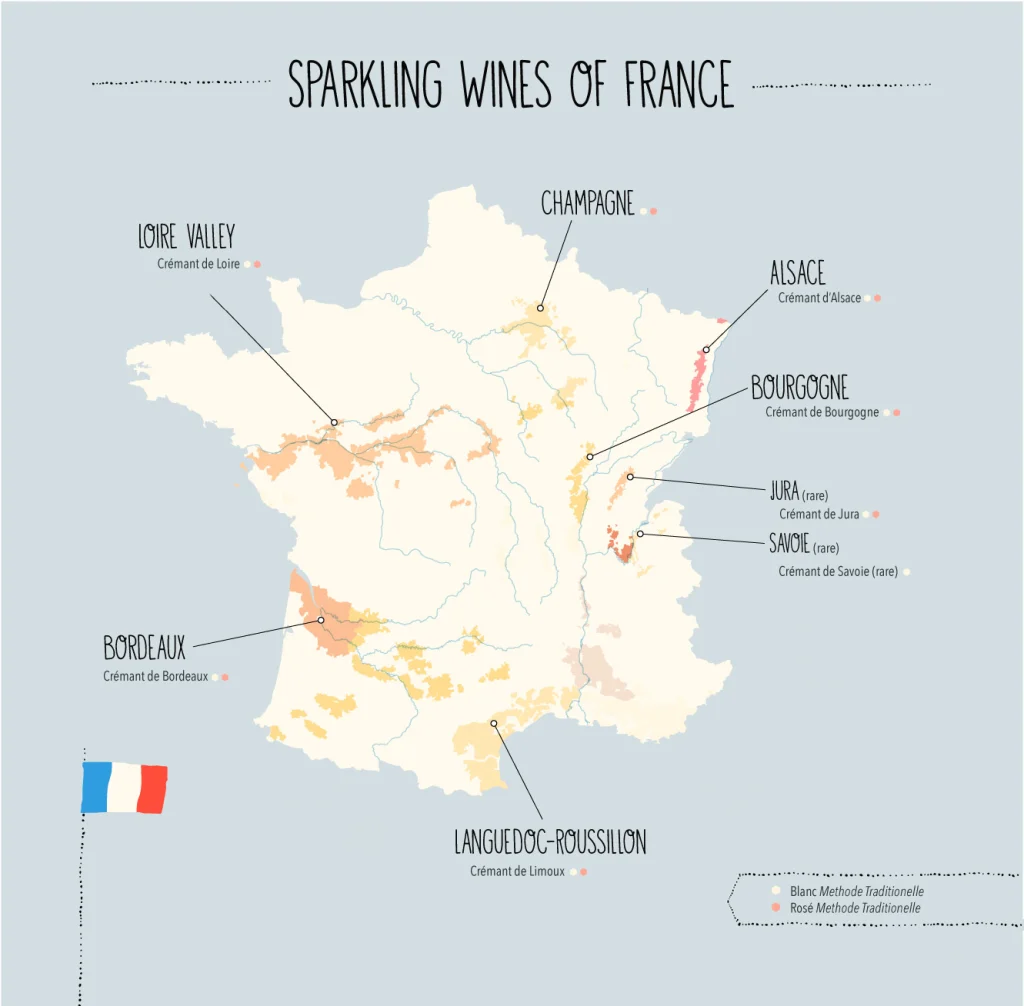
Champagne is not simply a fashionable word for sparkling wine. It identifies wine made within a specific French region under detailed appellation rules. Its identity reflects climate, soils, permitted grapes, production practices and long historical experience. Crémant is a designation used in several other French regions, including the Loire, Alsace and Bourgogne, with their own appellation requirements. Comparing them is not like comparing one brand with a cheaper imitation. It is more like comparing different regional traditions that share some techniques but express different places.
The second fermentation in the bottle
Champagne and Crémant are commonly made using the traditional method. After a base wine is produced, a further fermentation takes place in a sealed bottle, creating carbon dioxide that dissolves into the wine. Time spent with yeast sediment, or lees, can add aromas reminiscent of bread, biscuit or pastry. Producers then remove the sediment and finish the wine, often with a dosage that influences sweetness. The method is important, but grape choice, acidity, ageing time and winemaking decisions all shape the final result.
Explore the regional range
Crémant de Loire may use Chenin Blanc alongside other permitted varieties, which can bring an appealing acid-driven character. Crémant d’Alsace often features grapes familiar from that region. Crémant de Bourgogne can offer a different expression shaped by Burgundy’s varieties and conditions. None of these broad descriptions guarantees the flavour of every bottle. That is the pleasure of exploring: a category tells you something, and the producer tells you much more.
How do the wines taste?
A lively traditional-method sparkling wine may offer citrus, apple, floral notes and fresh acidity. With longer ageing on lees it may develop richer bakery or nutty aromas. Champagne can show exceptional complexity, particularly in carefully made bottles with extended ageing, but excellent Crémant can also be layered and satisfying. Taste two wines in the same type of glass, at similar temperatures, and compare the texture of the bubbles, intensity of flavour and finish. Your favourite may not be the one with the most famous name.
What should you serve with Crémant?
Dry sparkling wine is wonderfully flexible at the table. Try it with salty appetizers, fried foods, smoked salmon, roast chicken or mild cheeses. Acidity brings freshness while bubbles provide contrast to rich textures. Crémant de Loire can be a welcoming first glass at a casual dinner party, especially when guests arrive with different preferences. Serve it cool but not painfully cold, and let the glass warm slightly if the aromas seem muted. A thoughtfully chosen alcohol-free sparkling drink belongs on the same tray.
Champagne vs. Crémant: The Key Comparisons
| Feature | Champagne | Crémant |
|---|---|---|
| Region | Champagne (NE France) | Burgundy, Alsace, Loire, Jura, Limoux, etc. |
| Method | Méthode Champenoise (traditional bottle fermentation) | Same method (méthode traditionnelle) |
| Ageing requirement | Minimum 15 months on lees (36 months for vintage) | Minimum 9 months on lees |
| Price range | $70 – $300+ | $35 – $65 |
| Grapes | Chardonnay, Pinot Noir, Pinot Meunier | Varies by region (Chenin Blanc, Pinot Gris, Aligoté, etc.) |
| Flavour profile | Rich, brioche, nutty, complex | Fresh, fruity, floral, crisp |
| Occasion | Grand celebrations, gifting, fine dining | Everyday enjoyment, brunches, aperitifs |
How to shop in Edmonton
Rather than demanding a particular brand that may not be stocked, ask a local independent shop to show you examples from two Crémant appellations. Decide whether you prefer lean and crisp or fuller and toasty styles. Look at the producer, grape composition when available, dosage and age. Price is part of the decision, but not the whole story. A great bottle for a dinner party is one that suits the people and food, not one that requires everybody to admire its price tag.
A simple way to taste more confidently
Pour a modest sample into a clean glass and notice its colour, aroma, acidity, sweetness, body and finish. Do not worry about identifying an impressive list of fruits or flowers. A description such as fresh, bright, creamy, drying or savoury is often more useful than an elaborate tasting note. Taste a small bite of food, return to the wine and see what changes. This is where pairing starts to make sense. Different people will notice different things, and that is part of the enjoyment rather than a problem to correct.
Buying wine without the snobbery
Before visiting a wine shop, decide on your budget, the occasion and the style you usually enjoy. Tell the staff whether you prefer refreshing acidity, soft tannin, richer texture or a touch of sweetness. Ask for two possibilities and what distinguishes the producers, not simply which bottle has the best label. Stock, vintages and pricing can vary across Edmonton retailers, so specific recommendations should always be checked locally. A less famous appellation can deliver tremendous enjoyment, but no region or price point guarantees a perfect match for every palate.
Hospitality always comes first
Wine should support a meal and the people sharing it, not become the centre of attention unless guests specifically want a tasting. Put water on the table, offer satisfying food and make alcohol-free drinks as appealing as alcoholic ones. A guest should never need to explain why they are not drinking. The health risks of alcohol are real, so avoid describing consumption as a wellness practice. The most successful wine education encourages informed choices, sensible serving and curiosity without pressure.
Reading a label without guessing
A bottle label can reveal origin, producer, vintage and sometimes grape varieties or sweetness indications. It usually does not tell you everything about texture, flavour or how the wine was made. Appellation rules are helpful background, but individual producers can express the same region differently. If you are unsure, a retailer can explain the difference between two bottles in ordinary language. Ask about acidity, tannin, oak, sweetness and food pairing. These details lead to a better purchase than a gold medal sticker or a vague promise that a wine is smooth.
The YEG Thrive takeaway
The point is not to get every tasting note or pairing exactly right. It is to understand enough to select a bottle you enjoy, share it thoughtfully and stay curious. If a guest prefers water, tea or a non-alcoholic option, that is just as welcome. Good wine without the snobbery begins and ends with hospitality.