
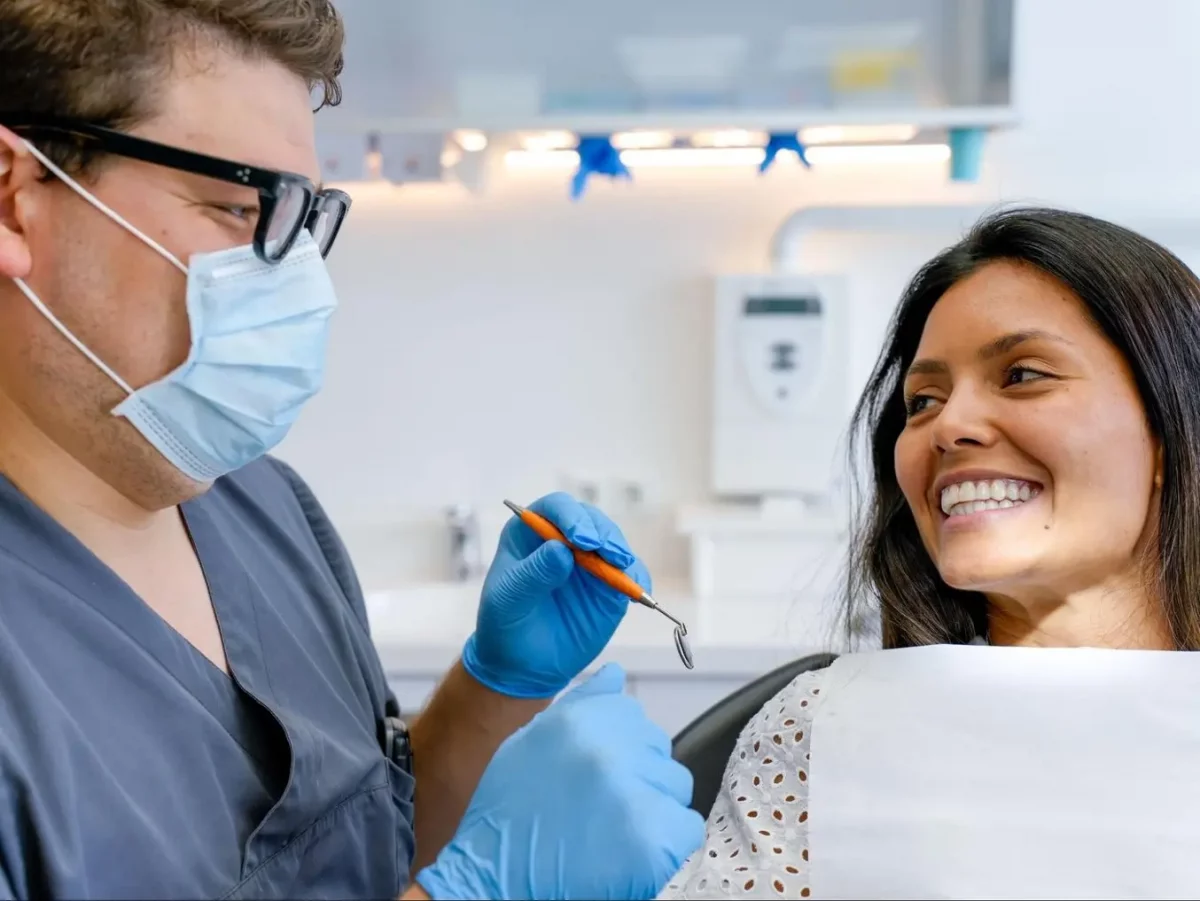

For many adults, their choice of treatment has been nearly as important as whether to get it done at all. That’s why the rise of clear aligners really matters. They’ve helped create a world where braces are efficient, effective, and nearly invisible. To everyone else, it just looks like you take a lot of selfies.
Choosing the Right Provider Makes the Difference
Clear aligner treatment is not something you can DIY in a meaningful sense. The results depend on the quality of the initial physical assessment, the sophistication of the plan, and the oversight during treatment. Teledentistry and remote check-in options have made it more convenient for busy lives, but those work best when the physical clinical foundations were put down correctly in the first place.
If you’re a patient in a major city, proximity to a sophisticated, current provider and scanner matters. Searching for Invisalign in London, or wherever you’re based, should involve looking up a clinic where the dentist has a track record with aligner cases, not just a badge on a website saying they’re a certified provider.
The software has already gone as far as it can go. What separates your treatment going well from brilliantly comes down to the clinical decisions made about your actual teeth, your bite, and your desires, not some statistical compromise based on an average patient who isn’t real.
The Planning Stage is Now Part of the Experience
One of the advantages of modern aligner treatment that doesn’t get talked about enough is the part that comes before you put anything in your mouth. Where the old putty impression was a drag, today’s intraoral scanners are a fascinating showstopper, capturing thousands of images per second to create a 3D model of your teeth, and doing the job in just a few minutes. Those digital renditions go straight to the lab, where technicians turn them into stacks of transparent aligner trays, each one engineered to move teeth by about 0.25 millimeters.
Fitting Treatment Around Real Life
Clear aligners are appealing to adult patients for a multitude of reasons. First and foremost, they’re an ideal solution for adults who wouldn’t be caught dead wearing metal braces. Maybe you wanted braces as a teen, but you never got them and now you wish you had. Or, maybe you did have braces previously and your teeth have since shifted. Either way, many adults are shying away from traditional orthodontics due to the less than desirable esthetics of metal braces.
Secondly, they are far more comfortable. With no metal to cause mouth sores during treatment and visits spaced out every 8 to 10 weeks, you will find you spend less time in the orthodontist’s chair.
If you are a coffee drinker or smoker, or if you don’t have the discipline to keep the trays in for at least 22 hours a day, traditional metal braces may be a better option for you.
Oral Health Benefits That Extend Beyond Alignment
Removeable appliances provide an advantage that fixed braces don’t: they enable you to properly clean your teeth. Braces create nooks and crannies where plaque can build up, and over the course of long treatment, this can lead to decalcification, white spot lesions on the teeth that become permanent damage. When you use aligners, you just brush and floss your teeth like normal, and the trays can also be cleaned.
For patients with any amount of gum recession, this matters for your periodontal health and the appearance of your smile. Teeth that are in the correct position are easier to keep clean, and arriving at that perfect place without months of struggling to clean your teeth is a huge benefit. Retainers are for life, because orthodontic relapse is inevitable, it’s one of the most common reasons that adults come back for treatment in their thirties. Those patients are often super motivated and already come to the table knowing that the perfect smile is a lifelong investment.
Modern Aligners Can Handle More Than Mild Crowding
There is a persistent belief that clear aligners are only appropriate for simple cases. For the most part, that used to be true. In the infancy of the technology, aligner therapy was indeed limited to milder, easier movements. However, that was then.
For starters, the presence of attachments, those tiny tooth-colored composite shapes that are bonded to certain teeth, enable the aligners to apply force in ways and in directions that flat trays simply couldn’t handle. Hence, movements that used to be considered undoable because of the absence of physical grappling points are no longer an issue for trained and experienced providers to correct. Digging deeper, even the material itself has matured. SmartTrack, the substance used in Invisalign’s aligners, is specifically engineered to deliver constant and more reliable force all throughout each phase of movement.