
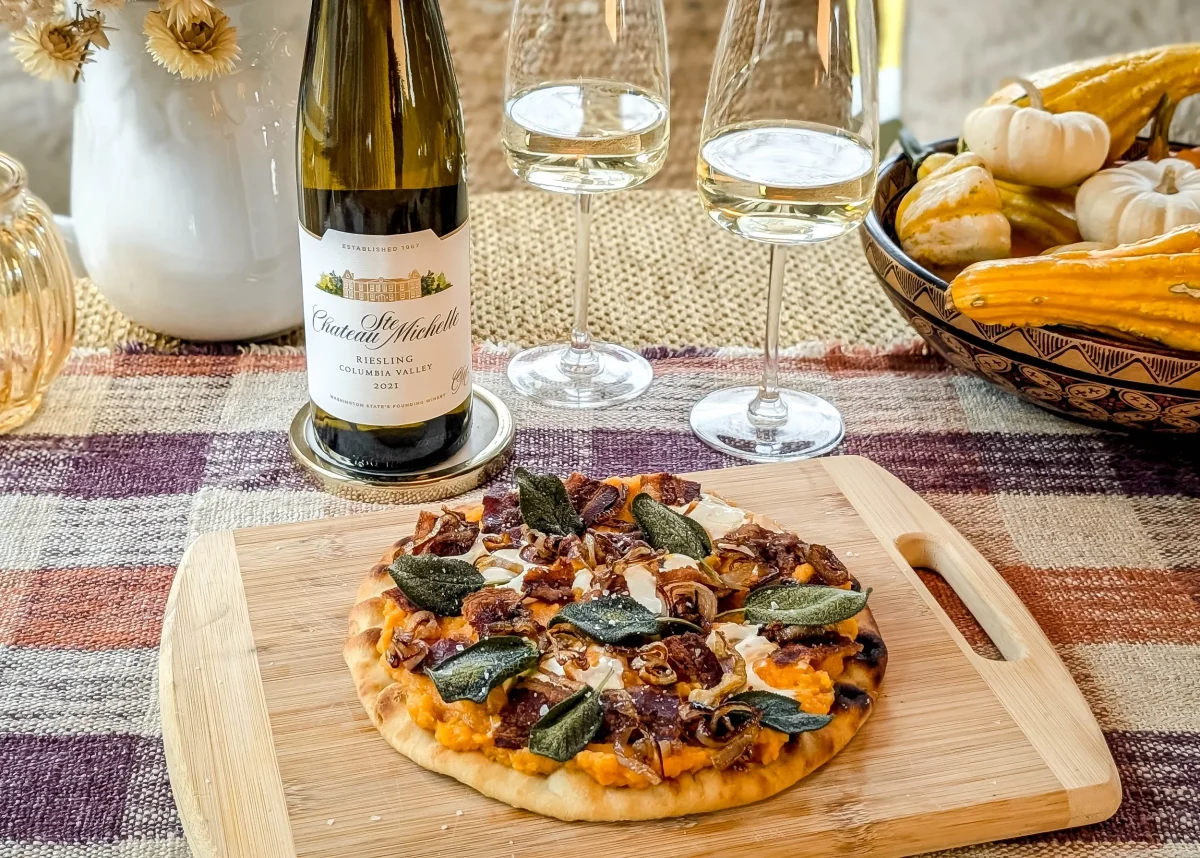

Mention dry Riesling wine and someone will often ask whether Riesling is supposed to be sweet. The grape carries a reputation that can close the conversation before a bottle is opened. If you usually enjoy Sauvignon Blanc or a fresh Chardonnay, that assumption may keep an interesting option off your shopping list.
Riesling comes in different styles, and the name alone does not tell you how sweet the finished wine will be. For an Edmonton fall dinner, the useful question is whether a particular bottle offers the freshness, texture and level of sweetness you enjoy.
October is a good time to explore it without turning the purchase into a grand experiment. You can start with one dry bottle, a familiar meal and a few practical questions at the shop. The aim is to understand your taste, rather than prove that you have finally learned to appreciate someone else’s favourite grape.
Separate the grape from the style
Think about how differently wines from the same grape can taste. A grape name offers a starting point, while the producer’s choices and the place it is grown help shape the result. Riesling is particularly useful for seeing why a single label category can hide a wide range of experiences.
WSET’s introduction to Riesling in Germany explains that fermentation can produce a dry wine or leave residual sugar, and that Riesling’s acidity remains important in both styles. Ripeness at harvest and sweetness in the finished glass are related considerations, but they are not the same measurement.
For a shopper, the immediate benefit is simple: you can ask for dry Riesling without contradicting the grape’s identity. Equally, enjoying a sweeter example does not mean you have chosen an inferior version. You are choosing a different style for a different preference or occasion.
Know what you mean by dry
When people describe wine as dry, they may be talking about several sensations at once. Someone might mean that it is not sugary. Another person may mean that it feels sharp or refreshing. Someone else may be reacting to a drying sensation from tannin in a red wine.
For this shopping conversation, make the request clear: you want a Riesling with little perceived sweetness. Add a comparison if it helps. You might say that you prefer the fresh feel of Sauvignon Blanc, or that you want something refreshing without a noticeably sweet finish.
Avoid relying entirely on a tasting note that says peach or apricot. Fruit descriptions describe aromas and flavours; they do not automatically mean the wine contains enough residual sugar to taste sweet. Ask about sweetness separately, just as you would ask about price or origin.
Treat the label as a set of clues
German wine labels can seem dense when you are unfamiliar with the terminology. Rather than memorising every category during one shopping trip, learn the few clues that address your immediate question. Look for an explicit dryness indication and ask someone knowledgeable to confirm the style of the specific bottle.
WSET’s guide to decoding German Riesling distinguishes label information about quality and style. The term trocken indicates a dry wine. Terms such as Kabinett or Spätlese, however, should not be treated as a complete answer to how sweet the wine will taste.
You can use alcohol content as supporting information, but avoid turning it into a universal shortcut. A number on the bottle cannot replace the producer’s details or a clear style description. If the label remains confusing, take a photograph and ask before buying.
Start with a meal you already enjoy
The easiest first encounter is often at your own table. Choose something familiar so you have fewer moving parts to interpret. A roast chicken dinner, a vegetable dish or a favourite takeout meal can give you a comfortable setting in which to decide what you think of the wine.
These are invitations to experiment rather than guaranteed pairings. The sauce, seasoning and your own palate matter. If a combination does not appeal to you, that does not mean you failed a test. It may simply mean another bottle or another dish would suit you better.
When talking to a retailer, describe the whole meal. Saying chicken tells less than saying roast chicken with a lemon sauce, or a spicy chicken curry. That extra detail allows a more useful recommendation without requiring you to learn a technical vocabulary first.
Compare thoughtfully instead of buying widely
If you want to compare styles, you can do it over separate meals rather than opening several bottles at once. Keep a short note from each experience: whether it seemed dry, whether the acidity felt comfortable and whether you wanted it with food.
Ask for a second recommendation based on the first. If you liked the freshness but wanted more texture, say so. If it was more aromatic than you expected, mention that. Those observations are more useful than deciding that you either like or dislike Riesling as an entire category.
The WSET approach to building tasting skills encourages structured observation. For an everyday drinker, a small version is enough: notice the smell, take a sip and record an honest reaction. Your notes can be plain language. Refreshing with dinner is perfectly serviceable.
Make the store conversation easier
Have a budget ready and say whether you want a familiar purchase or something exploratory. Ask for the producer’s style information if it is available. You can also ask whether the shop has a dry example that would suit someone who usually chooses another crisp white grape.
If you are shopping in Edmonton, avoid assuming every store will have the same selection. Ask what is currently available rather than searching for a specific bottle from an old list. An informative substitute can be more useful than a lengthy hunt for a wine that is no longer on the shelf.
Write down the bottle you enjoyed so you can find it again. Remembering the grape alone may send you home with a very different style next time. A quick photograph preserves the producer, vintage and other details without demanding a complicated wine journal.
Keep curiosity bigger than the rules
There is no obligation to prefer dry Riesling over a sweet one, or Riesling over another grape. The reward is having more information when you choose. You may discover a reliable dinner wine, or simply understand why a previous bottle did not appeal.
Offer an alcohol-free choice whenever you are sharing wine with others, and let people decline without explaining. Exploring a grape is about enjoyment and learning; it does not need to increase how much anyone drinks.
The next time Riesling appears on a shelf or a menu, give the style a moment of attention. One clear question about dryness may open a useful conversation, and perhaps introduce a fall-table option you had previously walked past.